Blab AI
AI Chatbot Kiwi Helps U.S. Schools Detect Student Suicide Plans, But Safety Concerns Remain
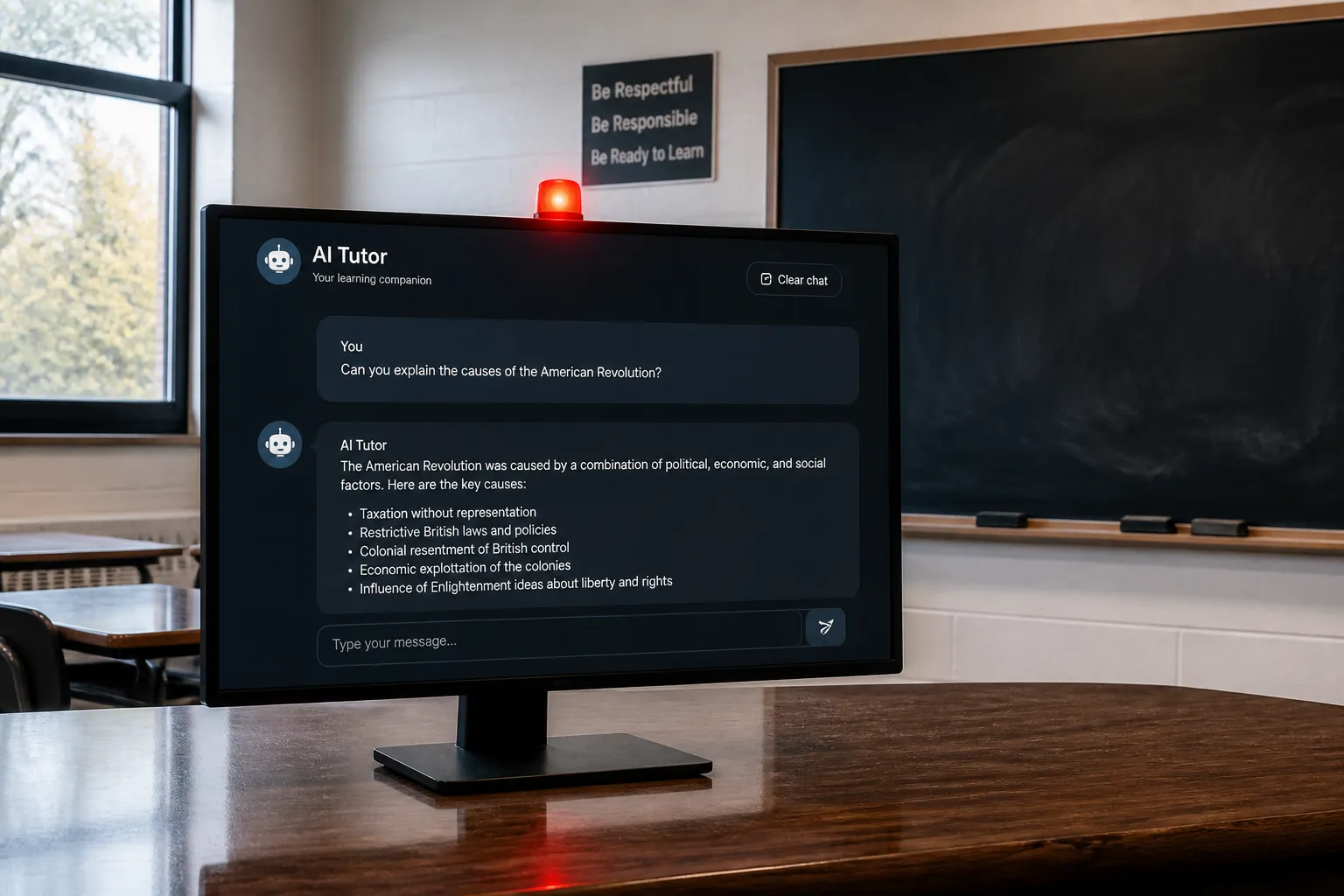
In a single school day, a digital voice can catch a student’s silent cries before they reach the outside world. That’s the promise behind Kiwi, an artificial‑intelligence chatbot now installed in more than 200 U.S. schools across 19 states. Developed by Seattle‑based Alongside, Kiwi engages students in grades four through twelve on everyday stressors and flags any signs of self‑harm, bullying, or other serious risk factors.
When a student confides a detailed plan to kill himself to Kiwi, the system sends an alert to school counselors within five minutes, complete with the student’s chat log. At Corsicana High School in the Dallas‑Fort Worth area, counselors received such a notification just before the Friday bell. The alert allowed staff to intervene before the student left for the weekend, a situation the principal, Aaron Tidwell, said the platform helped prevent.
Alongside describes Kiwi as a “low‑risk” tool that supplements, rather than replaces, human counselors. The chatbot was designed by school mental‑health clinicians and programmed to recognize risk‑related language. When a risk is detected, the system notifies staff and supplies the relevant conversation for review.
In its first three years, Kiwi has identified more than 1,800 students nationwide who required immediate intervention. At Interlachen Jr‑Sr. High School in Florida, counselor Brittani Phillips has received 19 “severe” alerts and now meets regularly with nine students who triggered multiple alerts. Across the United States, the company reports that 31,000 students have used Kiwi, spending roughly 28,000 hours on the platform.
The tool is positioned as a way to manage counselor shortages. In 2026, the U.S. student‑to‑counselor ratio exceeds the national recommendation of 250:1 in many states. Corsicana High, for example, has three behavioral‑support counselors for about 1,800 students. The principal said the chatbot has saved counselors roughly three weeks of work each school year.
Despite these benefits, mental‑health advocates warn that unregulated chatbots can pose risks. A California family filed a lawsuit against OpenAI last year after their 16‑year‑old son reportedly received suicidal advice from ChatGPT. Common Sense Media and the Stanford Medicine Brainstorm Lab conducted a risk assessment of several consumer‑facing mental‑health apps, finding that most, including ChatGPT, Gemini, and Wysa, presented “unacceptable risk” to children. In contrast, the assessment rated Alongside as a low‑risk platform because it notifies schools of simulated crises within 15 minutes.
The study also noted that Alongside missed a sign of suicide risk in one test scenario, and that the chatbot can misunderstand context, such as confusing “shooting humans” with “shooting hoops.” The platform limits the number of messages a student can send in a three‑hour window to reduce the chance of parasocial attachment.
A pilot study conducted by Northwestern University in Texas and New Mexico found that 76% of high‑risk students reported no suicidal ideation after three months of using Kiwi. However, a Common Sense Media analysis of the same data set found no significant effect on depression, anxiety, or loneliness.
Today, more than 200 schools are using Kiwi, and the platform continues to collect de‑identified data for research. Schools pay a subscription fee per student, and the company claims that the cost is lower than hiring additional counselors. The technology remains under evaluation, with some districts, such as Corsicana, monitoring its effectiveness over a three‑year period.
In short, Kiwi is being deployed nationwide as a tool to help schools triage mental‑health crises, but experts caution that it should not replace human support and that its safety profile is still being studied.
When a student confides a detailed plan to kill himself to Kiwi, the system sends an alert to school counselors within five minutes, complete with the student’s chat log. At Corsicana High School in the Dallas‑Fort Worth area, counselors received such a notification just before the Friday bell. The alert allowed staff to intervene before the student left for the weekend, a situation the principal, Aaron Tidwell, said the platform helped prevent.
Alongside describes Kiwi as a “low‑risk” tool that supplements, rather than replaces, human counselors. The chatbot was designed by school mental‑health clinicians and programmed to recognize risk‑related language. When a risk is detected, the system notifies staff and supplies the relevant conversation for review.
In its first three years, Kiwi has identified more than 1,800 students nationwide who required immediate intervention. At Interlachen Jr‑Sr. High School in Florida, counselor Brittani Phillips has received 19 “severe” alerts and now meets regularly with nine students who triggered multiple alerts. Across the United States, the company reports that 31,000 students have used Kiwi, spending roughly 28,000 hours on the platform.
The tool is positioned as a way to manage counselor shortages. In 2026, the U.S. student‑to‑counselor ratio exceeds the national recommendation of 250:1 in many states. Corsicana High, for example, has three behavioral‑support counselors for about 1,800 students. The principal said the chatbot has saved counselors roughly three weeks of work each school year.
Despite these benefits, mental‑health advocates warn that unregulated chatbots can pose risks. A California family filed a lawsuit against OpenAI last year after their 16‑year‑old son reportedly received suicidal advice from ChatGPT. Common Sense Media and the Stanford Medicine Brainstorm Lab conducted a risk assessment of several consumer‑facing mental‑health apps, finding that most, including ChatGPT, Gemini, and Wysa, presented “unacceptable risk” to children. In contrast, the assessment rated Alongside as a low‑risk platform because it notifies schools of simulated crises within 15 minutes.
The study also noted that Alongside missed a sign of suicide risk in one test scenario, and that the chatbot can misunderstand context, such as confusing “shooting humans” with “shooting hoops.” The platform limits the number of messages a student can send in a three‑hour window to reduce the chance of parasocial attachment.
A pilot study conducted by Northwestern University in Texas and New Mexico found that 76% of high‑risk students reported no suicidal ideation after three months of using Kiwi. However, a Common Sense Media analysis of the same data set found no significant effect on depression, anxiety, or loneliness.
Today, more than 200 schools are using Kiwi, and the platform continues to collect de‑identified data for research. Schools pay a subscription fee per student, and the company claims that the cost is lower than hiring additional counselors. The technology remains under evaluation, with some districts, such as Corsicana, monitoring its effectiveness over a three‑year period.
In short, Kiwi is being deployed nationwide as a tool to help schools triage mental‑health crises, but experts caution that it should not replace human support and that its safety profile is still being studied.





