Blab AI
Trumps Meme Campaign Faces Low Approval Ahead of 2026 Midterms
Donald Trump has released a series of AI‑generated memes over the Labor Day weekend that portray him as a superhero, a hockey star and a naval commander. The images, shared by the White House and by supporters on social media, show the former president wielding a Green Lantern ring to build a wall, standing over Canadian Prime Minister Mark Carney on an ice rink and firing a ship’s guns at an enemy fleet.
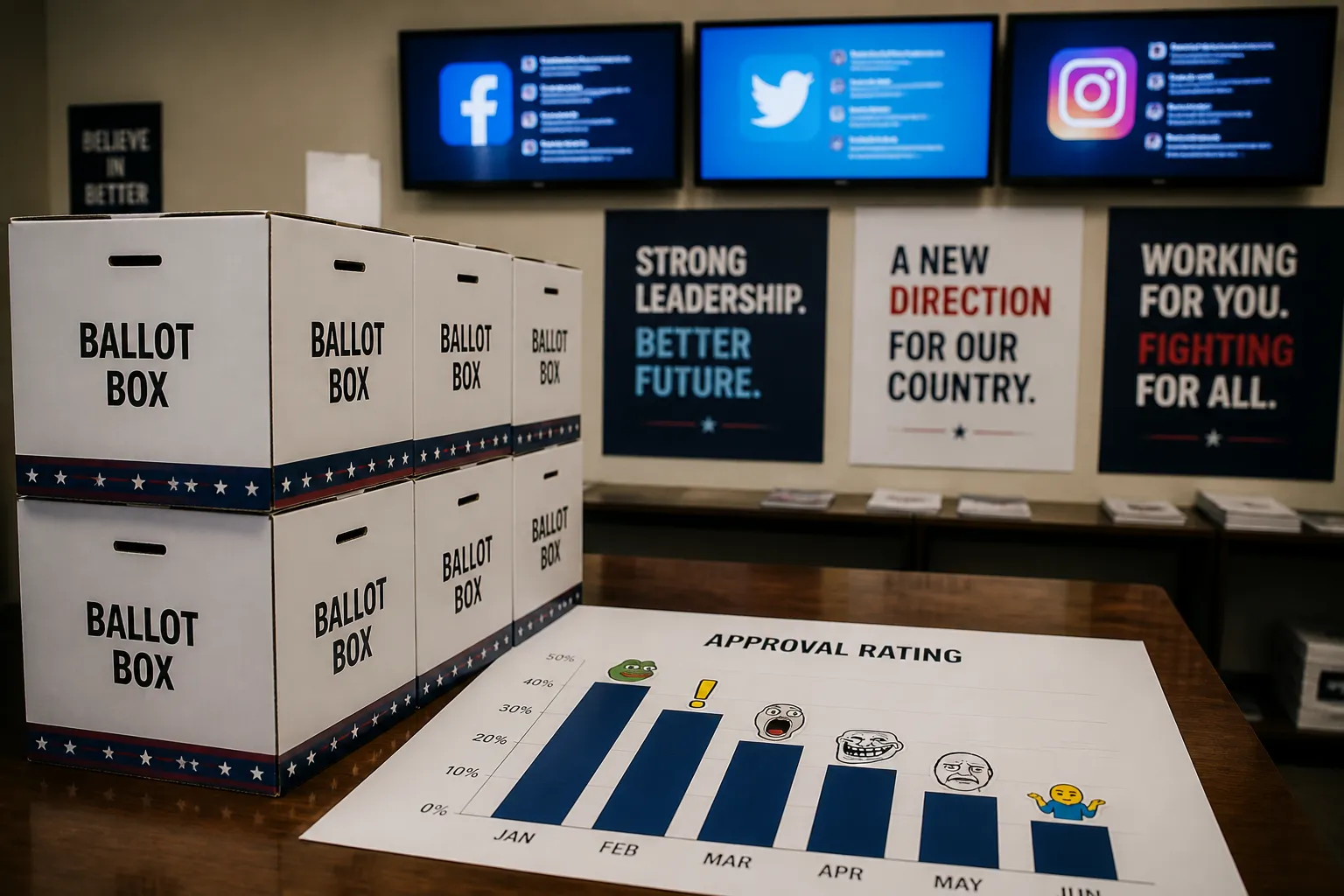
The campaign comes at a time when the president’s approval rating is low. A July AP‑NORC poll found that only 33 % of U.S. adults approve of how Trump is handling the job of president, and just 15 % strongly approve. The same poll noted that the president’s promise to keep gasoline under $2 a gallon is no longer a reality, with average gasoline prices near $4.15 a gallon.
The memes are part of a broader strategy by the Trump administration to energize the “Make America Great Again” base ahead of the 2026 midterm elections. The Republican Party will hold a convention in Dallas on Wednesday and Thursday to rally voters. Republican strategist Kevin Madden said the posts can mobilize Trump’s core supporters, but he cautioned that the “affordability voter” is the key demographic for the election.
White House communications staff have defended the memes as humor. Kaelan Dorr, a member of the communications team, posted on social media that the memes will continue. The White House press office declined to comment on the specific content.
The use of memes has not improved Trump’s public standing. The president has faced criticism for earlier posts, including a controversial image of himself as Jesus in April and a racist video of former President Barack Obama and his wife in February that was later deleted. The most recent meme campaign has not altered the approval numbers.
The contrast between the fantastical depictions and the real‑world challenges—such as the ongoing Iran war, rising fuel costs and questions about the president’s health—has drawn attention from political observers. Andrew Bates, a former deputy press secretary for President Biden, noted that Trump’s memes “seem to be about avoiding the actual responsibilities of governing.” He added that the president’s focus on imagery may alienate voters who are concerned with economic outcomes.
The midterm convention in Dallas is expected to feature Trump’s presence as a central element. The Republican Party’s strategy is to use his personal brand to drive turnout, but analysts warn that the low approval rating and the economic issues facing voters could limit the effectiveness of this approach.
In summary, Trump’s recent meme campaign has not translated into higher approval or broader public support. The president’s image as a powerful figure in memes contrasts sharply with the economic and geopolitical realities that dominate voters’ concerns. The upcoming midterm convention will test whether the meme strategy can mobilize enough voters to offset the challenges posed by low approval ratings and economic dissatisfaction.
The situation remains fluid. The next weeks will see the Republican Party’s efforts to use Trump’s persona to energize the base, while polls continue to track public sentiment on inflation, the Iran war and the president’s health.
The campaign comes at a time when the president’s approval rating is low. A July AP‑NORC poll found that only 33 % of U.S. adults approve of how Trump is handling the job of president, and just 15 % strongly approve. The same poll noted that the president’s promise to keep gasoline under $2 a gallon is no longer a reality, with average gasoline prices near $4.15 a gallon.
The memes are part of a broader strategy by the Trump administration to energize the “Make America Great Again” base ahead of the 2026 midterm elections. The Republican Party will hold a convention in Dallas on Wednesday and Thursday to rally voters. Republican strategist Kevin Madden said the posts can mobilize Trump’s core supporters, but he cautioned that the “affordability voter” is the key demographic for the election.
White House communications staff have defended the memes as humor. Kaelan Dorr, a member of the communications team, posted on social media that the memes will continue. The White House press office declined to comment on the specific content.
The use of memes has not improved Trump’s public standing. The president has faced criticism for earlier posts, including a controversial image of himself as Jesus in April and a racist video of former President Barack Obama and his wife in February that was later deleted. The most recent meme campaign has not altered the approval numbers.
The contrast between the fantastical depictions and the real‑world challenges—such as the ongoing Iran war, rising fuel costs and questions about the president’s health—has drawn attention from political observers. Andrew Bates, a former deputy press secretary for President Biden, noted that Trump’s memes “seem to be about avoiding the actual responsibilities of governing.” He added that the president’s focus on imagery may alienate voters who are concerned with economic outcomes.
The midterm convention in Dallas is expected to feature Trump’s presence as a central element. The Republican Party’s strategy is to use his personal brand to drive turnout, but analysts warn that the low approval rating and the economic issues facing voters could limit the effectiveness of this approach.
In summary, Trump’s recent meme campaign has not translated into higher approval or broader public support. The president’s image as a powerful figure in memes contrasts sharply with the economic and geopolitical realities that dominate voters’ concerns. The upcoming midterm convention will test whether the meme strategy can mobilize enough voters to offset the challenges posed by low approval ratings and economic dissatisfaction.
The situation remains fluid. The next weeks will see the Republican Party’s efforts to use Trump’s persona to energize the base, while polls continue to track public sentiment on inflation, the Iran war and the president’s health.





