Blab AI
Microsoft Pushes On-Device AI into Surface Lineup, Announces New Ultra Models
At a partner event in Sandton, South Africa, Microsoft revealed a new direction for its Surface line: embedding neural processing units (NPUs) directly into laptops and tablets so that AI tasks can run locally.
"We’re moving AI into the hardware that people carry with them," said John Press, head of Microsoft Surface at Core Group. Press explained that the trend toward on‑device AI is driven by businesses that are increasingly wary of rising token costs for cloud‑based models and of sending sensitive data to the cloud. By pushing repetitive workloads onto the device, Microsoft hopes to make Surface products more efficient and cost‑effective.
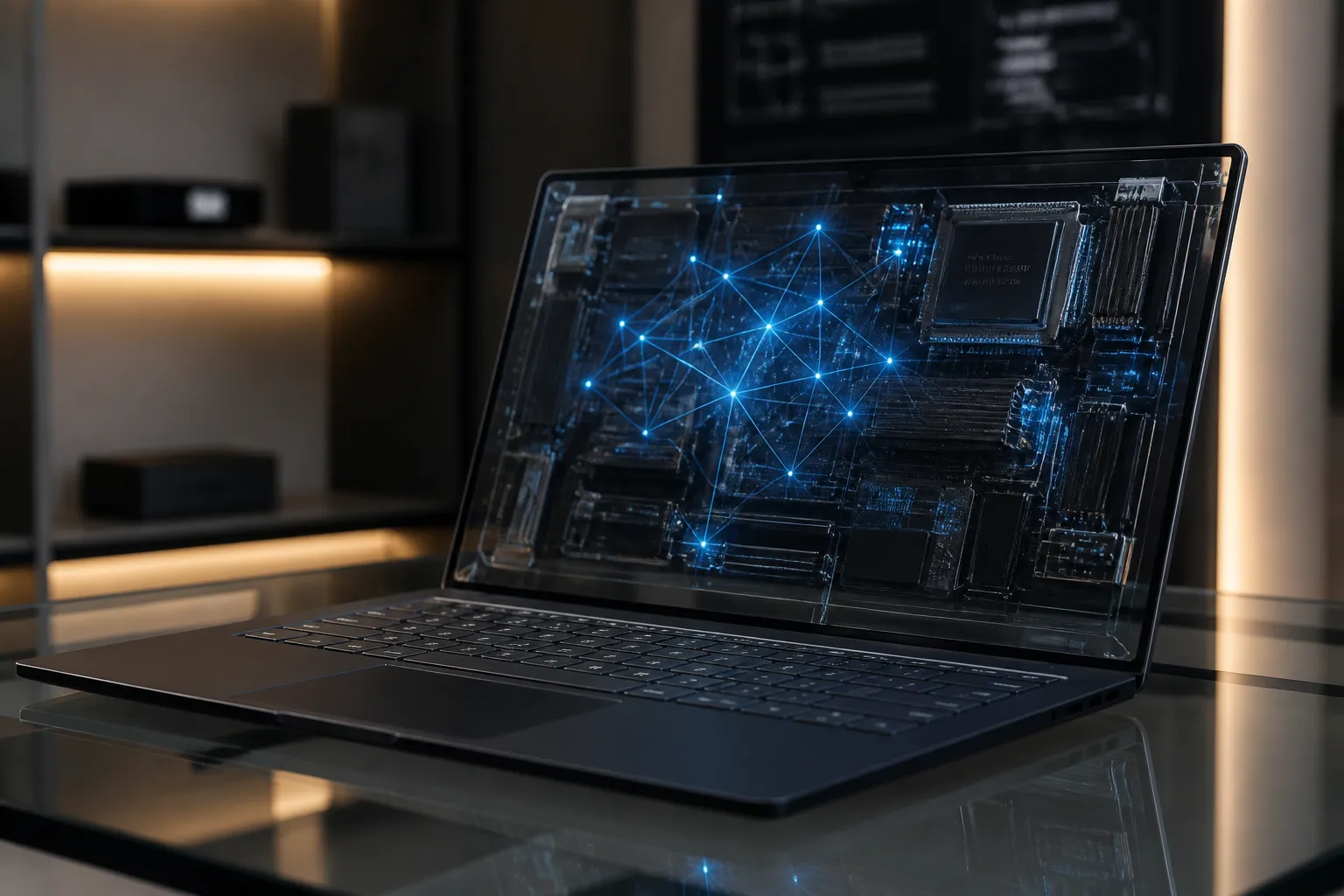
The core of the strategy is the NPU, which Microsoft says will handle tasks such as risk assessment, design applications, and workflow automation without a network connection. The company also emphasizes the enduring Surface focus on premium build quality: every device undergoes extensive testing—from hinge cycles to keyboard wear and moisture exposure—to ensure it can survive daily use. Engineers have fine‑tuned the click of a closing hinge and the tactile feel of the keyboard, underscoring attention to detail.
Two new models anchor the announcement. The Surface Ultra is marketed as a high‑performance machine for creators and developers, boasting up to 128 GB of unified memory, NVIDIA’s RTX Spark GPU, and a petaflop of AI compute. Microsoft says the device will allow professionals to run large models locally, reducing reliance on cloud infrastructure. The Surface Laptop Ultra, a premium laptop, will launch locally in South Africa, though pricing and release dates remain undisclosed. It targets heavy workloads such as video editing, 3D rendering, and AI development while addressing cloud costs and data privacy.
Both new devices are part of a broader push for on‑device AI. According to reports, the four new models—Surface Laptop for Business in 13‑inch, 13.8‑inch, and 15‑inch, and Surface Pro for Business in 13‑inch—are Copilot+ PCs. They contain on‑device NPUs that can run AI features like Fluid Dictation and Click‑to‑Do. Earlier Surface models, such as the Surface Pro 10, already incorporated an NPU via Intel’s AI Boost engine, and the Surface Pro 11 introduced a built‑in NPU for generative AI through Microsoft Copilot+.
The Sandton event also highlighted Microsoft’s exclusive distribution partnership in South Africa. While the Surface Ultra is positioned as an “Apple MacBook killer,” the company acknowledges that premium pricing could limit adoption in the country’s cost‑sensitive market. In South Africa, the Surface line competes in a crowded premium laptop and tablet market dominated by Apple’s MacBook range, Lenovo’s ThinkPad series, and high‑end HP and Dell devices. Rivals often win on price flexibility and established brand loyalty, and affordability and after‑sales support remain decisive factors.
Microsoft’s challenge is convincing cost‑sensitive buyers that the added AI capabilities, design detail, and durability justify the higher price point. The arrival of the Laptop Ultra signals the company’s intent to expand its premium Surface line in South Africa, but whether businesses and consumers will embrace the higher‑priced devices remains an open question.
In summary, Microsoft is positioning on‑device AI as the defining feature of its Surface hardware. The company’s strategy to embed NPUs, coupled with high‑performance GPUs and unified memory, aims to let professionals run large models locally, reduce cloud costs, and protect data privacy. The Surface Ultra and Surface Laptop Ultra will launch in South Africa, with pricing and release dates pending. The broader impact of these devices will depend on how well Microsoft can demonstrate the tangible benefits of on‑device AI to a market that values both performance and affordability.
"We’re moving AI into the hardware that people carry with them," said John Press, head of Microsoft Surface at Core Group. Press explained that the trend toward on‑device AI is driven by businesses that are increasingly wary of rising token costs for cloud‑based models and of sending sensitive data to the cloud. By pushing repetitive workloads onto the device, Microsoft hopes to make Surface products more efficient and cost‑effective.
The core of the strategy is the NPU, which Microsoft says will handle tasks such as risk assessment, design applications, and workflow automation without a network connection. The company also emphasizes the enduring Surface focus on premium build quality: every device undergoes extensive testing—from hinge cycles to keyboard wear and moisture exposure—to ensure it can survive daily use. Engineers have fine‑tuned the click of a closing hinge and the tactile feel of the keyboard, underscoring attention to detail.
Two new models anchor the announcement. The Surface Ultra is marketed as a high‑performance machine for creators and developers, boasting up to 128 GB of unified memory, NVIDIA’s RTX Spark GPU, and a petaflop of AI compute. Microsoft says the device will allow professionals to run large models locally, reducing reliance on cloud infrastructure. The Surface Laptop Ultra, a premium laptop, will launch locally in South Africa, though pricing and release dates remain undisclosed. It targets heavy workloads such as video editing, 3D rendering, and AI development while addressing cloud costs and data privacy.
Both new devices are part of a broader push for on‑device AI. According to reports, the four new models—Surface Laptop for Business in 13‑inch, 13.8‑inch, and 15‑inch, and Surface Pro for Business in 13‑inch—are Copilot+ PCs. They contain on‑device NPUs that can run AI features like Fluid Dictation and Click‑to‑Do. Earlier Surface models, such as the Surface Pro 10, already incorporated an NPU via Intel’s AI Boost engine, and the Surface Pro 11 introduced a built‑in NPU for generative AI through Microsoft Copilot+.
The Sandton event also highlighted Microsoft’s exclusive distribution partnership in South Africa. While the Surface Ultra is positioned as an “Apple MacBook killer,” the company acknowledges that premium pricing could limit adoption in the country’s cost‑sensitive market. In South Africa, the Surface line competes in a crowded premium laptop and tablet market dominated by Apple’s MacBook range, Lenovo’s ThinkPad series, and high‑end HP and Dell devices. Rivals often win on price flexibility and established brand loyalty, and affordability and after‑sales support remain decisive factors.
Microsoft’s challenge is convincing cost‑sensitive buyers that the added AI capabilities, design detail, and durability justify the higher price point. The arrival of the Laptop Ultra signals the company’s intent to expand its premium Surface line in South Africa, but whether businesses and consumers will embrace the higher‑priced devices remains an open question.
In summary, Microsoft is positioning on‑device AI as the defining feature of its Surface hardware. The company’s strategy to embed NPUs, coupled with high‑performance GPUs and unified memory, aims to let professionals run large models locally, reduce cloud costs, and protect data privacy. The Surface Ultra and Surface Laptop Ultra will launch in South Africa, with pricing and release dates pending. The broader impact of these devices will depend on how well Microsoft can demonstrate the tangible benefits of on‑device AI to a market that values both performance and affordability.





