Blab AI
Memory Shortage Drives AI Infrastructure Costs as Data Centers Struggle to Keep Pace
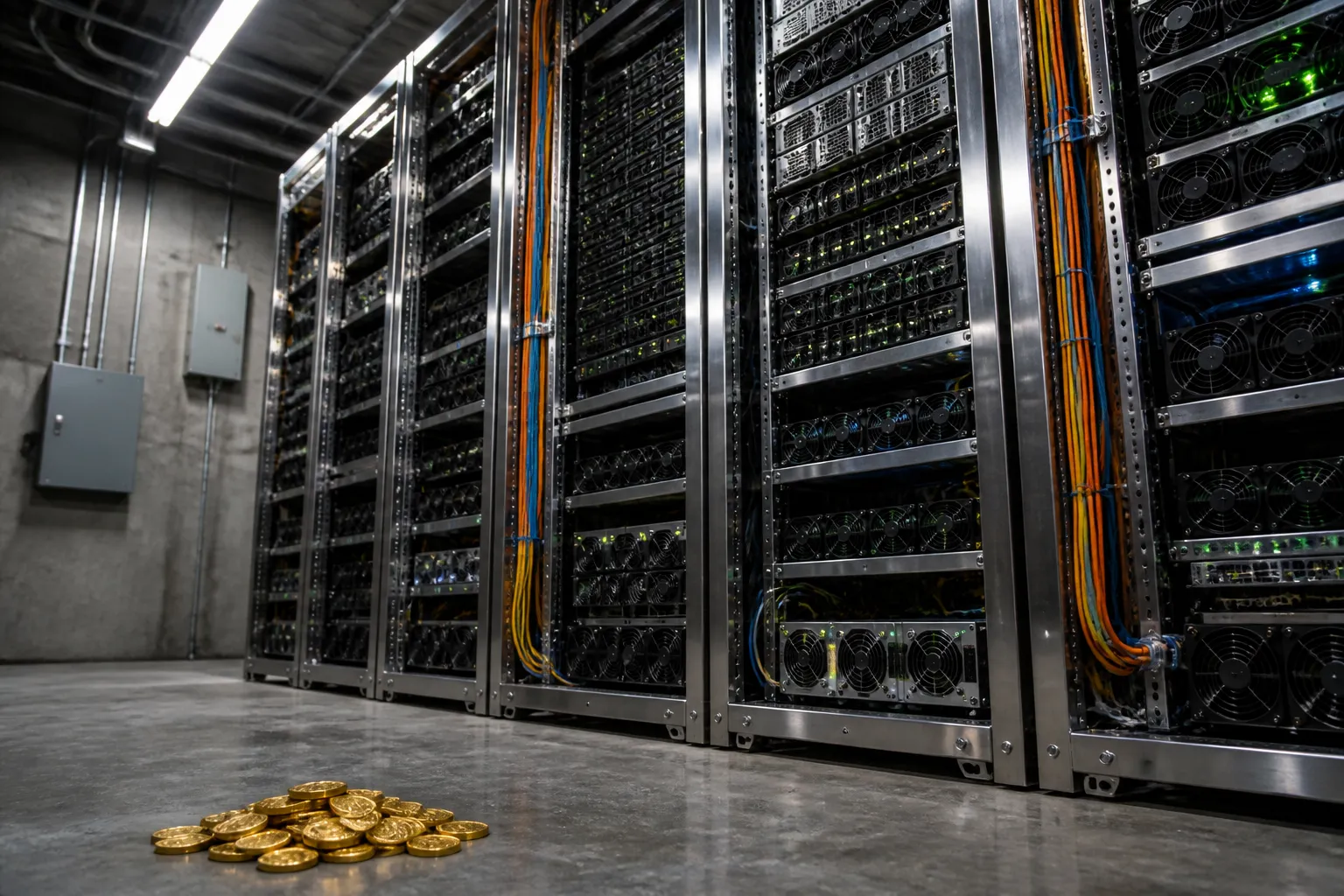
The rapid expansion of generative AI and large‑language models has turned memory into a critical bottleneck for data‑center operators. While hyperscalers such as Amazon, Microsoft, and Google are investing more than $1 trillion in AI development over the next two years, the supply of high‑bandwidth memory (HBM) and dynamic random‑access memory (DRAM) has not kept pace.
According to Fidelity managers, the demand for memory hardware is doubling each year, whereas supply is growing only 20‑30 % annually. The mismatch is expected to persist for several years. Micron, SK Hynix and Samsung – the three dominant DRAM producers – have reported price increases of over 200 % since early 2025, driven largely by AI workloads that crowd out commodity DRAM capacity.
Zach Turner, manager of Fidelity’s Capital Appreciation Fund, said the shift toward agentic AI systems – which handle increasingly complex tasks – is raising the amount of data that must fit into finite memory resources. He estimates that roughly 200 zettabytes of data are generated each year worldwide, a figure that underscores the scale of the demand pressure.
The memory crunch is not limited to DRAM. High‑bandwidth memory, used in GPUs and specialized AI accelerators, is also in short supply. In January 2026, a CNBC report highlighted that Micron, SK Hynix and Samsung were the primary suppliers of HBM, and that their limited output was pushing prices higher.
Fidelity’s investment thesis groups AI‑related businesses into three buckets based on the durability of their competitive advantages. Long‑term winners, such as semiconductor manufacturing equipment makers and chip‑testing firms, occupy critical positions in the ecosystem and are expected to benefit for years. Medium‑term winners include companies that currently enjoy supply‑demand imbalances but may see those advantages erode as new entrants or capacity expansions occur. Short‑term winners are commodity‑like suppliers whose pricing power may be fleeting.
The Capital Appreciation Fund’s top holdings illustrate the current focus on core AI infrastructure. NVIDIA (9.1 %), Amazon (6.8 %), Microsoft (4.7 %) and Apple (2.9 %) dominate the portfolio, followed by Meta, Alphabet, Western Digital, Broadcom, Alphabet C and Seagate. The overseas fund, which tracks a broader set of global companies, is heavily weighted toward ASML (4.9 %) and a mix of industrial and financial firms such as Banco Santander, Rolls‑Royce and Schneider Electric.
Vincent Montemaggiore, manager of Fidelity’s Overseas Fund, notes that the evolving power and throughput requirements of data centers are reshaping how they are built. He points out that the memory shortage is forcing operators to redesign server architectures and to invest in new packaging technologies.
Investors are also wary of the high capital spending that has fueled the AI boom. Some AI‑related stocks have pulled back amid concerns that debt levels are rising and that the return on investment may lag behind expectations. Turner cautions that the market can become overly euphoric, and that a retracement is a natural correction.
The memory crisis has broader implications. It is pushing up the cost of consumer electronics, as phone and laptop manufacturers must purchase more expensive memory chips to meet demand. It also raises cybersecurity concerns, because larger memory footprints can increase the attack surface for data‑center operators.
In short, the AI infrastructure buildout is outpacing the supply of memory, creating a persistent bottleneck that is reshaping data‑center design, inflating component costs and influencing investment decisions. Fidelity’s focus on long‑term winners in the semiconductor and memory supply chain reflects a belief that these companies will continue to benefit as AI adoption deepens.
The next few months will test whether the memory shortage continues to widen, whether new production capacity can be ramped up, and how quickly data‑center operators can adapt their architectures. The outcome will have a direct impact on the cost of AI services and on the broader technology ecosystem.
According to Fidelity managers, the demand for memory hardware is doubling each year, whereas supply is growing only 20‑30 % annually. The mismatch is expected to persist for several years. Micron, SK Hynix and Samsung – the three dominant DRAM producers – have reported price increases of over 200 % since early 2025, driven largely by AI workloads that crowd out commodity DRAM capacity.
Zach Turner, manager of Fidelity’s Capital Appreciation Fund, said the shift toward agentic AI systems – which handle increasingly complex tasks – is raising the amount of data that must fit into finite memory resources. He estimates that roughly 200 zettabytes of data are generated each year worldwide, a figure that underscores the scale of the demand pressure.
The memory crunch is not limited to DRAM. High‑bandwidth memory, used in GPUs and specialized AI accelerators, is also in short supply. In January 2026, a CNBC report highlighted that Micron, SK Hynix and Samsung were the primary suppliers of HBM, and that their limited output was pushing prices higher.
Fidelity’s investment thesis groups AI‑related businesses into three buckets based on the durability of their competitive advantages. Long‑term winners, such as semiconductor manufacturing equipment makers and chip‑testing firms, occupy critical positions in the ecosystem and are expected to benefit for years. Medium‑term winners include companies that currently enjoy supply‑demand imbalances but may see those advantages erode as new entrants or capacity expansions occur. Short‑term winners are commodity‑like suppliers whose pricing power may be fleeting.
The Capital Appreciation Fund’s top holdings illustrate the current focus on core AI infrastructure. NVIDIA (9.1 %), Amazon (6.8 %), Microsoft (4.7 %) and Apple (2.9 %) dominate the portfolio, followed by Meta, Alphabet, Western Digital, Broadcom, Alphabet C and Seagate. The overseas fund, which tracks a broader set of global companies, is heavily weighted toward ASML (4.9 %) and a mix of industrial and financial firms such as Banco Santander, Rolls‑Royce and Schneider Electric.
Vincent Montemaggiore, manager of Fidelity’s Overseas Fund, notes that the evolving power and throughput requirements of data centers are reshaping how they are built. He points out that the memory shortage is forcing operators to redesign server architectures and to invest in new packaging technologies.
Investors are also wary of the high capital spending that has fueled the AI boom. Some AI‑related stocks have pulled back amid concerns that debt levels are rising and that the return on investment may lag behind expectations. Turner cautions that the market can become overly euphoric, and that a retracement is a natural correction.
The memory crisis has broader implications. It is pushing up the cost of consumer electronics, as phone and laptop manufacturers must purchase more expensive memory chips to meet demand. It also raises cybersecurity concerns, because larger memory footprints can increase the attack surface for data‑center operators.
In short, the AI infrastructure buildout is outpacing the supply of memory, creating a persistent bottleneck that is reshaping data‑center design, inflating component costs and influencing investment decisions. Fidelity’s focus on long‑term winners in the semiconductor and memory supply chain reflects a belief that these companies will continue to benefit as AI adoption deepens.
The next few months will test whether the memory shortage continues to widen, whether new production capacity can be ramped up, and how quickly data‑center operators can adapt their architectures. The outcome will have a direct impact on the cost of AI services and on the broader technology ecosystem.





