Blab AI
Palantirs Role in Ukraine Raises Questions About Data Ownership and Value
On 2 June 2022, Alex Karp, chief executive of Palantir Technologies, became the first Western corporate CEO to step into Kyiv and meet President Volodymyr Zelenskyy after Russia’s full‑scale invasion had begun. The meeting, joined by Minister of Digital Transformation Mykhailo Fedorov, centered on cooperation in defence, security and digitalisation. Karp even floated the idea of a Palantir office in Ukraine and joint development projects with local specialists.
Palantir’s flagship offering is software that stitches together disparate data streams and exposes hidden relationships for decision‑makers. In civilian markets the firm serves supply‑chain, manufacturing and healthcare clients; in military settings it powers intelligence, targeting and battlefield awareness. The company’s involvement in Ukraine has grown well beyond the initial talks.
In May 2023 the Ministry of Digital Transformation signed a memorandum covering defence and reconstruction that framed Palantir as a partner to several state institutions and a conduit for “data and experience.” The agreement envisions Palantir technology being used for military purposes, for assessing damage, and for planning reconstruction and urban development.
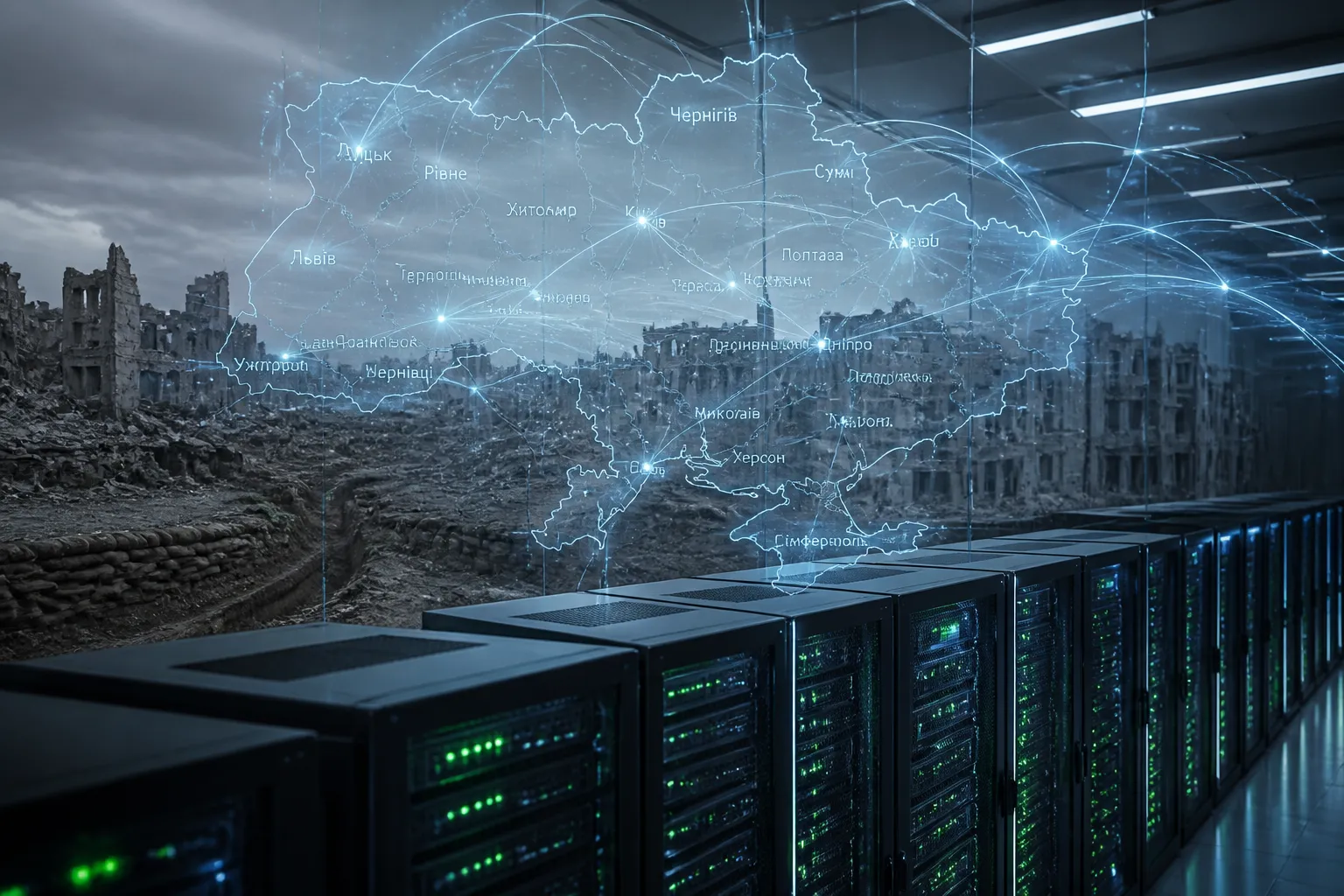
The war has produced an unprecedented volume of battlefield data. Every drone flight, missile interception, artillery strike and satellite image generates information that, when aggregated, can train artificial‑intelligence (AI) systems. In January 2026 the Ukrainian Ministry of Defence launched Brave1 Dataroom—a secure environment built in collaboration with the Ministry of Digital Transformation, the Armed Forces, military‑intelligence researchers and Palantir. The platform lets AI systems be trained and tested on real‑world combat data.
By June 2026 more than 100 Ukrainian companies had access to the Dataroom. The datasets include visual and thermal observations of aerial targets collected under varied weather, times of day and sensor systems. The Ministry said the data were used to improve autonomous recognition and interception of Russian drones and described millions of annotated frames from actual sorties being made available for AI training.
The value of such data lies in its realism. Ten million photographs of an aircraft against a clear sky are far less useful to a military vision system than images taken at night, in cloud, through thermal sensors, partially obscured or mixed with false positives. The Ukrainian battlefield provides precisely this variety, turning loss and destruction into a source of training material.
Palantir’s financial trajectory mirrors its expanding defence role. Revenue rose from $2.87 billion in 2024 to $4.48 billion in 2025—a 56 % increase. Government customers accounted for 54 % of 2025 revenue, with U.S. government clients alone contributing about $1.9 billion. By September 2026 Palantir’s market capitalisation reached roughly $440 billion, a significant rise since its 2020 debut.
The company’s prominence in U.S. defence procurement has been highlighted by public statements. On 10 April 2026 President Donald Trump praised Palantir on Truth Social for its war‑fighting capabilities, a comment that coincided with a narrowing of the company’s share price decline.
In early September 2026 Mykhailo Fedorov announced the creation of a new defence‑technology company, with Alex Karp as its first major investor. Fedorov, who served as Minister of Digital Transformation and Deputy Prime Minister, had overseen the partnership with Palantir that led to the Brave1 Dataroom. The arrangement raises questions about the use of state‑generated data in private ventures and the extent of Ukraine’s rights over derivative models and improvements.
The situation illustrates the broader issue of wartime data sovereignty. While Ukraine has received substantial Western military aid, it has also supplied the West with a laboratory of real‑world combat data. The data have enabled the development of AI systems that may be used in future conflicts, potentially benefiting foreign militaries.
Ukraine’s next steps involve clarifying the legal status of battlefield data shared with Palantir and other companies. An independent audit could identify which categories of data have been made available, under what contractual terms, and what rights Ukraine retains over derivative models. Such transparency would help ensure that the knowledge gained from Ukraine’s resistance is not used to create commercial advantages without appropriate recognition or compensation.
The war’s legacy may therefore include not only rebuilt infrastructure but also a unique dataset that could shape future AI‑driven defence systems worldwide. The question remains: how much of that value belongs to Ukraine and how much to the private firms that have processed it.
Palantir’s flagship offering is software that stitches together disparate data streams and exposes hidden relationships for decision‑makers. In civilian markets the firm serves supply‑chain, manufacturing and healthcare clients; in military settings it powers intelligence, targeting and battlefield awareness. The company’s involvement in Ukraine has grown well beyond the initial talks.
In May 2023 the Ministry of Digital Transformation signed a memorandum covering defence and reconstruction that framed Palantir as a partner to several state institutions and a conduit for “data and experience.” The agreement envisions Palantir technology being used for military purposes, for assessing damage, and for planning reconstruction and urban development.
The war has produced an unprecedented volume of battlefield data. Every drone flight, missile interception, artillery strike and satellite image generates information that, when aggregated, can train artificial‑intelligence (AI) systems. In January 2026 the Ukrainian Ministry of Defence launched Brave1 Dataroom—a secure environment built in collaboration with the Ministry of Digital Transformation, the Armed Forces, military‑intelligence researchers and Palantir. The platform lets AI systems be trained and tested on real‑world combat data.
By June 2026 more than 100 Ukrainian companies had access to the Dataroom. The datasets include visual and thermal observations of aerial targets collected under varied weather, times of day and sensor systems. The Ministry said the data were used to improve autonomous recognition and interception of Russian drones and described millions of annotated frames from actual sorties being made available for AI training.
The value of such data lies in its realism. Ten million photographs of an aircraft against a clear sky are far less useful to a military vision system than images taken at night, in cloud, through thermal sensors, partially obscured or mixed with false positives. The Ukrainian battlefield provides precisely this variety, turning loss and destruction into a source of training material.
Palantir’s financial trajectory mirrors its expanding defence role. Revenue rose from $2.87 billion in 2024 to $4.48 billion in 2025—a 56 % increase. Government customers accounted for 54 % of 2025 revenue, with U.S. government clients alone contributing about $1.9 billion. By September 2026 Palantir’s market capitalisation reached roughly $440 billion, a significant rise since its 2020 debut.
The company’s prominence in U.S. defence procurement has been highlighted by public statements. On 10 April 2026 President Donald Trump praised Palantir on Truth Social for its war‑fighting capabilities, a comment that coincided with a narrowing of the company’s share price decline.
In early September 2026 Mykhailo Fedorov announced the creation of a new defence‑technology company, with Alex Karp as its first major investor. Fedorov, who served as Minister of Digital Transformation and Deputy Prime Minister, had overseen the partnership with Palantir that led to the Brave1 Dataroom. The arrangement raises questions about the use of state‑generated data in private ventures and the extent of Ukraine’s rights over derivative models and improvements.
The situation illustrates the broader issue of wartime data sovereignty. While Ukraine has received substantial Western military aid, it has also supplied the West with a laboratory of real‑world combat data. The data have enabled the development of AI systems that may be used in future conflicts, potentially benefiting foreign militaries.
Ukraine’s next steps involve clarifying the legal status of battlefield data shared with Palantir and other companies. An independent audit could identify which categories of data have been made available, under what contractual terms, and what rights Ukraine retains over derivative models. Such transparency would help ensure that the knowledge gained from Ukraine’s resistance is not used to create commercial advantages without appropriate recognition or compensation.
The war’s legacy may therefore include not only rebuilt infrastructure but also a unique dataset that could shape future AI‑driven defence systems worldwide. The question remains: how much of that value belongs to Ukraine and how much to the private firms that have processed it.





