Blab AI
Hawaii University Secures $2 Million NSF Grant to Build AI-Enabled Food-Safety Early-Warning System
The University of Hawaiʻi at Mānoa has been awarded $2 million by the National Science Foundation (NSF) to lead a four‑year, multi‑institutional project that will develop artificial intelligence tools to detect environmental threats to food production before they become major problems. The award, part of a $4 million EPSCoR Track II Focused EPSCoR Collaboration, is shared with the University of Nebraska–Lincoln and begins on September 1, 2026. The initiative comes amid ongoing investigations into cyclospora outbreaks that have highlighted the need for faster, proactive food‑safety monitoring.
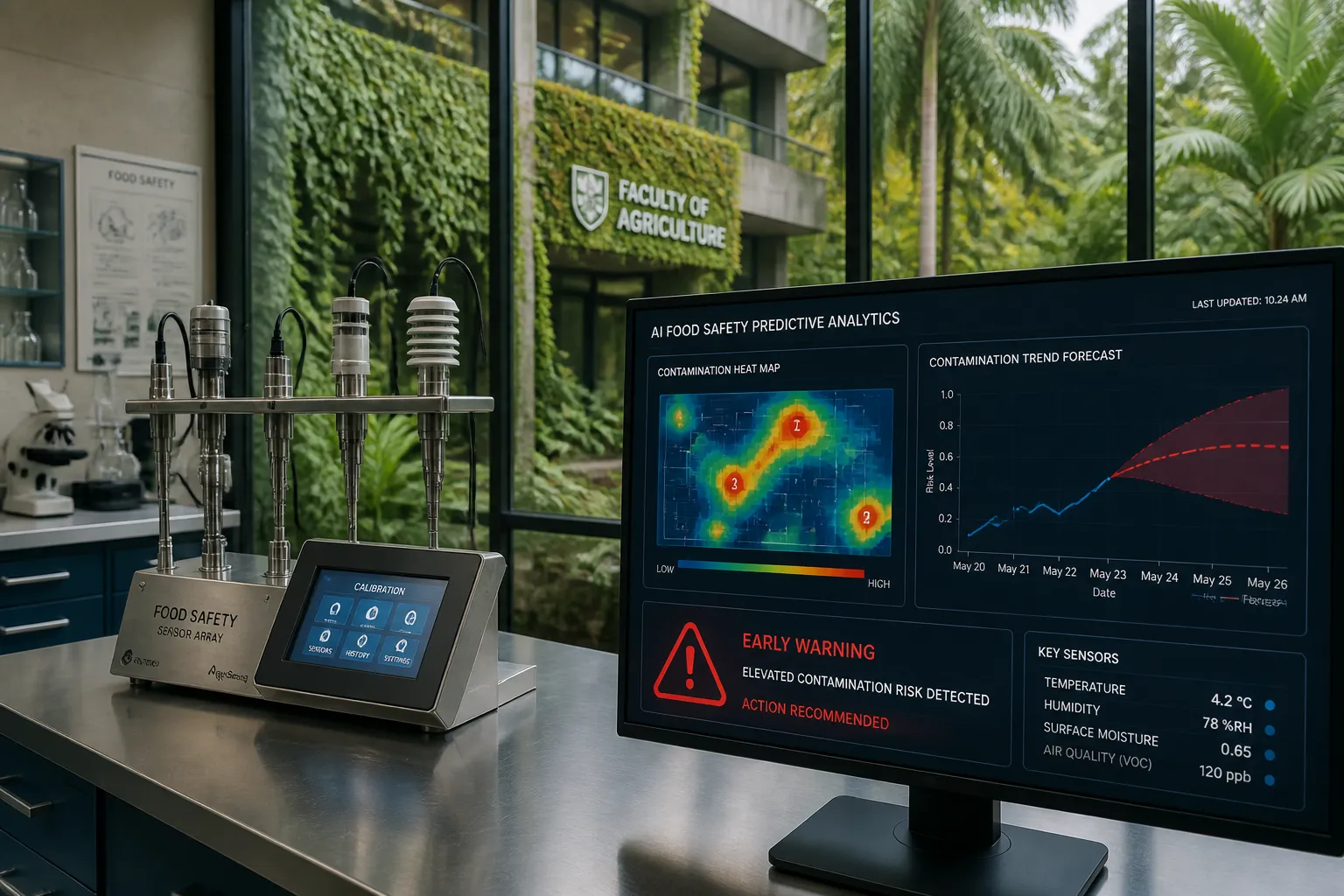
The project will combine AI, environmental sampling, advanced genetic analysis and high‑resolution chemical analysis to identify and monitor risks to aquaculture, livestock and agricultural systems. Researchers will develop new AI models that interpret complex biological and chemical data, including metagenomic sequences and mass‑spectrometry profiles. By continuously analyzing environmental data, the system aims to flag warning signs before pathogens or contaminants reach harmful levels.
Principal investigator Tao Yan, director of the Water Resources Research Center and professor in the Department of Civil, Environmental and Construction Engineering, will coordinate a team that includes researchers from UH’s College of Engineering, UH Cancer Center, School of Ocean and Earth Science and Technology, and College of Tropical Agriculture and Human Resilience. The collaboration also involves faculty from the University of Nebraska–Lincoln, bringing expertise in animal science and agricultural engineering.
Current monitoring methods often identify problems only after disease outbreaks occur or contaminants have reached dangerous concentrations. The proposed AI‑enabled approach seeks to shift the focus from reactive to proactive, providing early warnings that could help farmers and regulators take preventive action. Pilot tests will be conducted in aquaculture facilities and beef cattle production systems, with the goal of improving food safety, protecting animal health and increasing the resilience of food production systems.
In addition to research, the partnership will support STEM education and workforce development. Opportunities will be offered to junior faculty, graduate and undergraduate students, and K‑12 participants. Outreach efforts will engage industry partners, regulators and local communities to encourage adoption of the new technologies.
The project marks only the second time UH Mānoa has received an NSF EPSCoR Track II Focused EPSCoR Collaboration award, underscoring the university’s growing research capacity in the region. By building research capacity in both Hawaiʻi and Nebraska, the collaboration aims to create a long‑term partnership focused on using AI and biotechnology to address food‑system challenges.
At present, the project is in the planning stage, with the first grant disbursement scheduled for September 2026. The team will begin data collection and model development in the coming months, with pilot testing expected to start in late 2027. Unresolved questions include the scalability of the AI models across diverse food‑production environments and the integration of the system into existing monitoring workflows.
The NSF award reflects a broader trend of federal investment in AI‑driven solutions for public health and food safety. As the project progresses, its findings could inform policy and industry practices, potentially leading to earlier detection of foodborne threats and reduced outbreak impact.
The project will combine AI, environmental sampling, advanced genetic analysis and high‑resolution chemical analysis to identify and monitor risks to aquaculture, livestock and agricultural systems. Researchers will develop new AI models that interpret complex biological and chemical data, including metagenomic sequences and mass‑spectrometry profiles. By continuously analyzing environmental data, the system aims to flag warning signs before pathogens or contaminants reach harmful levels.
Principal investigator Tao Yan, director of the Water Resources Research Center and professor in the Department of Civil, Environmental and Construction Engineering, will coordinate a team that includes researchers from UH’s College of Engineering, UH Cancer Center, School of Ocean and Earth Science and Technology, and College of Tropical Agriculture and Human Resilience. The collaboration also involves faculty from the University of Nebraska–Lincoln, bringing expertise in animal science and agricultural engineering.
Current monitoring methods often identify problems only after disease outbreaks occur or contaminants have reached dangerous concentrations. The proposed AI‑enabled approach seeks to shift the focus from reactive to proactive, providing early warnings that could help farmers and regulators take preventive action. Pilot tests will be conducted in aquaculture facilities and beef cattle production systems, with the goal of improving food safety, protecting animal health and increasing the resilience of food production systems.
In addition to research, the partnership will support STEM education and workforce development. Opportunities will be offered to junior faculty, graduate and undergraduate students, and K‑12 participants. Outreach efforts will engage industry partners, regulators and local communities to encourage adoption of the new technologies.
The project marks only the second time UH Mānoa has received an NSF EPSCoR Track II Focused EPSCoR Collaboration award, underscoring the university’s growing research capacity in the region. By building research capacity in both Hawaiʻi and Nebraska, the collaboration aims to create a long‑term partnership focused on using AI and biotechnology to address food‑system challenges.
At present, the project is in the planning stage, with the first grant disbursement scheduled for September 2026. The team will begin data collection and model development in the coming months, with pilot testing expected to start in late 2027. Unresolved questions include the scalability of the AI models across diverse food‑production environments and the integration of the system into existing monitoring workflows.
The NSF award reflects a broader trend of federal investment in AI‑driven solutions for public health and food safety. As the project progresses, its findings could inform policy and industry practices, potentially leading to earlier detection of foodborne threats and reduced outbreak impact.





