Blab AI
New York City Bans Student-Facing Generative AI for Elementary and Middle Schools
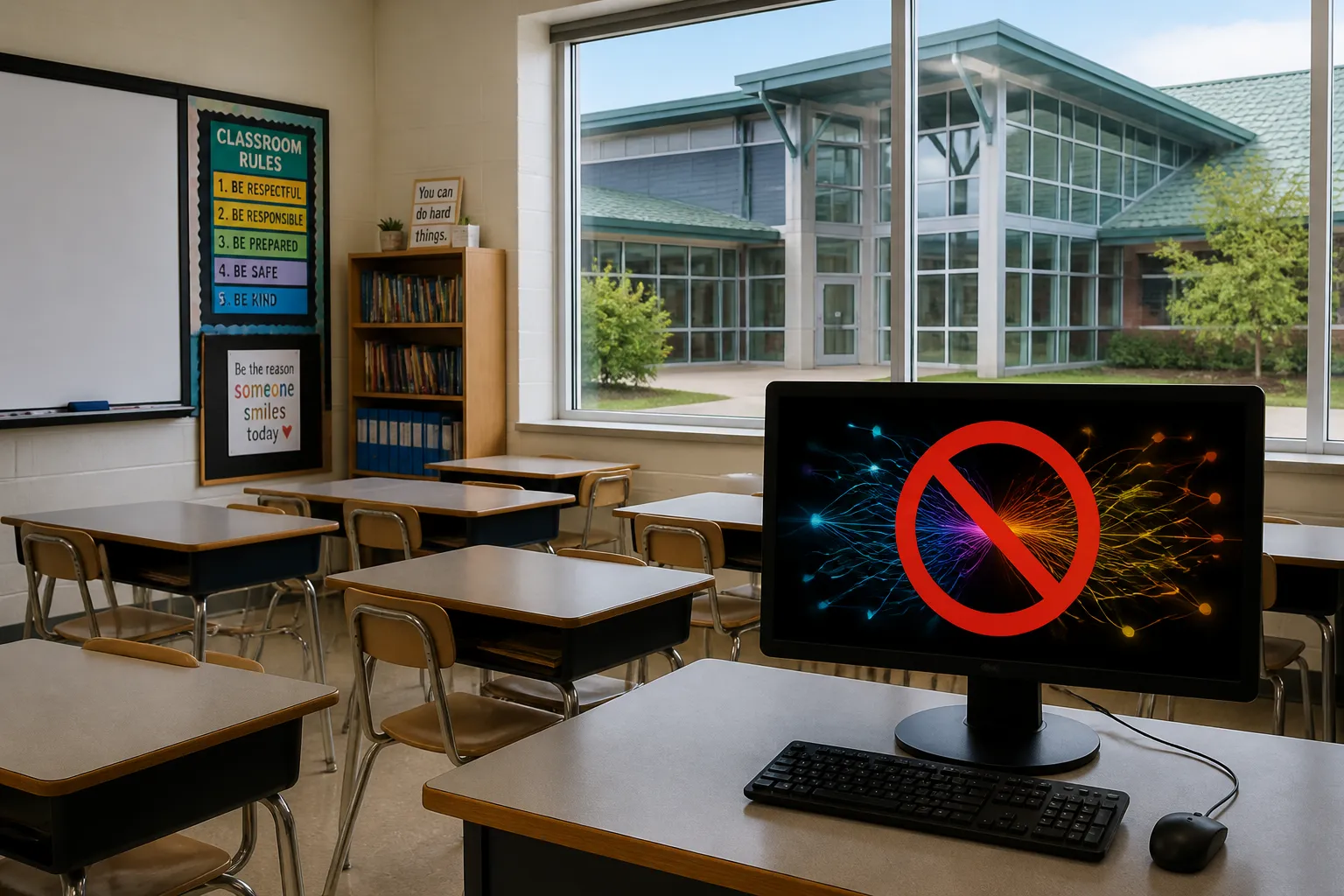
In a decisive move, New York City has imposed a one‑year ban on student‑facing generative artificial intelligence (AI) for children from kindergarten through eighth grade, beginning with the 2026‑27 school year. The policy will affect roughly 600,000 public‑school students—about two‑thirds of the city’s enrollment—and is accompanied by fresh screen‑time limits and a limited pilot for high‑school classrooms.
Under the moratorium, any software that employs generative AI for students in the affected grades, including companion chatbots, is prohibited. Teachers, however, may still use AI for lesson planning and administrative work, provided the tools meet the district’s safety standards. The city also carved out exceptions for assistive technology for students with disabilities, multilingual learners, and career‑readiness programs.
In addition to the ban, the city will impose age‑appropriate screen‑time restrictions. Students in grades three through five may use no more than 30 minutes of one‑to‑one screen time per day, while those in grades six through eight may use up to 45 minutes. Kindergarten and second‑grade students will be limited to 30 minutes of screen time overall.
High‑school students will receive twice‑yearly AI literacy modules. Each 45‑minute session will cover what AI is and is not, bias, ethical considerations, and the impact of AI on future careers. A limited pilot program will allow up to 50,000 high‑school students—about 5% of the public‑school body—to use five vetted AI tools under teacher supervision. The tools, selected for safety, data privacy, and teacher‑guided instruction, include Quill, Edia, Brisk Teaching, Playlab, and Intel AI‑Ready Schools.
All technology used in the district will undergo a comprehensive review. Vendors must demonstrate safety, transparency, ethical use, and evidence of learning impact. Tools that are not deemed mission‑critical will be barred.
The policy was announced by Mayor Zohran Kwame Mamdani and Schools Chancellor Kamar H. Samuels. The mayor said the city’s priority is “human connection” and that the moratorium would allow the district to study AI’s impact. The chancellor added that the city is “protecting what makes learning work” while ensuring students develop critical‑thinking skills.
The city will form a Technology in Schools Coalition, composed of students, educators, parents, elected officials, advocates, unions, and experts. The coalition will meet throughout the 2026‑27 school year to evaluate the moratorium and pilots, and it will publish a report with recommendations.
The policy is the most expansive student‑facing AI moratorium in the United States. It follows growing concerns about AI’s influence on learning, screen‑time addiction, and data privacy. By limiting AI exposure for younger students while providing structured AI education for older students, the city aims to balance innovation with student safety.
The announcement comes as the city’s public‑school system, the largest in the country, continues to grapple with technology integration. The policy reflects a broader trend of local governments reassessing AI’s role in education.
The city’s decision will be closely watched by other districts, policymakers, and technology vendors as it seeks to establish a framework for responsible AI use in schools.
Under the moratorium, any software that employs generative AI for students in the affected grades, including companion chatbots, is prohibited. Teachers, however, may still use AI for lesson planning and administrative work, provided the tools meet the district’s safety standards. The city also carved out exceptions for assistive technology for students with disabilities, multilingual learners, and career‑readiness programs.
In addition to the ban, the city will impose age‑appropriate screen‑time restrictions. Students in grades three through five may use no more than 30 minutes of one‑to‑one screen time per day, while those in grades six through eight may use up to 45 minutes. Kindergarten and second‑grade students will be limited to 30 minutes of screen time overall.
High‑school students will receive twice‑yearly AI literacy modules. Each 45‑minute session will cover what AI is and is not, bias, ethical considerations, and the impact of AI on future careers. A limited pilot program will allow up to 50,000 high‑school students—about 5% of the public‑school body—to use five vetted AI tools under teacher supervision. The tools, selected for safety, data privacy, and teacher‑guided instruction, include Quill, Edia, Brisk Teaching, Playlab, and Intel AI‑Ready Schools.
All technology used in the district will undergo a comprehensive review. Vendors must demonstrate safety, transparency, ethical use, and evidence of learning impact. Tools that are not deemed mission‑critical will be barred.
The policy was announced by Mayor Zohran Kwame Mamdani and Schools Chancellor Kamar H. Samuels. The mayor said the city’s priority is “human connection” and that the moratorium would allow the district to study AI’s impact. The chancellor added that the city is “protecting what makes learning work” while ensuring students develop critical‑thinking skills.
The city will form a Technology in Schools Coalition, composed of students, educators, parents, elected officials, advocates, unions, and experts. The coalition will meet throughout the 2026‑27 school year to evaluate the moratorium and pilots, and it will publish a report with recommendations.
The policy is the most expansive student‑facing AI moratorium in the United States. It follows growing concerns about AI’s influence on learning, screen‑time addiction, and data privacy. By limiting AI exposure for younger students while providing structured AI education for older students, the city aims to balance innovation with student safety.
The announcement comes as the city’s public‑school system, the largest in the country, continues to grapple with technology integration. The policy reflects a broader trend of local governments reassessing AI’s role in education.
The city’s decision will be closely watched by other districts, policymakers, and technology vendors as it seeks to establish a framework for responsible AI use in schools.





