Blab AI
Higher Education Adopts AI Policies to Balance Automation and Human Support
Across campus, the hum of keyboards has given way to the soft chime of AI assistants. In the past two years, colleges and universities have raced to embed conversational AI tools into every corner of the student experience. A survey by student‑support platform Chegg in October 2024 revealed that roughly 80 % of undergraduates now use AI in their studies, and about half of institutions have rolled out these tools on an institution‑wide basis. The momentum has shifted leadership’s focus from “what can AI do?” to “where should it be used and where should a human remain involved?”
The urgency of that question is underscored by stark statistics. According to the National Student Clearinghouse Research Center, nearly 40 % of students who begin college fail to earn a degree within six years. At the same time, student‑support specialists—coaches, advisers, and counselors—handle heavy caseloads, averaging almost 300 students each, based on 2021 research from Tyton Partners. These figures point to a pressing need for technology that can triage routine administrative tasks while preserving the human touch for complex, emotionally‑charged situations.
AI systems are already proving useful for early‑warning alerts, timely nudges before deadlines, and answering routine questions at any hour. Chegg’s survey also reported that more than a third of inquiries to chatbots arrive outside normal business hours, a pattern that illustrates the potential of AI to extend support beyond campus office hours. Yet experts caution that AI is not a substitute for the nuanced judgment required when a student stops attending classes or struggles with mental‑health or financial stress. “Human advisers are far better equipped to understand why a student has stopped showing up to class or to help them balance a heavy course load with the rest of their complicated lives,” the source notes.
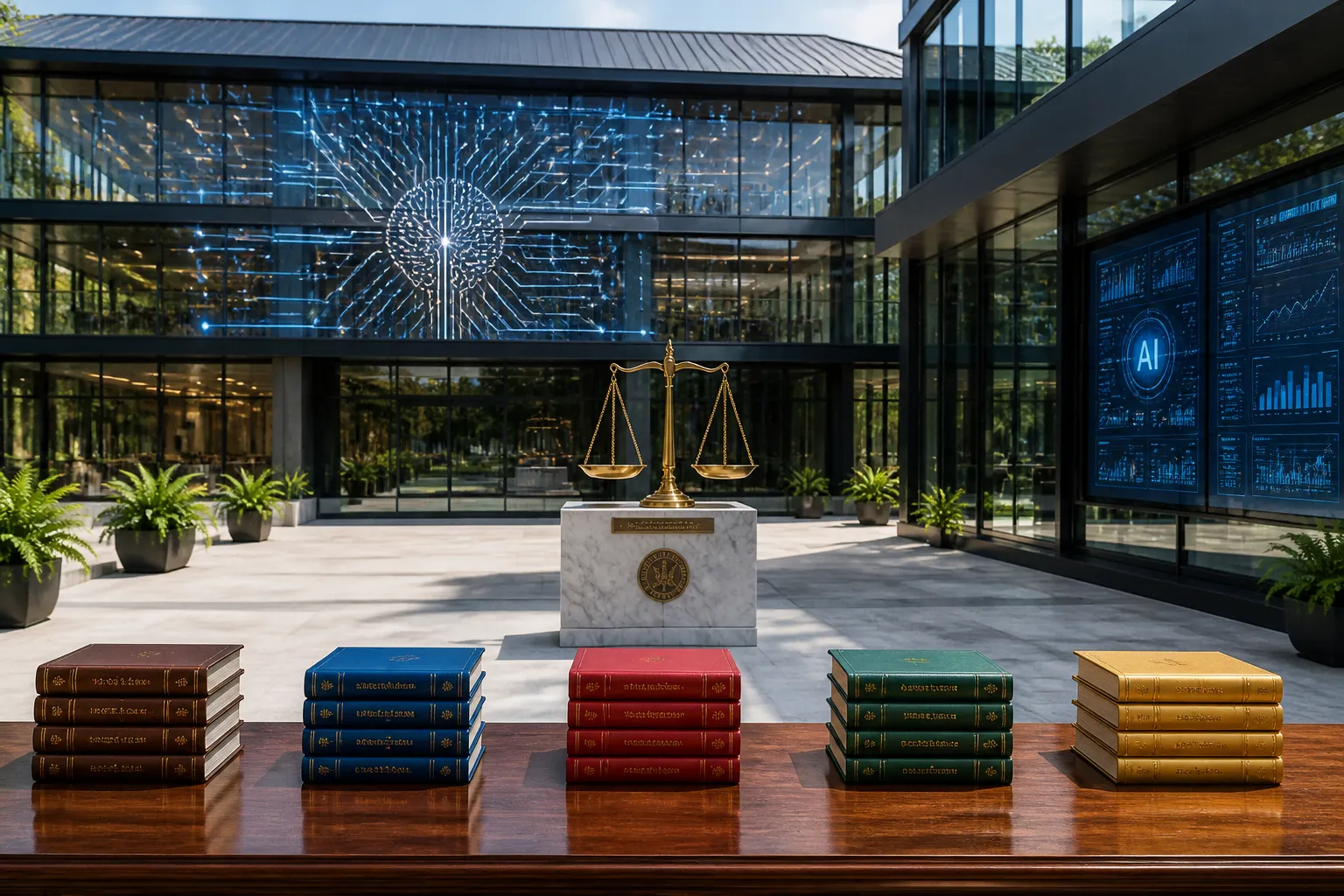
Defining clear boundaries between automated and human‑led conversations is the next hurdle. A practical example comes from National University’s Sanford College of Education in California, which recently introduced the RAISE 5 framework. The framework assigns each course one of five levels of AI integration, ranging from actively encouraged use to full prohibition. By establishing a shared standard, faculty and students receive consistent guidance on when AI can be employed and when a human touch is required.
The State University of New York (SUNY) has taken a similar approach at the system level. The university’s 64 campuses adopted a system‑wide AI policy that requires each campus to provide training and establish its own guidelines by the end of the year. The policy aims to ensure that faculty, staff, and students use AI responsibly and that governance structures are in place to monitor usage.
Both the RAISE 5 framework and SUNY’s policy illustrate a broader trend: higher‑education institutions are moving from experimentation to governance. The goal is to maximize AI’s efficiency gains—such as automating reminders for financial‑aid forms—while preserving human interaction for the moments that require empathy, judgment, and relationship building.
Ruth Bauer, president of InsideTrack, a nonprofit that has delivered one‑on‑one success coaching to more than 3 million college students since 2001, emphasizes the importance of human connection. Meanwhile, Tony Frey, president of Mainstay, an ed‑tech company that builds AI‑enabled student‑support tools, highlights the role of AI in improving enrollment, persistence, and completion.
The next phase for higher education will involve refining these governance models, measuring their impact on student outcomes, and scaling best practices across campuses. As AI tools become more sophisticated, institutions will need to continuously evaluate which conversations can be safely automated and which must remain human‑led. The balance between automation and human support will likely shape the future of student success and institutional efficiency.
The urgency of that question is underscored by stark statistics. According to the National Student Clearinghouse Research Center, nearly 40 % of students who begin college fail to earn a degree within six years. At the same time, student‑support specialists—coaches, advisers, and counselors—handle heavy caseloads, averaging almost 300 students each, based on 2021 research from Tyton Partners. These figures point to a pressing need for technology that can triage routine administrative tasks while preserving the human touch for complex, emotionally‑charged situations.
AI systems are already proving useful for early‑warning alerts, timely nudges before deadlines, and answering routine questions at any hour. Chegg’s survey also reported that more than a third of inquiries to chatbots arrive outside normal business hours, a pattern that illustrates the potential of AI to extend support beyond campus office hours. Yet experts caution that AI is not a substitute for the nuanced judgment required when a student stops attending classes or struggles with mental‑health or financial stress. “Human advisers are far better equipped to understand why a student has stopped showing up to class or to help them balance a heavy course load with the rest of their complicated lives,” the source notes.
Defining clear boundaries between automated and human‑led conversations is the next hurdle. A practical example comes from National University’s Sanford College of Education in California, which recently introduced the RAISE 5 framework. The framework assigns each course one of five levels of AI integration, ranging from actively encouraged use to full prohibition. By establishing a shared standard, faculty and students receive consistent guidance on when AI can be employed and when a human touch is required.
The State University of New York (SUNY) has taken a similar approach at the system level. The university’s 64 campuses adopted a system‑wide AI policy that requires each campus to provide training and establish its own guidelines by the end of the year. The policy aims to ensure that faculty, staff, and students use AI responsibly and that governance structures are in place to monitor usage.
Both the RAISE 5 framework and SUNY’s policy illustrate a broader trend: higher‑education institutions are moving from experimentation to governance. The goal is to maximize AI’s efficiency gains—such as automating reminders for financial‑aid forms—while preserving human interaction for the moments that require empathy, judgment, and relationship building.
Ruth Bauer, president of InsideTrack, a nonprofit that has delivered one‑on‑one success coaching to more than 3 million college students since 2001, emphasizes the importance of human connection. Meanwhile, Tony Frey, president of Mainstay, an ed‑tech company that builds AI‑enabled student‑support tools, highlights the role of AI in improving enrollment, persistence, and completion.
The next phase for higher education will involve refining these governance models, measuring their impact on student outcomes, and scaling best practices across campuses. As AI tools become more sophisticated, institutions will need to continuously evaluate which conversations can be safely automated and which must remain human‑led. The balance between automation and human support will likely shape the future of student success and institutional efficiency.





