Blab AI
Chinese AI-Hardware and Robotics Firms Shift Global Focus Amid U.S. Import Bans
On Tuesday, Goldman Sachs released a research note that charts a new chapter for Chinese exporters, calling it “Go Global 3.0.” The analysis, led by analyst Jacqueline Du, argues that Chinese firms are now aiming for overseas markets from the outset, rather than waiting to saturate the domestic scene first.
The note explains that the first two export waves were dominated by low‑cost manufacturing and the “new three” sectors—electric vehicles, lithium‑ion batteries and solar photovoltaic technology. The current wave pivots to hardware that spans the entire AI value chain, from data‑centre infrastructure to automated industrial systems. According to the report, demand abroad is fueled by supply shortages outside China and the rapid adoption of new technologies.
A standout illustration of this shift is Unitree Robotics, a Hangzhou‑based company that has positioned itself as a “born‑global” player. Unitree’s humanoid robot line has become the world’s best‑selling model, with the firm shipping more than 5,500 units last year—roughly 150 each from U.S. rivals Tesla, Figure AI and Agility Robotics, according to Omdia data. Between 2022 and 2024, Unitree’s overseas sales eclipsed domestic revenue, and global sales accounted for 44 % of the company’s total revenue in 2024.
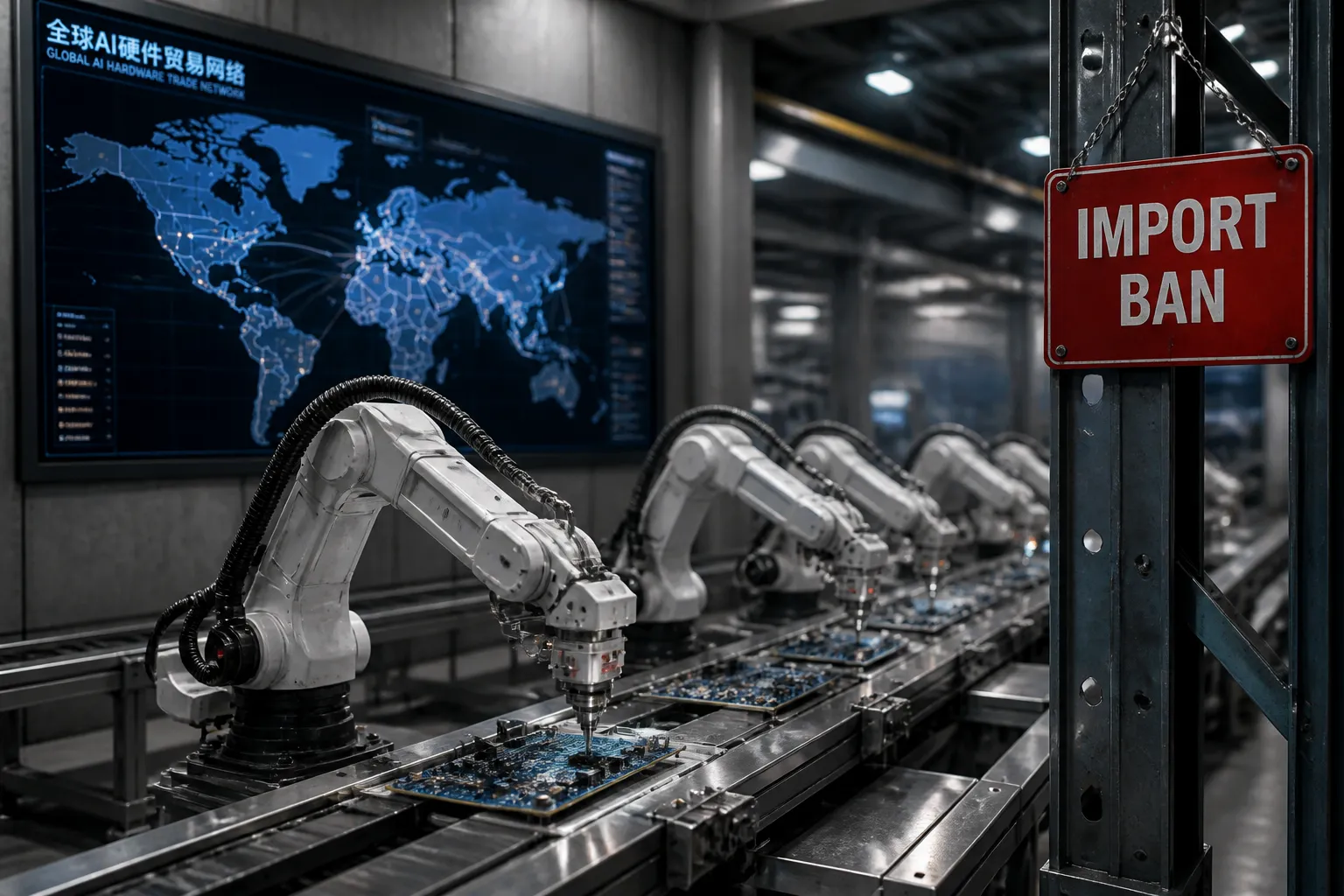
The report warns that established global players like Unitree now face heightened regulatory, trade and political risks. Late last month, the United States announced a ban on imports of new humanoid and quadruped robots from foreign manufacturers, citing “unacceptable risks” to national security. The U.S. Federal Communications Commission added a ban on imports of foreign‑produced power inverters—components used in solar panels, car batteries and data‑centre equipment.
These restrictions are expected to bar Chinese manufacturers from the American market and could strain supply‑chain relationships. The note notes that the trajectory of overseas market share and profitability for Chinese firms will increasingly be dictated by evolving policy, localisation requirements, supply‑chain restrictions and customer willingness to adopt Chinese technologies in strategically sensitive sectors.
At the same time, domestic companies that supplied critical infrastructure during global supply bottlenecks are positioned to capture mid‑term market share. The report highlights leading producers of electrical transformers and switchgear—components that help manage power grids—as examples of firms that benefited from the shortages.
Looking ahead, the note argues that long‑term competitiveness will hinge on whether Chinese exporters can translate their rapid deployment and competitive pricing into lasting advantages in product quality, ecosystem access and global services capabilities. The ability to navigate localisation mandates and to build robust after‑sales networks will be key.
In short, Chinese AI‑hardware and robotics firms are pivoting to a global strategy, with Unitree leading in humanoid robot sales. U.S. import bans on foreign robots and power inverters are reshaping the market landscape and amplifying regulatory uncertainty. The next few months will test the resilience of these firms as they adapt to new trade rules, expand their service ecosystems and compete for market share in a tightening geopolitical environment.
The note explains that the first two export waves were dominated by low‑cost manufacturing and the “new three” sectors—electric vehicles, lithium‑ion batteries and solar photovoltaic technology. The current wave pivots to hardware that spans the entire AI value chain, from data‑centre infrastructure to automated industrial systems. According to the report, demand abroad is fueled by supply shortages outside China and the rapid adoption of new technologies.
A standout illustration of this shift is Unitree Robotics, a Hangzhou‑based company that has positioned itself as a “born‑global” player. Unitree’s humanoid robot line has become the world’s best‑selling model, with the firm shipping more than 5,500 units last year—roughly 150 each from U.S. rivals Tesla, Figure AI and Agility Robotics, according to Omdia data. Between 2022 and 2024, Unitree’s overseas sales eclipsed domestic revenue, and global sales accounted for 44 % of the company’s total revenue in 2024.
The report warns that established global players like Unitree now face heightened regulatory, trade and political risks. Late last month, the United States announced a ban on imports of new humanoid and quadruped robots from foreign manufacturers, citing “unacceptable risks” to national security. The U.S. Federal Communications Commission added a ban on imports of foreign‑produced power inverters—components used in solar panels, car batteries and data‑centre equipment.
These restrictions are expected to bar Chinese manufacturers from the American market and could strain supply‑chain relationships. The note notes that the trajectory of overseas market share and profitability for Chinese firms will increasingly be dictated by evolving policy, localisation requirements, supply‑chain restrictions and customer willingness to adopt Chinese technologies in strategically sensitive sectors.
At the same time, domestic companies that supplied critical infrastructure during global supply bottlenecks are positioned to capture mid‑term market share. The report highlights leading producers of electrical transformers and switchgear—components that help manage power grids—as examples of firms that benefited from the shortages.
Looking ahead, the note argues that long‑term competitiveness will hinge on whether Chinese exporters can translate their rapid deployment and competitive pricing into lasting advantages in product quality, ecosystem access and global services capabilities. The ability to navigate localisation mandates and to build robust after‑sales networks will be key.
In short, Chinese AI‑hardware and robotics firms are pivoting to a global strategy, with Unitree leading in humanoid robot sales. U.S. import bans on foreign robots and power inverters are reshaping the market landscape and amplifying regulatory uncertainty. The next few months will test the resilience of these firms as they adapt to new trade rules, expand their service ecosystems and compete for market share in a tightening geopolitical environment.





