Blab AI
North Carolina Central University Opens First HBCU AI Research Center
On Monday, North Carolina Central University (NCCU) celebrated a milestone that reaches beyond campus borders: the opening of the Institute for Artificial Intelligence and Emerging Research (IAIER), the first dedicated AI research facility at a historically Black college or university.
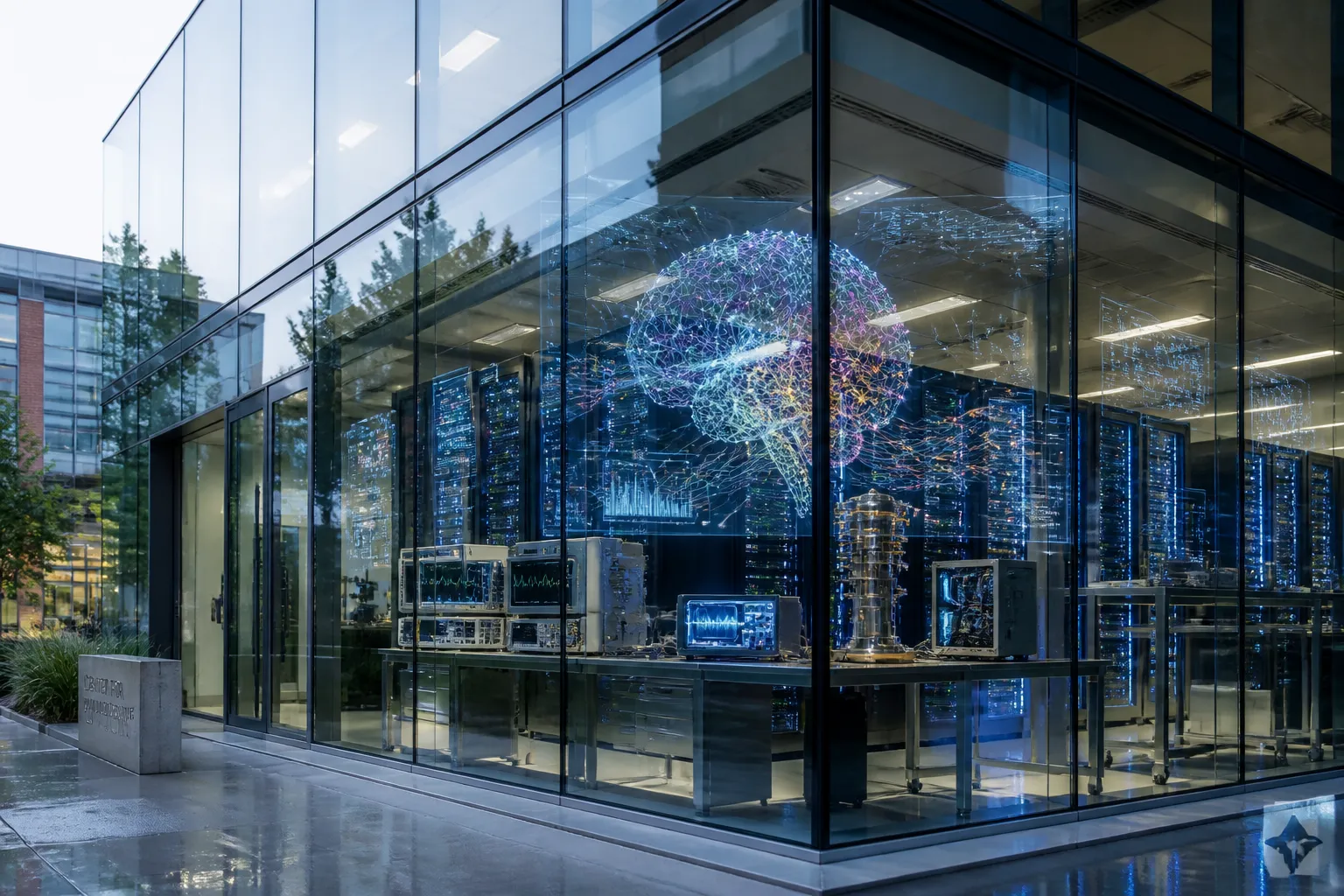
The 5,000‑square‑foot building sits on the northwest corner of Fayetteville and Lawson streets in Durham and cost $7.2 million. Google’s $1 million grant and Lenovo’s equipment investment made the project possible, giving students and faculty a modern space to explore the frontiers of technology.
IAIER’s layout was crafted to foster collaboration. A central hub surrounds a series of specialized studios and labs: the AI Literacy Studio, Machine Learning and Data Science Studio, Robotics and Emerging Tech Lab, XR Innovation Sandbox, Ethics and Governance Classroom, and an Innovation Atrium. The design encourages interdisciplinary work and hands‑on experimentation across AI, robotics, machine learning, extended reality (XR), and ethical technology.
"When I think about AI, I think about the fact that technology continues to move faster than trust," said NCCU Chancellor Dr. Karrie G. Dixon at the ribbon‑cutting ceremony. "The institute will help students prepare for careers that work for North Carolina and beyond, and AI will enhance everything in a responsible and ethical way."
The ceremony drew more than 150 attendees, including alumni, local officials, and representatives from Google and Lenovo. Students and faculty toured the new building, and Information‑technology major David Goings remarked, "The institute gives students a chance to express themselves in AI and hopes it sparks ideas that could change the world for the better."
Founding director Dr. Siobahn Day Grady, an associate professor in NCCU’s School of Library and Information Sciences, explained that the project had been in development for several years. She noted that the current generation of students "is not like our generation. They think differently. They want to be involved and feel like they’re a part of their learning." Grady said the institute is an opportunity to set a pathway for others to follow.
U.S. Representative Valerie Foushee, who attended the opening, emphasized that future breakthroughs should not be limited to Silicon Valley or large universities. "Our future cannot be built by a few tech moguls and billionaires," she said.
Alumni Pebbles Lucas recalled how technology has reshaped learning. "I remember the dictionary I had to look up every word. Now I could just go on my telephone, check ChatGPT and hit a word, and then they give you the synonyms and the antonyms," she said.
IAIER’s launch aligns with NCCU’s plan to offer a minor in artificial intelligence through the Department of Mathematics and Physics starting in the fall of 2026. The minor will build on the institute’s resources and provide students with a structured curriculum in AI fundamentals.
NCCU officials say the institute will position students to lead in a rapidly evolving field. The facility is expected to attract research collaborations, industry partnerships, and additional funding. The university also plans to use the center to support entrepreneurship and technology transfer initiatives.
The opening of IAIER reflects a broader trend of higher‑education institutions investing in AI research and education. By providing a dedicated space for AI study, NCCU joins a growing list of universities that are creating specialized centers to train the next generation of AI professionals.
As AI continues to reshape education and industry, NCCU’s institute aims to keep students current with emerging technologies while emphasizing responsible use and ethical governance. The university’s leadership views the center as a way to help students not only keep pace with AI developments but also help define the future of the technology.
The institute’s inaugural year will focus on building a community of researchers, students, and industry partners. NCCU has announced plans to host workshops, hackathons, and seminars that will showcase the institute’s capabilities and foster collaboration across disciplines.
In summary, the Institute for Artificial Intelligence and Emerging Research represents a historic milestone for NCCU and the HBCU community. With support from Google and Lenovo, the 5,000‑square‑foot facility will serve as a hub for AI literacy, research, and innovation, and will launch a new AI minor for students beginning in fall 2026.
The 5,000‑square‑foot building sits on the northwest corner of Fayetteville and Lawson streets in Durham and cost $7.2 million. Google’s $1 million grant and Lenovo’s equipment investment made the project possible, giving students and faculty a modern space to explore the frontiers of technology.
IAIER’s layout was crafted to foster collaboration. A central hub surrounds a series of specialized studios and labs: the AI Literacy Studio, Machine Learning and Data Science Studio, Robotics and Emerging Tech Lab, XR Innovation Sandbox, Ethics and Governance Classroom, and an Innovation Atrium. The design encourages interdisciplinary work and hands‑on experimentation across AI, robotics, machine learning, extended reality (XR), and ethical technology.
"When I think about AI, I think about the fact that technology continues to move faster than trust," said NCCU Chancellor Dr. Karrie G. Dixon at the ribbon‑cutting ceremony. "The institute will help students prepare for careers that work for North Carolina and beyond, and AI will enhance everything in a responsible and ethical way."
The ceremony drew more than 150 attendees, including alumni, local officials, and representatives from Google and Lenovo. Students and faculty toured the new building, and Information‑technology major David Goings remarked, "The institute gives students a chance to express themselves in AI and hopes it sparks ideas that could change the world for the better."
Founding director Dr. Siobahn Day Grady, an associate professor in NCCU’s School of Library and Information Sciences, explained that the project had been in development for several years. She noted that the current generation of students "is not like our generation. They think differently. They want to be involved and feel like they’re a part of their learning." Grady said the institute is an opportunity to set a pathway for others to follow.
U.S. Representative Valerie Foushee, who attended the opening, emphasized that future breakthroughs should not be limited to Silicon Valley or large universities. "Our future cannot be built by a few tech moguls and billionaires," she said.
Alumni Pebbles Lucas recalled how technology has reshaped learning. "I remember the dictionary I had to look up every word. Now I could just go on my telephone, check ChatGPT and hit a word, and then they give you the synonyms and the antonyms," she said.
IAIER’s launch aligns with NCCU’s plan to offer a minor in artificial intelligence through the Department of Mathematics and Physics starting in the fall of 2026. The minor will build on the institute’s resources and provide students with a structured curriculum in AI fundamentals.
NCCU officials say the institute will position students to lead in a rapidly evolving field. The facility is expected to attract research collaborations, industry partnerships, and additional funding. The university also plans to use the center to support entrepreneurship and technology transfer initiatives.
The opening of IAIER reflects a broader trend of higher‑education institutions investing in AI research and education. By providing a dedicated space for AI study, NCCU joins a growing list of universities that are creating specialized centers to train the next generation of AI professionals.
As AI continues to reshape education and industry, NCCU’s institute aims to keep students current with emerging technologies while emphasizing responsible use and ethical governance. The university’s leadership views the center as a way to help students not only keep pace with AI developments but also help define the future of the technology.
The institute’s inaugural year will focus on building a community of researchers, students, and industry partners. NCCU has announced plans to host workshops, hackathons, and seminars that will showcase the institute’s capabilities and foster collaboration across disciplines.
In summary, the Institute for Artificial Intelligence and Emerging Research represents a historic milestone for NCCU and the HBCU community. With support from Google and Lenovo, the 5,000‑square‑foot facility will serve as a hub for AI literacy, research, and innovation, and will launch a new AI minor for students beginning in fall 2026.





