Blab AI
North Carolina Central University Opens First HBCU AI Institute Building
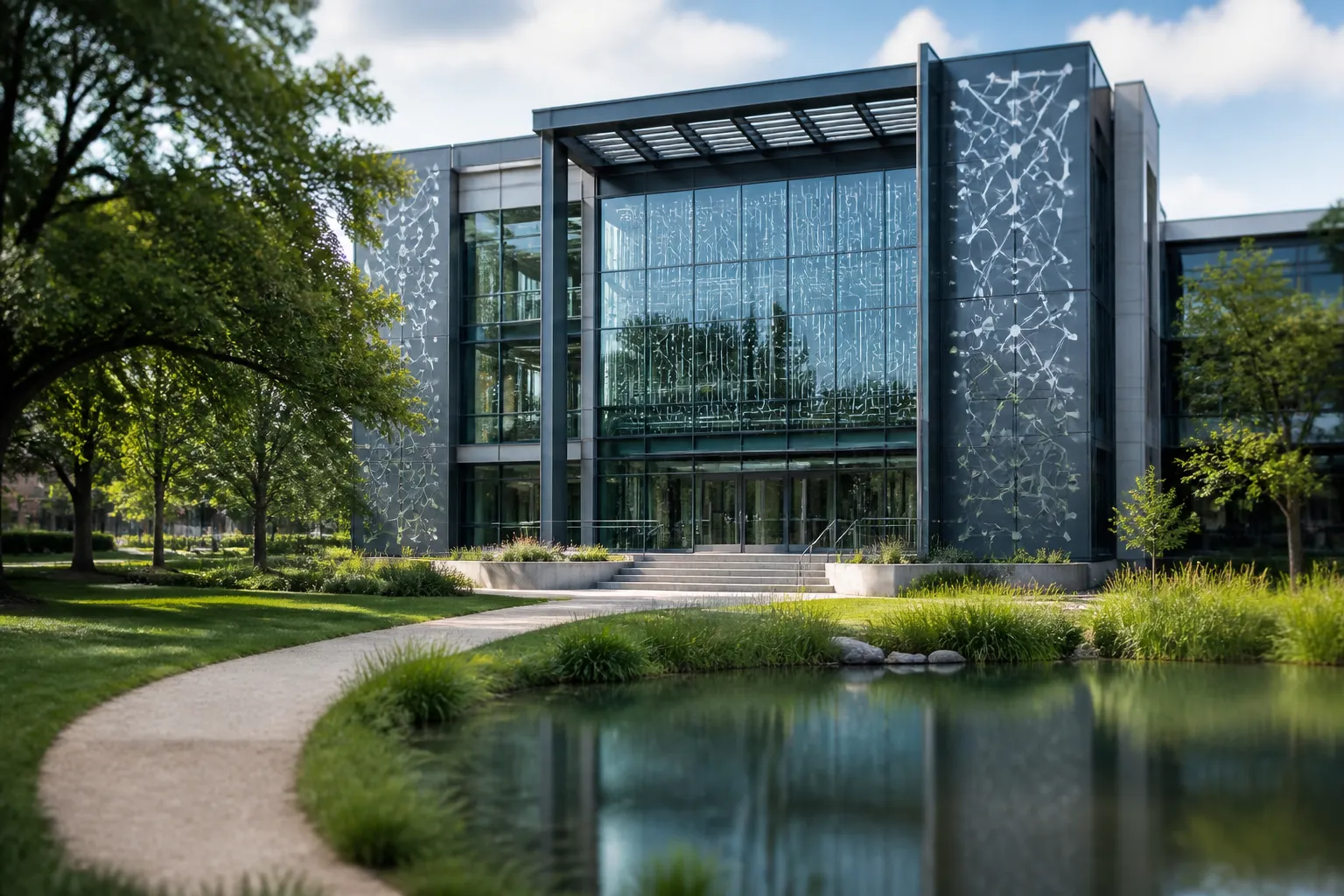
On Monday, Aug. 10, 2026, North Carolina Central University (NCCU) unveiled a new 5,000‑square‑foot facility that will house the Institute for Artificial Intelligence and Emerging Research (IAIER). The building sits at the corner of Fayetteville and Lawson streets in Durham, marking the first AI institute building established by a historically Black college or university.
The $7.2 million structure was financed through a mix of federal Title III grant funding and NCCU trust funds, according to a university news release. IAIER itself was launched in January 2025 with a $1 million seed grant from Google.org. Its stated mission is to advance responsible AI development and broaden access to emerging technologies, with an early target of enrolling 200 students within its first two years.
Inside, the institute centers on a collaboration hub surrounded by specialized rooms: an AI Literacy Studio, a Machine Learning and Data Science Studio, a Robotics and Emerging Tech Lab, an XR Innovation Sandbox, an Ethics and Governance Classroom, and an Innovation Atrium. The institute offers career certificates in AI, data analytics, cybersecurity, and project management, as well as seed grants for early‑stage faculty research. A partnership with Google enables students and staff to pursue certificates aligned with in‑demand workforce skills.
The opening ceremony drew more than 150 attendees, including university officials, faculty, students, and representatives from corporate partners. Founding director Dr. Siobahn Day Grady and NCCU Chancellor Dr. Karrie G. Dixon highlighted the building’s role in positioning students as creators rather than consumers of AI technology.
IAIER received formal approval from NCCU’s Board of Trustees in December 2025. The institute’s launch is part of a broader AI programming rollout across campus. Beginning in fall 2025, NCCU added an AI module to the mandatory Introduction to University Education course for all freshmen. Starting fall 2026, the Department of Mathematics and Physics will offer a minor in artificial intelligence.
Corporate partners of IAIER include Google, OpenAI, IBM, Anthropic, Cisco, Amazon Web Services, Dell, Lenovo, and FICO. These collaborations support research, curriculum development, and industry‑aligned training.
The building’s opening marks a milestone for HBCUs and the wider AI community. By providing dedicated space, resources, and partnerships, NCCU aims to increase representation of African American students in AI fields and to foster responsible, human‑centered AI research.
As NCCU continues to expand its AI initiatives, the institute’s success will be measured by student enrollment, program completion, and the impact of its research and industry collaborations. The university remains committed to integrating AI education into its broader academic offerings and to maintaining the institute’s focus on ethical, responsible AI.
The new facility is expected to serve as a hub for interdisciplinary research, student projects, and community outreach, reinforcing NCCU’s role as a leader in AI education within the HBCU ecosystem.
The $7.2 million structure was financed through a mix of federal Title III grant funding and NCCU trust funds, according to a university news release. IAIER itself was launched in January 2025 with a $1 million seed grant from Google.org. Its stated mission is to advance responsible AI development and broaden access to emerging technologies, with an early target of enrolling 200 students within its first two years.
Inside, the institute centers on a collaboration hub surrounded by specialized rooms: an AI Literacy Studio, a Machine Learning and Data Science Studio, a Robotics and Emerging Tech Lab, an XR Innovation Sandbox, an Ethics and Governance Classroom, and an Innovation Atrium. The institute offers career certificates in AI, data analytics, cybersecurity, and project management, as well as seed grants for early‑stage faculty research. A partnership with Google enables students and staff to pursue certificates aligned with in‑demand workforce skills.
The opening ceremony drew more than 150 attendees, including university officials, faculty, students, and representatives from corporate partners. Founding director Dr. Siobahn Day Grady and NCCU Chancellor Dr. Karrie G. Dixon highlighted the building’s role in positioning students as creators rather than consumers of AI technology.
IAIER received formal approval from NCCU’s Board of Trustees in December 2025. The institute’s launch is part of a broader AI programming rollout across campus. Beginning in fall 2025, NCCU added an AI module to the mandatory Introduction to University Education course for all freshmen. Starting fall 2026, the Department of Mathematics and Physics will offer a minor in artificial intelligence.
Corporate partners of IAIER include Google, OpenAI, IBM, Anthropic, Cisco, Amazon Web Services, Dell, Lenovo, and FICO. These collaborations support research, curriculum development, and industry‑aligned training.
The building’s opening marks a milestone for HBCUs and the wider AI community. By providing dedicated space, resources, and partnerships, NCCU aims to increase representation of African American students in AI fields and to foster responsible, human‑centered AI research.
As NCCU continues to expand its AI initiatives, the institute’s success will be measured by student enrollment, program completion, and the impact of its research and industry collaborations. The university remains committed to integrating AI education into its broader academic offerings and to maintaining the institute’s focus on ethical, responsible AI.
The new facility is expected to serve as a hub for interdisciplinary research, student projects, and community outreach, reinforcing NCCU’s role as a leader in AI education within the HBCU ecosystem.





