Blab AI
NASA AI Tool Reveals Global Rise in Floating Algae From Satellite Data
NASA’s new artificial‑intelligence system, which sifts through satellite images, has exposed a steady global uptick in floating algae, a finding published in Nature Communications.
The study examined 1.2 million images captured between 2003 and 2022. Using a self‑supervised AI model, researchers classified five categories of floating algae—both micro‑ and macro‑species—across 13 ocean regions. The analysis revealed that floating microalgae increased at an average rate of about 1 percent per year, while macroalgae expanded much faster in certain areas. In the tropical Atlantic and western Pacific, macroalgae grew by 13.4 percent annually.
The authors note that the most pronounced shift began around 2008, when large macroalgal blooms first appeared in several parts of the world. Prior to that year, the only significant macroalgal bloom reported outside the Sargasso Sea was the well‑known Sargassum in that region.
"Our paper gives the first global picture of floating algae, including macroalgal mats and microalgal scum," said Chuanmin Hu, a professor of oceanography at the University of South Florida and senior author of the study. "Our results show that the global ocean now favors the growth of floating macroalgae."
The study highlights both the ecological benefits and risks associated with floating macroalgae. Large mats can provide habitat and nursery areas for marine life in the open ocean, but they can also damage coastal ecosystems when they reach shorelines and decompose. Such events threaten marine life, human and animal health, tourism, and local economies.
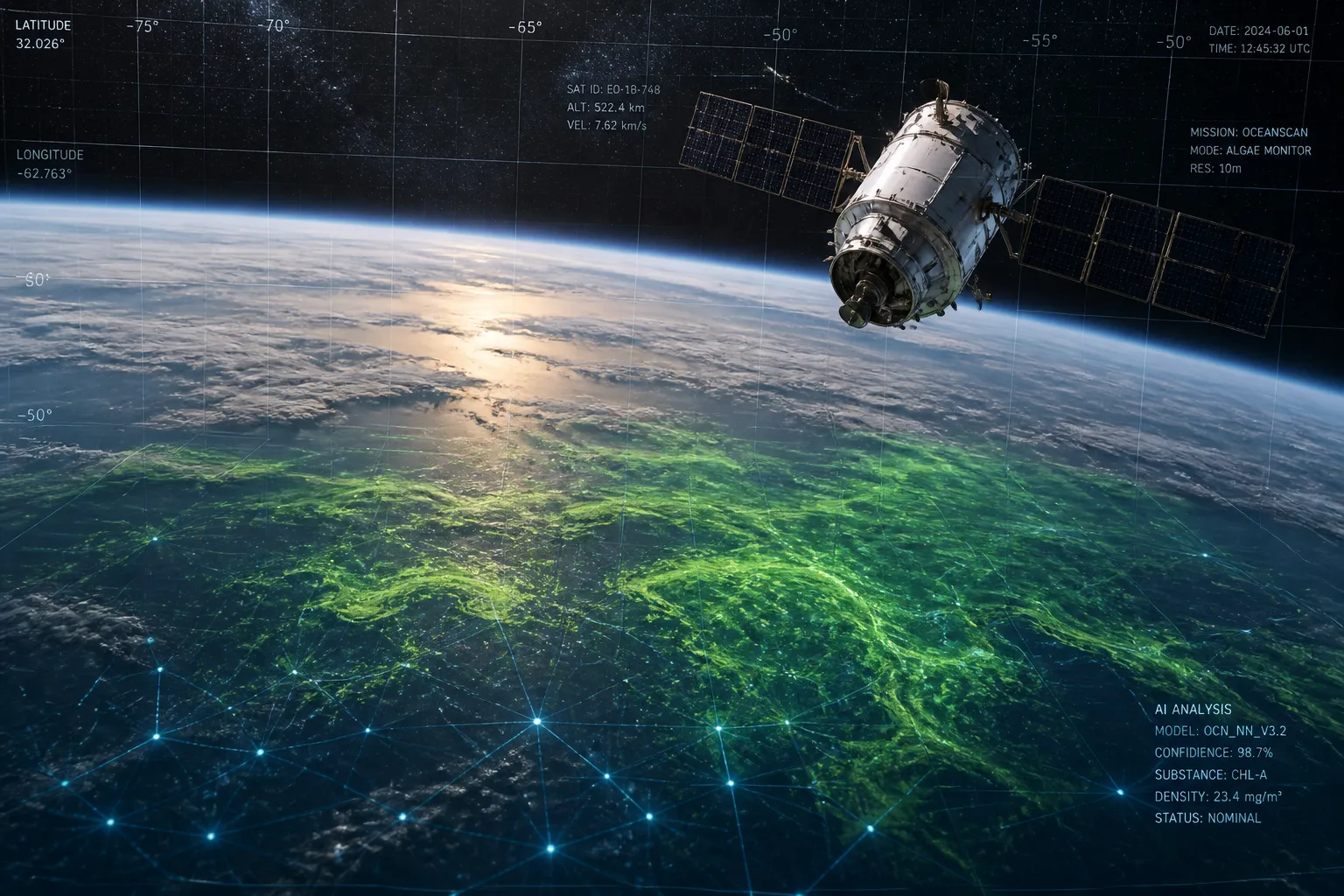
NASA’s AI tool, already deployed to detect harmful algal blooms in U.S. coastal waters, draws data from Earth‑orbiting satellites such as Sentinel‑2. By fusing multispectral bands, the system can identify chlorophyll signatures that indicate the presence of algae at a 10‑meter resolution.
According to the authors, the expansion of floating algae is likely driven by a combination of regional factors, including nutrient runoff, rising ocean temperatures, and changes in ocean circulation. The team plans to analyze additional satellite data to better understand the long‑term drivers of these blooms.
The findings have implications for a range of stakeholders. Fisheries managers may need to adjust harvest strategies in response to shifting habitat conditions. Coastal communities could face increased risk of beach closures and economic losses during large bloom events. The study also underscores the value of satellite‑based monitoring for early warning systems.
NASA’s AI system demonstrates how machine‑learning techniques can process vast amounts of remote‑sensing data that would be impractical to analyze manually. By providing a global, time‑series view of floating algae, the tool offers a new capability for scientists, regulators, and industry to track and respond to harmful algal blooms.
The research team has made its AI model and dataset publicly available, encouraging further studies that could refine the understanding of how climate change and human activities influence the frequency and intensity of floating algal blooms.
The study represents the first comprehensive assessment of floating algae at a global scale and highlights a regime shift toward conditions that favor macroalgal growth. Continued monitoring and analysis will be essential to anticipate the ecological and economic impacts of these expanding blooms.
The study examined 1.2 million images captured between 2003 and 2022. Using a self‑supervised AI model, researchers classified five categories of floating algae—both micro‑ and macro‑species—across 13 ocean regions. The analysis revealed that floating microalgae increased at an average rate of about 1 percent per year, while macroalgae expanded much faster in certain areas. In the tropical Atlantic and western Pacific, macroalgae grew by 13.4 percent annually.
The authors note that the most pronounced shift began around 2008, when large macroalgal blooms first appeared in several parts of the world. Prior to that year, the only significant macroalgal bloom reported outside the Sargasso Sea was the well‑known Sargassum in that region.
"Our paper gives the first global picture of floating algae, including macroalgal mats and microalgal scum," said Chuanmin Hu, a professor of oceanography at the University of South Florida and senior author of the study. "Our results show that the global ocean now favors the growth of floating macroalgae."
The study highlights both the ecological benefits and risks associated with floating macroalgae. Large mats can provide habitat and nursery areas for marine life in the open ocean, but they can also damage coastal ecosystems when they reach shorelines and decompose. Such events threaten marine life, human and animal health, tourism, and local economies.
NASA’s AI tool, already deployed to detect harmful algal blooms in U.S. coastal waters, draws data from Earth‑orbiting satellites such as Sentinel‑2. By fusing multispectral bands, the system can identify chlorophyll signatures that indicate the presence of algae at a 10‑meter resolution.
According to the authors, the expansion of floating algae is likely driven by a combination of regional factors, including nutrient runoff, rising ocean temperatures, and changes in ocean circulation. The team plans to analyze additional satellite data to better understand the long‑term drivers of these blooms.
The findings have implications for a range of stakeholders. Fisheries managers may need to adjust harvest strategies in response to shifting habitat conditions. Coastal communities could face increased risk of beach closures and economic losses during large bloom events. The study also underscores the value of satellite‑based monitoring for early warning systems.
NASA’s AI system demonstrates how machine‑learning techniques can process vast amounts of remote‑sensing data that would be impractical to analyze manually. By providing a global, time‑series view of floating algae, the tool offers a new capability for scientists, regulators, and industry to track and respond to harmful algal blooms.
The research team has made its AI model and dataset publicly available, encouraging further studies that could refine the understanding of how climate change and human activities influence the frequency and intensity of floating algal blooms.
The study represents the first comprehensive assessment of floating algae at a global scale and highlights a regime shift toward conditions that favor macroalgal growth. Continued monitoring and analysis will be essential to anticipate the ecological and economic impacts of these expanding blooms.





