Blab AI
Florida Reports Second Vibrio vulnificus Death as UF Researchers Develop AI Forecasting Tool
On August 9, 2026, the Florida Department of Health confirmed a second fatal case of Vibrio vulnificus in Marion County, adding to an earlier death in July that took the life of an 80‑ to 84‑year‑old resident of Palm Beach County.
Vibrio vulnificus is a naturally occurring Gram‑negative bacterium that thrives where freshwater meets saltwater—particularly in bays, mangrove lagoons, and river mouths. Dr. Norman Beatty of the University of Florida College of Medicine notes that the organism can enter the body by eating contaminated seafood, especially raw oysters, or by touching open wounds in the water.
"In people with immunocompromising conditions or liver disease, the infection can progress to severe sepsis and septic shock," Beatty said. "When the bacteria enter an open wound, they produce enzymes that break down tissue, leading to rapid spread of infection."
As of July 23, 2026, Florida’s public‑health surveillance network had recorded 11 confirmed Vibrio cases statewide, including the two deaths in Palm Beach and Marion counties. The agency tracks incidents through clinical laboratories and mandatory reporting.
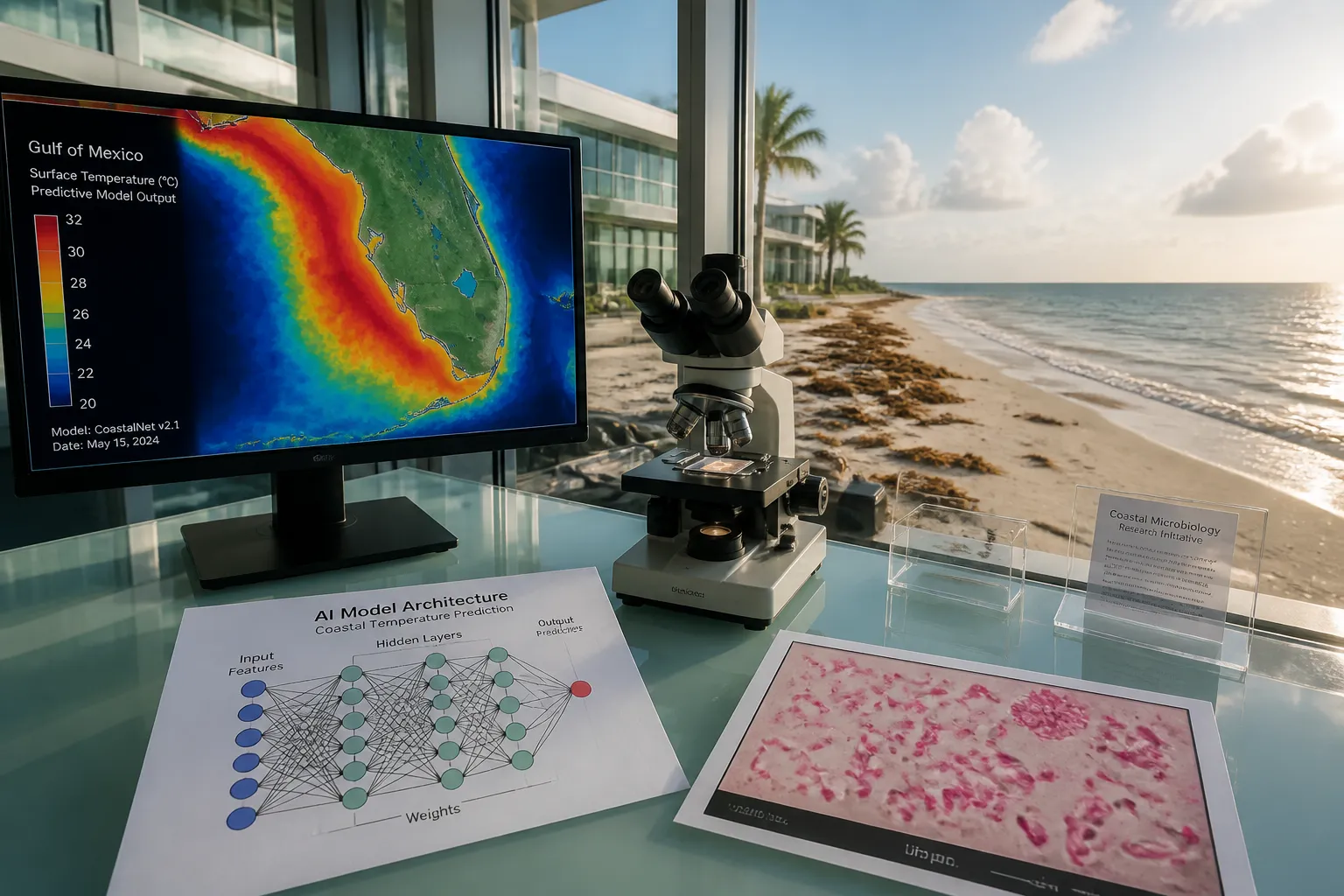
In response to the growing risk, researchers at the University of Florida are building an artificial‑intelligence platform that could predict Vibrio hotspots up to three to four weeks ahead. Professor Antar Jutla of UF’s Department of Environmental Engineering Sciences explained that the system will draw on NASA satellite data to monitor environmental variables that drive bacterial growth.
"We want to use satellites so that we can basically track and monitor the conditions which may be favorable to the hotspots for Vibrio vulnificus," Jutla said. "Ultimately, we want to provide a tool so that people who are going to beaches and who are basically going to do recreational activities can make their own determination as to what is going to be best for them."
The platform will integrate measurements of water temperature, salinity, hydrology, and other climatic factors that influence bacterial proliferation. By modeling these inputs, the AI system aims to emulate the predictive approach used in hurricane forecasting, offering public‑health officials and beachgoers a data‑driven risk assessment.
Jutla said the team plans to finish the initial prototype within the next two years and then conduct field testing in Florida’s coastal waters. Funding comes from a mix of university research grants and state health‑department contracts.
Public‑health officials have shown interest in the tool as a way to issue early warnings and guide advisories for vulnerable populations. While the Florida Department of Health has not yet issued a formal statement on the tool’s potential impact, it has acknowledged the need for better surveillance of waterborne pathogens.
The development of an AI‑driven hotspot forecast represents a novel intersection of environmental science, public‑health surveillance, and machine‑learning technology. If successful, the system could provide a scalable framework for monitoring other waterborne diseases that are influenced by climate and hydrological conditions.
At present, the tool remains in the prototype phase, and no commercial or public‑facing product has been released. The University of Florida team will continue refining the model and validating its predictions against laboratory and field data. The next milestone will be a pilot deployment on selected Florida beaches, with the goal of integrating the forecasts into the state’s existing health‑alert infrastructure.
The broader implications of this research include potential applications for coastal communities across the Gulf of Mexico and the Atlantic, where Vibrio vulnificus infections have risen in recent decades. As climate change drives warmer sea temperatures, the frequency and geographic spread of the bacterium may increase, underscoring the importance of proactive monitoring.
In summary, Florida has reported a second death from Vibrio vulnificus in 2026, highlighting the ongoing threat posed by this bacterium in brackish coastal waters. University of Florida researchers are developing an AI‑based forecasting tool that could provide early warnings of high‑risk areas, potentially reducing exposure for beachgoers and improving public‑health responses. The project’s success will depend on continued funding, rigorous testing, and collaboration with state health agencies.
Vibrio vulnificus is a naturally occurring Gram‑negative bacterium that thrives where freshwater meets saltwater—particularly in bays, mangrove lagoons, and river mouths. Dr. Norman Beatty of the University of Florida College of Medicine notes that the organism can enter the body by eating contaminated seafood, especially raw oysters, or by touching open wounds in the water.
"In people with immunocompromising conditions or liver disease, the infection can progress to severe sepsis and septic shock," Beatty said. "When the bacteria enter an open wound, they produce enzymes that break down tissue, leading to rapid spread of infection."
As of July 23, 2026, Florida’s public‑health surveillance network had recorded 11 confirmed Vibrio cases statewide, including the two deaths in Palm Beach and Marion counties. The agency tracks incidents through clinical laboratories and mandatory reporting.
In response to the growing risk, researchers at the University of Florida are building an artificial‑intelligence platform that could predict Vibrio hotspots up to three to four weeks ahead. Professor Antar Jutla of UF’s Department of Environmental Engineering Sciences explained that the system will draw on NASA satellite data to monitor environmental variables that drive bacterial growth.
"We want to use satellites so that we can basically track and monitor the conditions which may be favorable to the hotspots for Vibrio vulnificus," Jutla said. "Ultimately, we want to provide a tool so that people who are going to beaches and who are basically going to do recreational activities can make their own determination as to what is going to be best for them."
The platform will integrate measurements of water temperature, salinity, hydrology, and other climatic factors that influence bacterial proliferation. By modeling these inputs, the AI system aims to emulate the predictive approach used in hurricane forecasting, offering public‑health officials and beachgoers a data‑driven risk assessment.
Jutla said the team plans to finish the initial prototype within the next two years and then conduct field testing in Florida’s coastal waters. Funding comes from a mix of university research grants and state health‑department contracts.
Public‑health officials have shown interest in the tool as a way to issue early warnings and guide advisories for vulnerable populations. While the Florida Department of Health has not yet issued a formal statement on the tool’s potential impact, it has acknowledged the need for better surveillance of waterborne pathogens.
The development of an AI‑driven hotspot forecast represents a novel intersection of environmental science, public‑health surveillance, and machine‑learning technology. If successful, the system could provide a scalable framework for monitoring other waterborne diseases that are influenced by climate and hydrological conditions.
At present, the tool remains in the prototype phase, and no commercial or public‑facing product has been released. The University of Florida team will continue refining the model and validating its predictions against laboratory and field data. The next milestone will be a pilot deployment on selected Florida beaches, with the goal of integrating the forecasts into the state’s existing health‑alert infrastructure.
The broader implications of this research include potential applications for coastal communities across the Gulf of Mexico and the Atlantic, where Vibrio vulnificus infections have risen in recent decades. As climate change drives warmer sea temperatures, the frequency and geographic spread of the bacterium may increase, underscoring the importance of proactive monitoring.
In summary, Florida has reported a second death from Vibrio vulnificus in 2026, highlighting the ongoing threat posed by this bacterium in brackish coastal waters. University of Florida researchers are developing an AI‑based forecasting tool that could provide early warnings of high‑risk areas, potentially reducing exposure for beachgoers and improving public‑health responses. The project’s success will depend on continued funding, rigorous testing, and collaboration with state health agencies.





