Blab AI
Firmus Technologies Seeks Irrigation Water for Tasmanian AI Data Centre, Sparks Community and Regulatory Questions
When a data‑centre project proposes to tap a farmer’s water supply, the question is no longer whether the technology will work but whether it can coexist with local livelihoods.
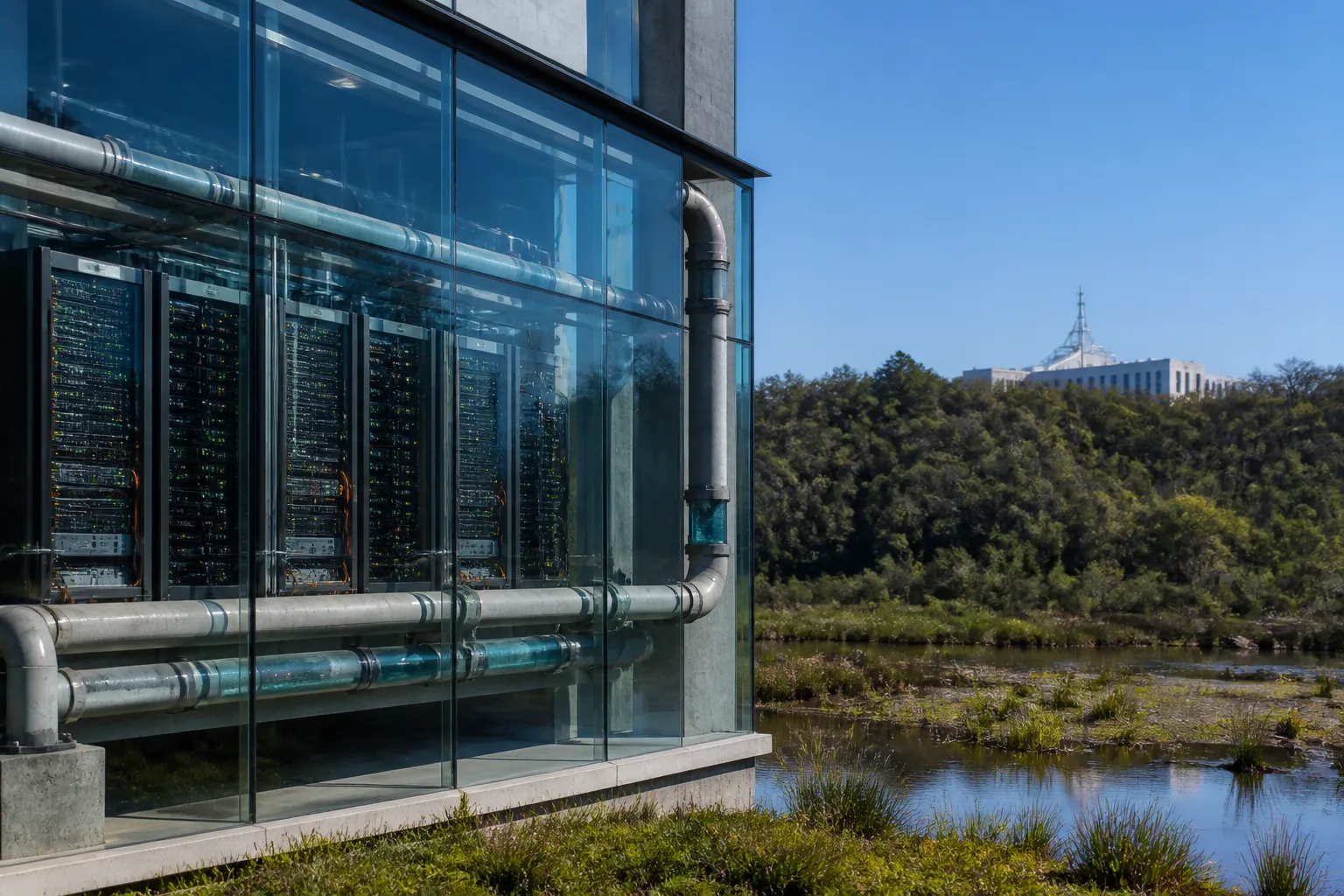
Firmus Technologies, an Australian start‑up that designs liquid‑cooled “AI factories,” has announced plans to use water from Tasmania’s state‑owned irrigation scheme for a new campus in the state’s north‑west. The company’s website states that it will “likely tap Tasmanian Irrigation water,” but the irrigation authority has made no commitment, noting that the scheme is intended for agriculture and hydrogen production.
The firm is already building an AI factory in the Launceston suburb of St Leonards and has put forward two other sites: Bell Bay on the east coast and Wesley Vale in the north‑west. For Wesley Vale, Firmus has submitted a development application to Latrobe Council, which is holding the request until the company supplies further information. The delay reflects uncertainty over the water source and the potential impact on local water users.
Firmus’s public statements about water use have evolved. A FAQ on its website originally read, “Not likely to use Tas Water for this site. They do not have a connection to this site,” and added, “We will likely use Tas Irrigation, but we do not want to highlight this yet, as they are yet to agree to supply us, as we fall outside their normal customer base [agriculture] and they need legal approval to supply us.” The FAQ also noted that “rainwater harvesting and on‑site storage are proposed as the primary water solution for the facility and have been designed to meet the project’s operational requirements.” After the Australian Broadcasting Corporation reached out, the FAQ section was removed.
According to the company, rainwater capture will supply the bulk of the cooling water. It says the facility will only need water on days when the ambient temperature exceeds 26 °C and that the total annual consumption will be comparable to that of a restaurant. Firmus also said that “initial cooling water requirements are expected to be fulfilled through use of a water cart if Tasmanian Irrigation connection is not available prior.” It added that it has not yet made a formal request to Tasmanian Irrigation and that discussions about supplementary water sources are separate from the primary rainwater strategy.
Tasmanian Irrigation, a state‑owned company that supplies water to farmers across the island, has stated that it has given no undertaking to Firmus. “Our legislative framework is set up to enable the supply of water for agriculture and for hydrogen production,” a spokesperson said. “Any application for water from industries outside of this would require consideration by the Tasmanian government and engagement with the community, including our customers.” The irrigation authority also noted that the only precedent for supplying water to a non‑agricultural user is the Tamar Scheme, which supports both farmers and hydrogen projects in northern Tasmania.
Neil Grose, chief operating officer of TasFarmers, the peak farming body, said it would be “highly unusual” for Tasmanian Irrigation to supply water to a data centre. “Irrigation water is for irrigating farmland,” he said. “It would concern us that Firmus are planning to use, and are talking about using irrigation water, without going through the proper channels first and talking to people, but most importantly, talking to farmers.” He added that farmers need confidence that their water supply will not be diverted during dry seasons. “Having the demands of a data factory is something very, very different from what that scheme’s designed for and what the farmers in that area would be expecting,” Grose said. He said TasFarmers was open to speaking with Firmus if the company is prepared to invest in new infrastructure, but he was not sure the conversation had started.
The situation illustrates the growing tension between the rapid expansion of AI infrastructure and the limited water resources that local communities rely on for agriculture. While Firmus has positioned itself as a provider of clear information and community engagement, the lack of a formal water agreement and the potential impact on irrigation users remain unresolved. Latrobe Council’s decision to withhold the development application until the company supplies further details underscores the need for a transparent assessment of water use and supply arrangements before the Wesley Vale site can proceed.
Firmus’s next steps will likely involve formal negotiations with Tasmanian Irrigation and a detailed environmental assessment that quantifies cooling water demand under different temperature scenarios. Until those negotiations are concluded, the status of the Wesley Vale project remains on hold, and the broader question of how AI data centres can coexist with Tasmania’s agricultural water needs remains open.
Firmus Technologies, an Australian start‑up that designs liquid‑cooled “AI factories,” has announced plans to use water from Tasmania’s state‑owned irrigation scheme for a new campus in the state’s north‑west. The company’s website states that it will “likely tap Tasmanian Irrigation water,” but the irrigation authority has made no commitment, noting that the scheme is intended for agriculture and hydrogen production.
The firm is already building an AI factory in the Launceston suburb of St Leonards and has put forward two other sites: Bell Bay on the east coast and Wesley Vale in the north‑west. For Wesley Vale, Firmus has submitted a development application to Latrobe Council, which is holding the request until the company supplies further information. The delay reflects uncertainty over the water source and the potential impact on local water users.
Firmus’s public statements about water use have evolved. A FAQ on its website originally read, “Not likely to use Tas Water for this site. They do not have a connection to this site,” and added, “We will likely use Tas Irrigation, but we do not want to highlight this yet, as they are yet to agree to supply us, as we fall outside their normal customer base [agriculture] and they need legal approval to supply us.” The FAQ also noted that “rainwater harvesting and on‑site storage are proposed as the primary water solution for the facility and have been designed to meet the project’s operational requirements.” After the Australian Broadcasting Corporation reached out, the FAQ section was removed.
According to the company, rainwater capture will supply the bulk of the cooling water. It says the facility will only need water on days when the ambient temperature exceeds 26 °C and that the total annual consumption will be comparable to that of a restaurant. Firmus also said that “initial cooling water requirements are expected to be fulfilled through use of a water cart if Tasmanian Irrigation connection is not available prior.” It added that it has not yet made a formal request to Tasmanian Irrigation and that discussions about supplementary water sources are separate from the primary rainwater strategy.
Tasmanian Irrigation, a state‑owned company that supplies water to farmers across the island, has stated that it has given no undertaking to Firmus. “Our legislative framework is set up to enable the supply of water for agriculture and for hydrogen production,” a spokesperson said. “Any application for water from industries outside of this would require consideration by the Tasmanian government and engagement with the community, including our customers.” The irrigation authority also noted that the only precedent for supplying water to a non‑agricultural user is the Tamar Scheme, which supports both farmers and hydrogen projects in northern Tasmania.
Neil Grose, chief operating officer of TasFarmers, the peak farming body, said it would be “highly unusual” for Tasmanian Irrigation to supply water to a data centre. “Irrigation water is for irrigating farmland,” he said. “It would concern us that Firmus are planning to use, and are talking about using irrigation water, without going through the proper channels first and talking to people, but most importantly, talking to farmers.” He added that farmers need confidence that their water supply will not be diverted during dry seasons. “Having the demands of a data factory is something very, very different from what that scheme’s designed for and what the farmers in that area would be expecting,” Grose said. He said TasFarmers was open to speaking with Firmus if the company is prepared to invest in new infrastructure, but he was not sure the conversation had started.
The situation illustrates the growing tension between the rapid expansion of AI infrastructure and the limited water resources that local communities rely on for agriculture. While Firmus has positioned itself as a provider of clear information and community engagement, the lack of a formal water agreement and the potential impact on irrigation users remain unresolved. Latrobe Council’s decision to withhold the development application until the company supplies further details underscores the need for a transparent assessment of water use and supply arrangements before the Wesley Vale site can proceed.
Firmus’s next steps will likely involve formal negotiations with Tasmanian Irrigation and a detailed environmental assessment that quantifies cooling water demand under different temperature scenarios. Until those negotiations are concluded, the status of the Wesley Vale project remains on hold, and the broader question of how AI data centres can coexist with Tasmania’s agricultural water needs remains open.





