Blab AI
Nubia Unveils NaviX Ultra, Claims First AI-Agent Smartphone
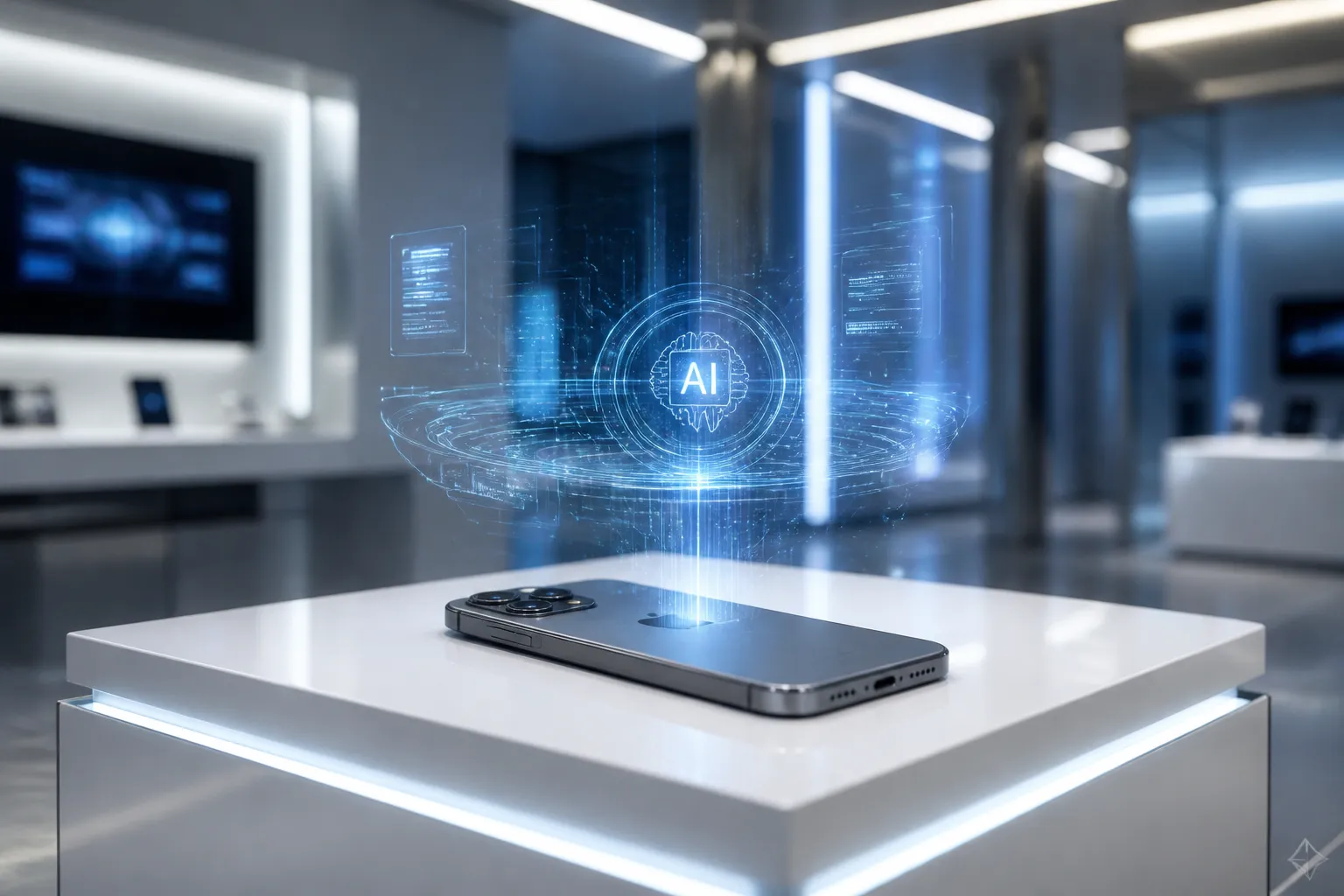
Nubia Technology made a splash at the World Artificial Intelligence Conference in Shanghai on 8 July 2026, announcing the NaviX Ultra as the world’s first AI‑agent phone. The claim has sparked debate, as other Chinese makers have rolled out comparable devices earlier, but the launch still marks a significant push toward consumer‑level large‑model AI.
The new handset is powered by ByteDance’s Doubao mobile assistant, a system‑level AI built on a large‑model architecture. According to Nubia’s senior vice president of ZTE, Ni Fei, the partnership blends Doubao’s advanced natural‑language and multimodal capabilities with Nubia’s hardware and software know‑how. Ni Fei highlighted that the collaboration is the result of a full‑cycle of testing and refinement that began with the M153 model.
Design and Hardware The NaviX Ultra arrives in four colors—Blue Horizon, Dreamland, Obsidian Black, and Snowfield. The Dreamland edition is distinguished by a pink finish that wraps around the rear camera housing. The rear camera module breaks from convention with a horizontal strip layout, housing a triple‑camera system that includes a periscope telephoto lens. On the front, a centered punch‑hole camera sits above a flat display with uniform bezels.
A bright orange button on the side frame provides instant access to the AI assistant. This design choice reflects Nubia’s focus on four core goals: understanding, functionality, retention, and security. The phone is said to comprehend natural language across many contexts and to complete multi‑step tasks—such as comparing prices, placing orders, or planning trips—by interacting with multiple apps autonomously.
On‑Device AI Processing Nubia stresses that most AI processing happens locally, rather than in the cloud. The company claims that this approach, combined with official generative‑AI registration credentials, lowers the risk of user data leaks.
Production and Availability While a price and precise release date remain undisclosed, Nubia said the NaviX Ultra will be sold in a limited run of about 200,000 units, with the first batch capped below 100,000. The phone is expected to be available for purchase after the WAIC event, which runs from 17 to 20 July.
Background Founded in 2012 as a subsidiary of ZTE, Nubia became independent in 2015. It has a history of gaming‑focused devices under its REDMAGIC sub‑brand and has recently shifted toward AI‑centric products. The partnership with ByteDance’s Doubao marks a significant step in integrating large‑model AI into consumer hardware.
Industry Context The claim that the NaviX Ultra is the first AI‑agent smartphone fits into a broader trend among Chinese manufacturers to market AI‑enhanced devices. ByteDance’s Doubao has been positioned as a system‑level assistant capable of automated clicks, inputs, and swipes across apps—a feature that has attracted attention from both consumers and regulators.
Regulatory and Security Considerations Nubia’s focus on on‑device processing and the use of official AI registration credentials aim to address data‑privacy and security concerns. However, the company has not yet disclosed any third‑party security audits or compliance certifications.
Future Outlook Nubia has indicated that the NaviX Ultra will be the first in a series of AI‑powered smartphones. No further models have been announced, and pricing remains undisclosed. The company’s next steps will likely involve expanding its AI ecosystem, securing supply chains for the device’s components, and monitoring regulatory responses to on‑device AI processing.
In sum, the NaviX Ultra represents Nubia’s attempt to launch a mass‑produced AI‑agent smartphone. The device combines ByteDance’s Doubao assistant with Nubia’s hardware design, offering on‑device AI processing and a distinctive camera layout. While the phone’s launch is imminent, key details such as price, full availability, and long‑term support remain to be clarified.
The new handset is powered by ByteDance’s Doubao mobile assistant, a system‑level AI built on a large‑model architecture. According to Nubia’s senior vice president of ZTE, Ni Fei, the partnership blends Doubao’s advanced natural‑language and multimodal capabilities with Nubia’s hardware and software know‑how. Ni Fei highlighted that the collaboration is the result of a full‑cycle of testing and refinement that began with the M153 model.
Design and Hardware The NaviX Ultra arrives in four colors—Blue Horizon, Dreamland, Obsidian Black, and Snowfield. The Dreamland edition is distinguished by a pink finish that wraps around the rear camera housing. The rear camera module breaks from convention with a horizontal strip layout, housing a triple‑camera system that includes a periscope telephoto lens. On the front, a centered punch‑hole camera sits above a flat display with uniform bezels.
A bright orange button on the side frame provides instant access to the AI assistant. This design choice reflects Nubia’s focus on four core goals: understanding, functionality, retention, and security. The phone is said to comprehend natural language across many contexts and to complete multi‑step tasks—such as comparing prices, placing orders, or planning trips—by interacting with multiple apps autonomously.
On‑Device AI Processing Nubia stresses that most AI processing happens locally, rather than in the cloud. The company claims that this approach, combined with official generative‑AI registration credentials, lowers the risk of user data leaks.
Production and Availability While a price and precise release date remain undisclosed, Nubia said the NaviX Ultra will be sold in a limited run of about 200,000 units, with the first batch capped below 100,000. The phone is expected to be available for purchase after the WAIC event, which runs from 17 to 20 July.
Background Founded in 2012 as a subsidiary of ZTE, Nubia became independent in 2015. It has a history of gaming‑focused devices under its REDMAGIC sub‑brand and has recently shifted toward AI‑centric products. The partnership with ByteDance’s Doubao marks a significant step in integrating large‑model AI into consumer hardware.
Industry Context The claim that the NaviX Ultra is the first AI‑agent smartphone fits into a broader trend among Chinese manufacturers to market AI‑enhanced devices. ByteDance’s Doubao has been positioned as a system‑level assistant capable of automated clicks, inputs, and swipes across apps—a feature that has attracted attention from both consumers and regulators.
Regulatory and Security Considerations Nubia’s focus on on‑device processing and the use of official AI registration credentials aim to address data‑privacy and security concerns. However, the company has not yet disclosed any third‑party security audits or compliance certifications.
Future Outlook Nubia has indicated that the NaviX Ultra will be the first in a series of AI‑powered smartphones. No further models have been announced, and pricing remains undisclosed. The company’s next steps will likely involve expanding its AI ecosystem, securing supply chains for the device’s components, and monitoring regulatory responses to on‑device AI processing.
In sum, the NaviX Ultra represents Nubia’s attempt to launch a mass‑produced AI‑agent smartphone. The device combines ByteDance’s Doubao assistant with Nubia’s hardware design, offering on‑device AI processing and a distinctive camera layout. While the phone’s launch is imminent, key details such as price, full availability, and long‑term support remain to be clarified.





