Blab AI
James Altucher Claims Energy, Not Chips, Limits AI-Elon Musks Orbital Data Centers Offer the Fix
On September 6 2026, tech investor James Altucher released a free presentation that flipped a familiar narrative: the real ceiling on AI growth is power, not silicon.
Distributed through Globe Newswire and hosted on Paradigm Press’s website, Altucher’s talk opens with a striking image. A single AI‑optimized data center can consume as much electricity as 840,000 homes—roughly the entire city of Indianapolis—yet the United States grid was never built to handle such a surge.
The argument isn’t new. Nvidia CEO Jensen Huang has warned that “every data center of the future will be power limited.” Sam Altman, CEO of OpenAI, testified before Congress that energy is a critical factor for AI’s future, and Meta founder Mark Zuckerberg has said the company would build far larger AI systems if it could secure enough electricity.
Altucher points to Elon Musk’s bold move: abandoning the terrestrial grid altogether. According to his presentation, space offers several decisive advantages:
Near‑continuous solar power – Solar panels in low‑Earth orbit can operate for up to eight times longer than on the ground, with no clouds, weather, or night to interrupt generation. Free cooling – The space environment is hundreds of degrees below zero, eliminating the need for expensive cooling systems that consume a large share of a data center’s power budget. No grid outages – Orbital facilities would not be subject to terrestrial blackouts or overloads. No permitting hurdles – Space‑based projects bypass local zoning boards, community opposition, and the regulatory battles that often stall ground‑based data center construction. * No rising utility costs or pollution complaints – The power source is solar, and the cooling is passive, so the operating costs that drive utility bills on Earth are avoided.
He frames Musk’s SpaceX and its newly merged AI arm, xAI, as the company’s most significant AI asset. Altucher argues that the satellites Musk is launching are not merely for internet or rocket launches; they are the foundation for a new class of AI infrastructure that will run entirely in orbit.
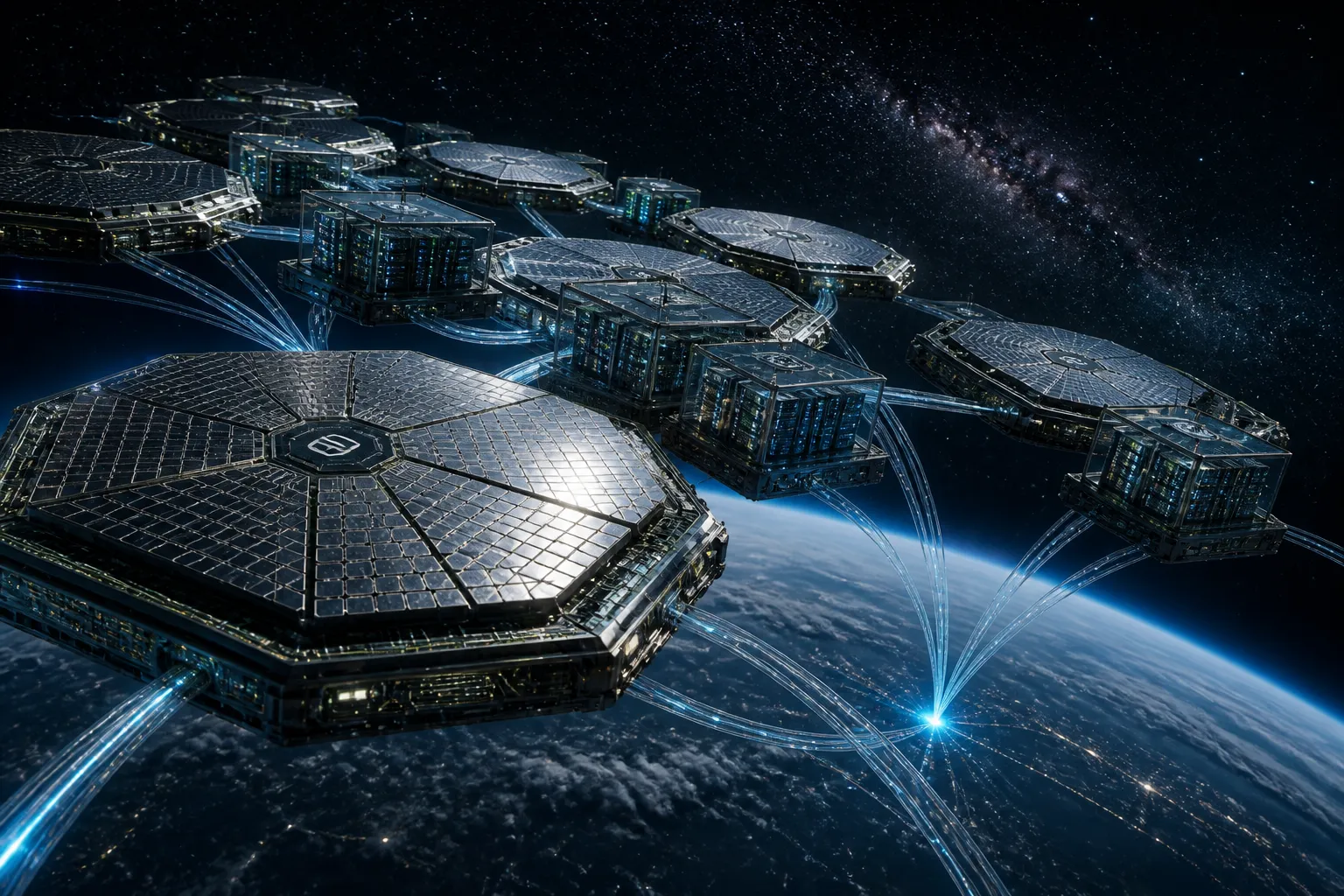
The idea of orbital AI data centers entered the public eye earlier this year when SpaceX announced plans to deploy up to a million satellites to form a solar‑powered, free‑cooling data‑center network. Reuters and AP reported that Musk’s plan would allow the company to sidestep the energy constraints that have slowed terrestrial AI expansion.
Altucher’s presentation, available on demand, positions the shift to space as an early moment in a larger industry transformation. He cautions that the public and investors may not yet recognize the significance of moving AI infrastructure into orbit, and that those who understand the shift early stand to benefit.
The presentation does not provide technical details on how the orbital data centers will be built or how they will interface with existing AI workloads. It also does not quantify the cost savings or performance gains relative to ground‑based facilities. However, the argument is clear: if the energy bottleneck is the primary constraint on AI growth, then a solar‑powered, free‑cooling, grid‑independent platform in space offers a plausible solution.
As of September 2026, the AI industry continues to invest heavily in data‑center construction, with estimates that global AI‑specific power consumption will exceed 500 TWh annually. The shift to orbital infrastructure could alter that trajectory, but the technical, regulatory, and economic challenges remain.
In summary, Altucher’s presentation highlights an energy‑centric view of AI’s limits and points to Elon Musk’s orbital data‑center strategy as a potential remedy. The industry will watch how SpaceX and xAI develop the technology, how the U.S. and international regulators respond, and whether the projected benefits materialize.
Distributed through Globe Newswire and hosted on Paradigm Press’s website, Altucher’s talk opens with a striking image. A single AI‑optimized data center can consume as much electricity as 840,000 homes—roughly the entire city of Indianapolis—yet the United States grid was never built to handle such a surge.
The argument isn’t new. Nvidia CEO Jensen Huang has warned that “every data center of the future will be power limited.” Sam Altman, CEO of OpenAI, testified before Congress that energy is a critical factor for AI’s future, and Meta founder Mark Zuckerberg has said the company would build far larger AI systems if it could secure enough electricity.
Altucher points to Elon Musk’s bold move: abandoning the terrestrial grid altogether. According to his presentation, space offers several decisive advantages:
Near‑continuous solar power – Solar panels in low‑Earth orbit can operate for up to eight times longer than on the ground, with no clouds, weather, or night to interrupt generation. Free cooling – The space environment is hundreds of degrees below zero, eliminating the need for expensive cooling systems that consume a large share of a data center’s power budget. No grid outages – Orbital facilities would not be subject to terrestrial blackouts or overloads. No permitting hurdles – Space‑based projects bypass local zoning boards, community opposition, and the regulatory battles that often stall ground‑based data center construction. * No rising utility costs or pollution complaints – The power source is solar, and the cooling is passive, so the operating costs that drive utility bills on Earth are avoided.
He frames Musk’s SpaceX and its newly merged AI arm, xAI, as the company’s most significant AI asset. Altucher argues that the satellites Musk is launching are not merely for internet or rocket launches; they are the foundation for a new class of AI infrastructure that will run entirely in orbit.
The idea of orbital AI data centers entered the public eye earlier this year when SpaceX announced plans to deploy up to a million satellites to form a solar‑powered, free‑cooling data‑center network. Reuters and AP reported that Musk’s plan would allow the company to sidestep the energy constraints that have slowed terrestrial AI expansion.
Altucher’s presentation, available on demand, positions the shift to space as an early moment in a larger industry transformation. He cautions that the public and investors may not yet recognize the significance of moving AI infrastructure into orbit, and that those who understand the shift early stand to benefit.
The presentation does not provide technical details on how the orbital data centers will be built or how they will interface with existing AI workloads. It also does not quantify the cost savings or performance gains relative to ground‑based facilities. However, the argument is clear: if the energy bottleneck is the primary constraint on AI growth, then a solar‑powered, free‑cooling, grid‑independent platform in space offers a plausible solution.
As of September 2026, the AI industry continues to invest heavily in data‑center construction, with estimates that global AI‑specific power consumption will exceed 500 TWh annually. The shift to orbital infrastructure could alter that trajectory, but the technical, regulatory, and economic challenges remain.
In summary, Altucher’s presentation highlights an energy‑centric view of AI’s limits and points to Elon Musk’s orbital data‑center strategy as a potential remedy. The industry will watch how SpaceX and xAI develop the technology, how the U.S. and international regulators respond, and whether the projected benefits materialize.





