Blab AI
Retirement Fiduciaries Face New AI Governance Framework
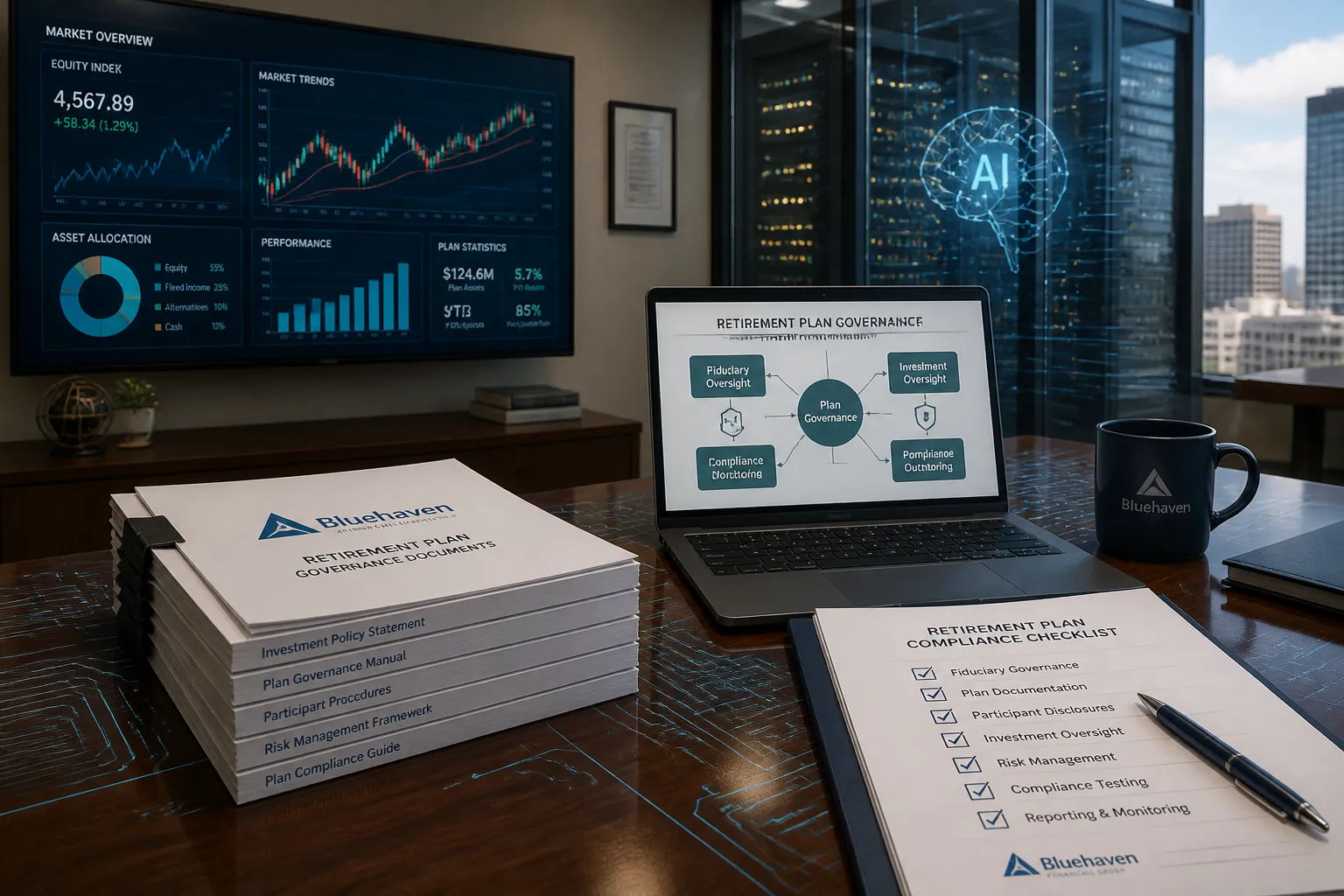
The retirement industry still lacks a widely accepted protocol for artificial‑intelligence‑assisted fiduciary conduct, a gap that has become more consequential as AI tools become available to plan sponsors, advisors and committee members. The absence of a clear framework means fiduciaries must still demonstrate prudence, but the standards for how that prudence is exercised, supervised and documented are higher when AI is involved.
The research that underpins this article identifies five stages of integrating human judgment and AI in fiduciary decision‑making. Stage 1 is human judgment alone, where decisions are based on experience, precedent and training. Stage 2 introduces structured human judgment through checklists, policies, investment policy statements and compliance frameworks. While these tools reduce variability, the research notes that they do not prove that the right issue was understood or that the fiduciary exercised the required reasoning.
Stage 3 marks the entry of AI‑assisted governance. Purpose‑built, role‑aware avatars are designed to surface missing information, flag inconsistencies, compare alternatives and test assumptions. The research stresses that AI at this stage is a co‑pilot, not a replacement for human judgment, and that behavioral governance—focusing on whether a fiduciary demonstrated knowledge, reasoning and execution—becomes essential.
In Stage 4, AI becomes more active and disciplined. Avatars guide decision making, validate evidence and support professional development while humans retain oversight. The research calls this the point at which AI proficiency becomes a fiduciary competency. Professionals must learn to challenge AI outputs, validate sources, recognize hallucinations and document reliance. Continuous, situational learning is now possible, with AI providing just‑in‑time guidance during tasks such as evaluating a target‑date fund, responding to a cybersecurity incident or preparing a committee report.
Stage 5 represents full integration, where human leaders and avatars operate as a unified system. The research compares the model to Google Maps: the human chooses the destination and remains responsible, while the system continuously integrates data, identifies risks and suggests routes. At this level, the retirement industry moves beyond isolated AI tools toward a fiduciary protocol that preserves human accountability.
The need for a structured pathway is echoed in recent industry commentary. A May 12, 2026 article in Legal News Feed notes that continuous education on AI developments, legal implications and best practices will be crucial for fiduciaries navigating the complex landscape. Robins Kaplan’s 2026 piece stresses that AI integration must preserve fiduciary integrity and that firms must ask key questions about when AI should be used, what evidence must be validated and what training is required.
The research argues that until the industry can answer these questions, AI adoption will remain fragmented, uneven and risky. It calls for permission structures, proficiency standards, purpose‑built platforms and a protocol that preserves human accountability. The next frontier in retirement professional development, according to the research, is AI proficiency grounded in fiduciary responsibility and behavioral governance.
In practice, this means that plan sponsors, advisors and committee members will need to adopt new tools that embed AI within existing fiduciary frameworks, while also ensuring that documentation, oversight and escalation procedures remain robust. The research does not provide a ready‑made solution, but it outlines the logical progression and the critical gaps that must be addressed before AI can be safely and effectively integrated into fiduciary conduct.
The retirement industry’s move toward a unified human‑AI fiduciary system will likely influence regulatory expectations, professional training programs and the design of future AI platforms. As the sector grapples with these challenges, the balance between human judgment and AI assistance will continue to shape how fiduciaries protect participants’ interests under ERISA and other governing statutes.
The research that underpins this article identifies five stages of integrating human judgment and AI in fiduciary decision‑making. Stage 1 is human judgment alone, where decisions are based on experience, precedent and training. Stage 2 introduces structured human judgment through checklists, policies, investment policy statements and compliance frameworks. While these tools reduce variability, the research notes that they do not prove that the right issue was understood or that the fiduciary exercised the required reasoning.
Stage 3 marks the entry of AI‑assisted governance. Purpose‑built, role‑aware avatars are designed to surface missing information, flag inconsistencies, compare alternatives and test assumptions. The research stresses that AI at this stage is a co‑pilot, not a replacement for human judgment, and that behavioral governance—focusing on whether a fiduciary demonstrated knowledge, reasoning and execution—becomes essential.
In Stage 4, AI becomes more active and disciplined. Avatars guide decision making, validate evidence and support professional development while humans retain oversight. The research calls this the point at which AI proficiency becomes a fiduciary competency. Professionals must learn to challenge AI outputs, validate sources, recognize hallucinations and document reliance. Continuous, situational learning is now possible, with AI providing just‑in‑time guidance during tasks such as evaluating a target‑date fund, responding to a cybersecurity incident or preparing a committee report.
Stage 5 represents full integration, where human leaders and avatars operate as a unified system. The research compares the model to Google Maps: the human chooses the destination and remains responsible, while the system continuously integrates data, identifies risks and suggests routes. At this level, the retirement industry moves beyond isolated AI tools toward a fiduciary protocol that preserves human accountability.
The need for a structured pathway is echoed in recent industry commentary. A May 12, 2026 article in Legal News Feed notes that continuous education on AI developments, legal implications and best practices will be crucial for fiduciaries navigating the complex landscape. Robins Kaplan’s 2026 piece stresses that AI integration must preserve fiduciary integrity and that firms must ask key questions about when AI should be used, what evidence must be validated and what training is required.
The research argues that until the industry can answer these questions, AI adoption will remain fragmented, uneven and risky. It calls for permission structures, proficiency standards, purpose‑built platforms and a protocol that preserves human accountability. The next frontier in retirement professional development, according to the research, is AI proficiency grounded in fiduciary responsibility and behavioral governance.
In practice, this means that plan sponsors, advisors and committee members will need to adopt new tools that embed AI within existing fiduciary frameworks, while also ensuring that documentation, oversight and escalation procedures remain robust. The research does not provide a ready‑made solution, but it outlines the logical progression and the critical gaps that must be addressed before AI can be safely and effectively integrated into fiduciary conduct.
The retirement industry’s move toward a unified human‑AI fiduciary system will likely influence regulatory expectations, professional training programs and the design of future AI platforms. As the sector grapples with these challenges, the balance between human judgment and AI assistance will continue to shape how fiduciaries protect participants’ interests under ERISA and other governing statutes.





