Blab AI
Northern Territory Eyes 12 Hyperscale Data Centres Amid Energy and Environmental Concerns
In a bid to turn its sun‑baked skies into a digital goldmine, the Northern Territory (NT) is courting 12 hyperscale data centres—an ambition that could make Australia’s most remote jurisdiction a new hub for artificial‑intelligence infrastructure.
The proposals, highlighted by Energy North’s 1‑gigawatt Project Ares in the Barkly region and a campus at Murranji Station, would demand a steady 1 GW of power—more than triple the peak demand of the Darwin‑Katherine grid, which reached 294.9 MW in 2024‑25, according to the NT Utilities Commission. If approved, the territory could host a cluster of facilities that would reshape its industrial profile.
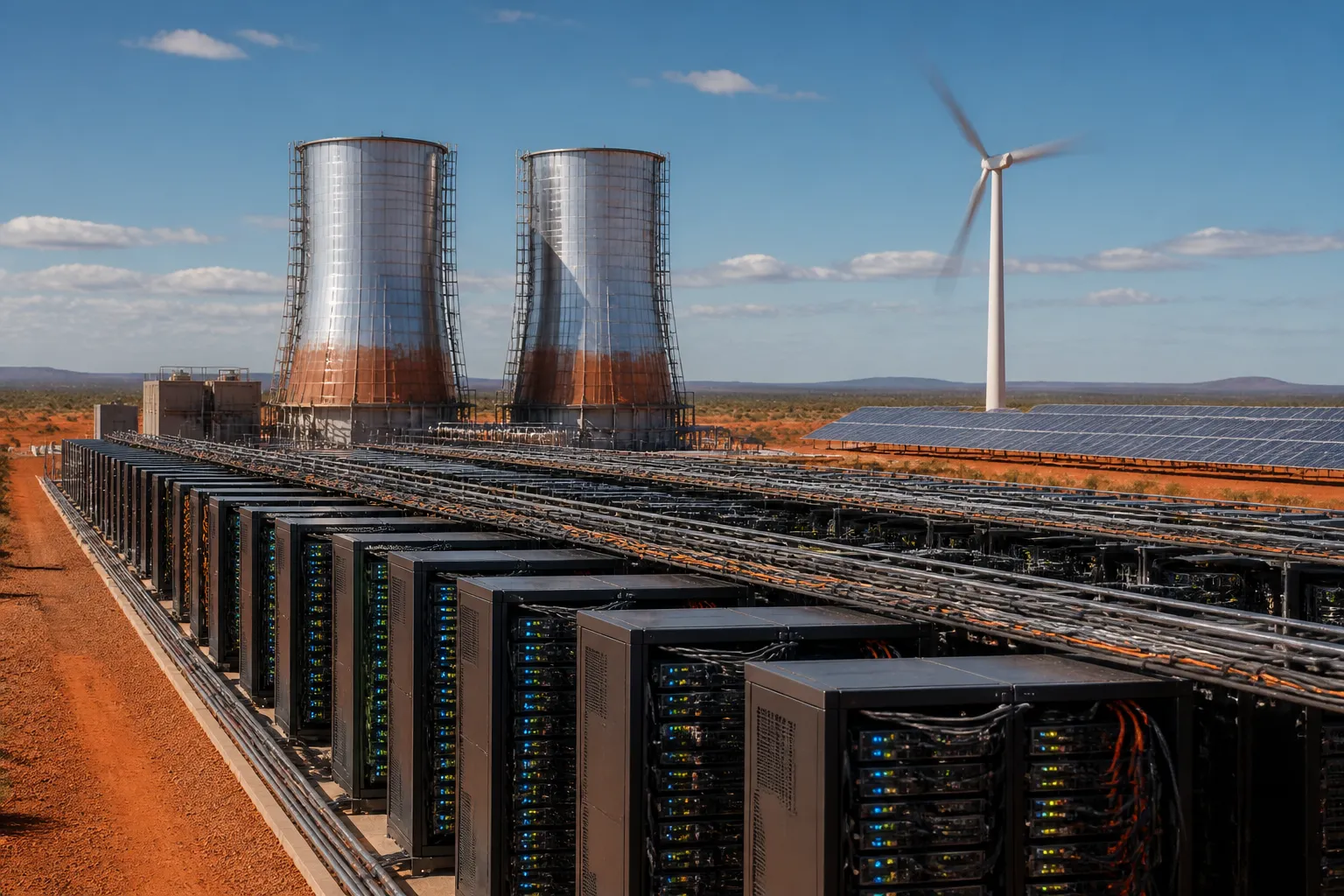
What makes the NT attractive to data‑centre operators is a rare combination of abundant solar irradiance and a growing natural‑gas supply in the Beetaloo Basin. “The territory’s sunny skies and vast reserves of natural gas make it an appealing destination for AI firms,” said Jason Finlay, a partner at Vantage North Group. Vantage North, founded by former senior NT public servants, works closely with gas companies in the basin and with firms planning data‑centre construction. The gas would provide a stable, abundant source of electricity for facilities that consume large amounts of power.
While solar farms could theoretically meet the full energy demand, Finlay explained that companies prefer a “gas firming” approach to keep costs predictable. He added that the NT’s solar potential is among the best in the world, offering a reliable baseline that can be supplemented by gas during periods of lower insolation.
Environmental groups have raised alarms about the energy and water footprint of the proposed sites. Greenpeace Australia Pacific has called for a moratorium on new data‑centres until legislation is reviewed. “The frenzy of development could derail Australia’s transition to renewable energy,” said Greenpeace campaigner Solaye Snider. A Greenpeace report estimates that data‑centres could account for 13 % of national electricity demand by 2040.
Water use is another point of contention. The proposed 1‑GW campus in the Barkly region would consume up to 4 gigalitres annually—more than the water used by Greater Darwin in a single month, according to NT Power and Water Corporation data. Sydney Water projects that data‑centres could represent a quarter of the city’s total annual water use by 2035. Snider argued that the lack of binding regulations allows data‑centres powered by a mix of gas and renewables to operate without limits on gas consumption.
The federal government is reportedly weighing options, and AI is expected to feature prominently in the Labor Party’s national conference agenda this week. The party could broaden its platform to include oversight on safety risks, copyright, and the demand for electricity and water that AI infrastructure generates.
Developers are also attracted to the NT because traditional commercial hubs such as Singapore have tightened regulations to prevent data‑centres from straining local power grids. Finlay said Darwin’s proximity to undersea cables that connect Australia to Southeast Asia makes it an attractive location for data traffic. He explained that building a 5‑GW campus in the NT would allow operators to transmit data to Singapore without importing energy.
The NT’s economy, largely based on mining and petroleum, has seen a modest population of 260,400 as of March 2025, with Darwin housing about 52.6 % of residents. The addition of large data‑centres would represent a significant shift in the territory’s industrial profile.
In summary, the Northern Territory is poised to become a hub for AI data‑centre development, driven by solar and gas resources. However, the proposals face scrutiny over energy consumption, water use, and regulatory gaps. The federal government’s upcoming policy decisions and the outcome of the Labor conference will likely shape the trajectory of these projects.
The current status is that 12 proposals have been submitted, with Project Ares and the Murranji Station campus among the most advanced. No final approvals have been granted, and environmental reviews are ongoing. The outcome of the moratorium call and potential new legislation on renewable‑energy mandates remain unresolved.
The proposals, highlighted by Energy North’s 1‑gigawatt Project Ares in the Barkly region and a campus at Murranji Station, would demand a steady 1 GW of power—more than triple the peak demand of the Darwin‑Katherine grid, which reached 294.9 MW in 2024‑25, according to the NT Utilities Commission. If approved, the territory could host a cluster of facilities that would reshape its industrial profile.
What makes the NT attractive to data‑centre operators is a rare combination of abundant solar irradiance and a growing natural‑gas supply in the Beetaloo Basin. “The territory’s sunny skies and vast reserves of natural gas make it an appealing destination for AI firms,” said Jason Finlay, a partner at Vantage North Group. Vantage North, founded by former senior NT public servants, works closely with gas companies in the basin and with firms planning data‑centre construction. The gas would provide a stable, abundant source of electricity for facilities that consume large amounts of power.
While solar farms could theoretically meet the full energy demand, Finlay explained that companies prefer a “gas firming” approach to keep costs predictable. He added that the NT’s solar potential is among the best in the world, offering a reliable baseline that can be supplemented by gas during periods of lower insolation.
Environmental groups have raised alarms about the energy and water footprint of the proposed sites. Greenpeace Australia Pacific has called for a moratorium on new data‑centres until legislation is reviewed. “The frenzy of development could derail Australia’s transition to renewable energy,” said Greenpeace campaigner Solaye Snider. A Greenpeace report estimates that data‑centres could account for 13 % of national electricity demand by 2040.
Water use is another point of contention. The proposed 1‑GW campus in the Barkly region would consume up to 4 gigalitres annually—more than the water used by Greater Darwin in a single month, according to NT Power and Water Corporation data. Sydney Water projects that data‑centres could represent a quarter of the city’s total annual water use by 2035. Snider argued that the lack of binding regulations allows data‑centres powered by a mix of gas and renewables to operate without limits on gas consumption.
The federal government is reportedly weighing options, and AI is expected to feature prominently in the Labor Party’s national conference agenda this week. The party could broaden its platform to include oversight on safety risks, copyright, and the demand for electricity and water that AI infrastructure generates.
Developers are also attracted to the NT because traditional commercial hubs such as Singapore have tightened regulations to prevent data‑centres from straining local power grids. Finlay said Darwin’s proximity to undersea cables that connect Australia to Southeast Asia makes it an attractive location for data traffic. He explained that building a 5‑GW campus in the NT would allow operators to transmit data to Singapore without importing energy.
The NT’s economy, largely based on mining and petroleum, has seen a modest population of 260,400 as of March 2025, with Darwin housing about 52.6 % of residents. The addition of large data‑centres would represent a significant shift in the territory’s industrial profile.
In summary, the Northern Territory is poised to become a hub for AI data‑centre development, driven by solar and gas resources. However, the proposals face scrutiny over energy consumption, water use, and regulatory gaps. The federal government’s upcoming policy decisions and the outcome of the Labor conference will likely shape the trajectory of these projects.
The current status is that 12 proposals have been submitted, with Project Ares and the Murranji Station campus among the most advanced. No final approvals have been granted, and environmental reviews are ongoing. The outcome of the moratorium call and potential new legislation on renewable‑energy mandates remain unresolved.





