Blab AI
Asian AI Startups Capitalise on Anthropics Mythos Export Ban
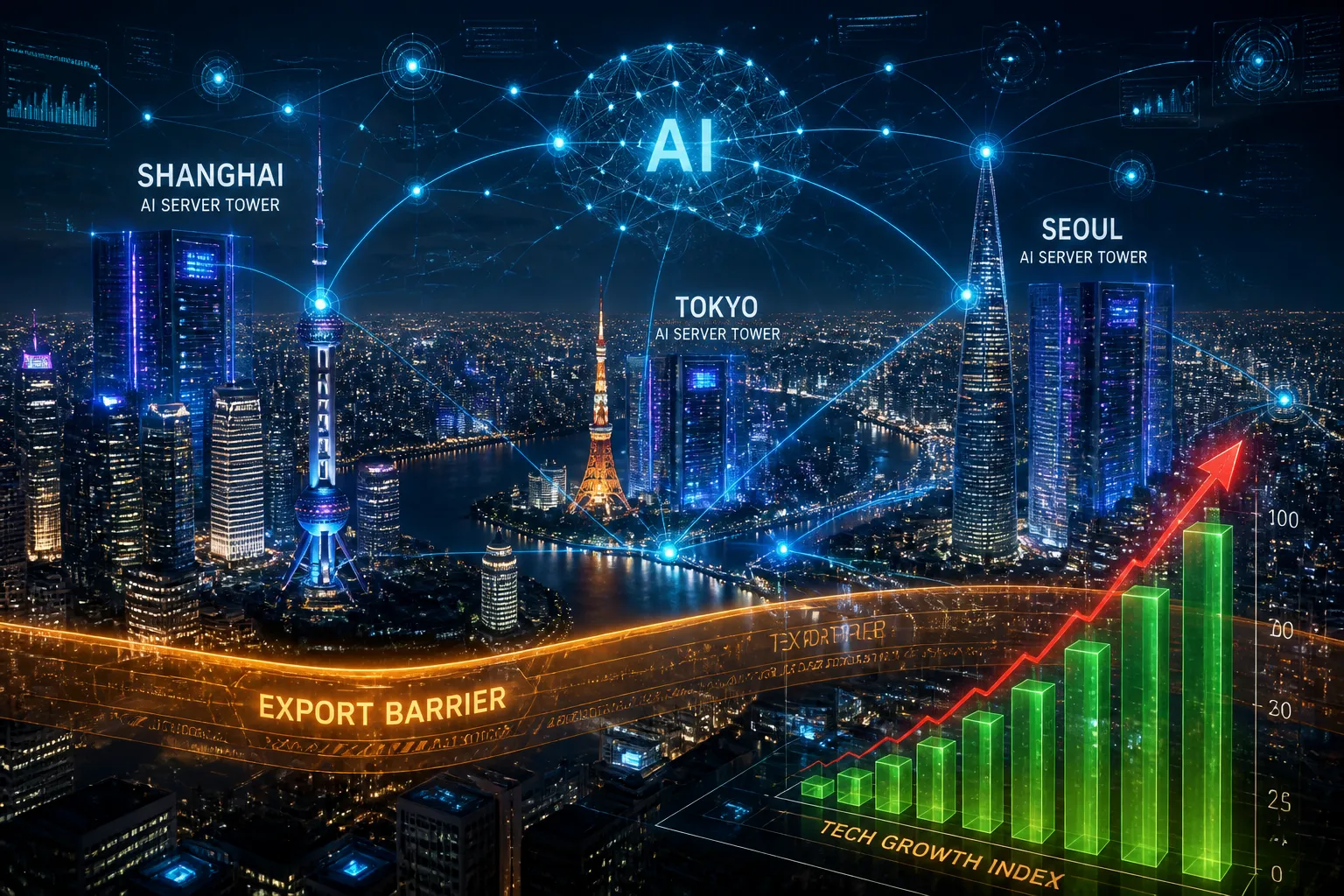
The United States’ recent export‑control directive that suspended all foreign access to Anthropic’s Mythos model has opened a window for Asian artificial‑intelligence firms to launch competing large‑language models. The ban, which has been in effect for the third consecutive month, has left the flagship model unavailable in the region, prompting a swift response from several local startups.
On Tuesday, Singapore‑based Vertex AI announced the release of its Phoenix‑7 model, describing it as offering “Mythos‑level reasoning without the Washington red tape.” The same day, South Korean unicorn Mindforge unveiled Atlas, a model that the company claims matches Mythos performance on key enterprise benchmarks. Both launches came while Anthropic’s Mythos remained locked out of Asian markets.
The export ban was issued by the U.S. Commerce Department on June 12, 2026, citing national‑security concerns. The directive required Anthropic to disable all access to its Fable 5 and Mythos 5 models for any foreign national, whether inside or outside the United States. Anthropic complied by disabling the models late on Friday, after the models had been publicly announced three days earlier.
Vertex AI’s CEO, Zhang Wei, told reporters at the launch event that the company was not waiting for American firms to resolve their regulatory problems. “We’re not waiting around for American companies to figure out their regulatory problems,” he said. The statement reflects a growing sentiment across Asia’s AI ecosystem that if U.S. labs cannot provide consistent access to frontier models, local alternatives will step up.
The timing of the ban is significant for U.S. dominance in the AI market. IDC projects the Asian AI market to be worth $847 billion in 2026, with enterprise adoption accelerating faster than in North America or Europe. Every week that Mythos remains banned is another week for competitors to lock in enterprise contracts, train sales teams on local alternatives, and build customer stickiness that is difficult to break.
Anthropic’s Mythos model was originally developed to find vulnerabilities in software and has not been publicly released, citing safety and misuse concerns. The model’s absence from Asian markets has created a vacuum that local firms are eager to fill. Vertex AI’s Phoenix‑7 and Mindforge’s Atlas are positioned as direct competitors, offering similar reasoning capabilities without the export‑control constraints.
The export ban has also prompted broader discussion about the future of AI regulation. Analysts note that the U.S. government’s use of national‑security export controls to restrict access to advanced models could have long‑term effects on the global AI ecosystem. If Asian firms continue to gain traction, the center of gravity for AI development may shift toward the Pacific.
Anthropic has been under scrutiny from U.S. federal agencies since early 2026, after the Department of Defense designated the company a supply‑chain risk and barred private military contractors from doing business with it. The company has engaged with the White House to resolve the export restrictions, but no resolution has been announced.
The launch of Phoenix‑7 and Atlas demonstrates that Asian AI startups are prepared to step into the void left by the Mythos ban. Whether these models will achieve the same level of performance and adoption as Anthropic’s flagship is uncertain, but the immediate response indicates a strategic shift in the industry.
In the coming weeks, the U.S. government may revisit the export‑control directive, and Asian firms will likely continue to accelerate their own model development. The outcome will shape the competitive landscape for enterprise AI solutions in Asia and beyond.
On Tuesday, Singapore‑based Vertex AI announced the release of its Phoenix‑7 model, describing it as offering “Mythos‑level reasoning without the Washington red tape.” The same day, South Korean unicorn Mindforge unveiled Atlas, a model that the company claims matches Mythos performance on key enterprise benchmarks. Both launches came while Anthropic’s Mythos remained locked out of Asian markets.
The export ban was issued by the U.S. Commerce Department on June 12, 2026, citing national‑security concerns. The directive required Anthropic to disable all access to its Fable 5 and Mythos 5 models for any foreign national, whether inside or outside the United States. Anthropic complied by disabling the models late on Friday, after the models had been publicly announced three days earlier.
Vertex AI’s CEO, Zhang Wei, told reporters at the launch event that the company was not waiting for American firms to resolve their regulatory problems. “We’re not waiting around for American companies to figure out their regulatory problems,” he said. The statement reflects a growing sentiment across Asia’s AI ecosystem that if U.S. labs cannot provide consistent access to frontier models, local alternatives will step up.
The timing of the ban is significant for U.S. dominance in the AI market. IDC projects the Asian AI market to be worth $847 billion in 2026, with enterprise adoption accelerating faster than in North America or Europe. Every week that Mythos remains banned is another week for competitors to lock in enterprise contracts, train sales teams on local alternatives, and build customer stickiness that is difficult to break.
Anthropic’s Mythos model was originally developed to find vulnerabilities in software and has not been publicly released, citing safety and misuse concerns. The model’s absence from Asian markets has created a vacuum that local firms are eager to fill. Vertex AI’s Phoenix‑7 and Mindforge’s Atlas are positioned as direct competitors, offering similar reasoning capabilities without the export‑control constraints.
The export ban has also prompted broader discussion about the future of AI regulation. Analysts note that the U.S. government’s use of national‑security export controls to restrict access to advanced models could have long‑term effects on the global AI ecosystem. If Asian firms continue to gain traction, the center of gravity for AI development may shift toward the Pacific.
Anthropic has been under scrutiny from U.S. federal agencies since early 2026, after the Department of Defense designated the company a supply‑chain risk and barred private military contractors from doing business with it. The company has engaged with the White House to resolve the export restrictions, but no resolution has been announced.
The launch of Phoenix‑7 and Atlas demonstrates that Asian AI startups are prepared to step into the void left by the Mythos ban. Whether these models will achieve the same level of performance and adoption as Anthropic’s flagship is uncertain, but the immediate response indicates a strategic shift in the industry.
In the coming weeks, the U.S. government may revisit the export‑control directive, and Asian firms will likely continue to accelerate their own model development. The outcome will shape the competitive landscape for enterprise AI solutions in Asia and beyond.





