Blab AI
Central Valley Launches Supercomputing Hub to Accelerate AI-Driven Agriculture
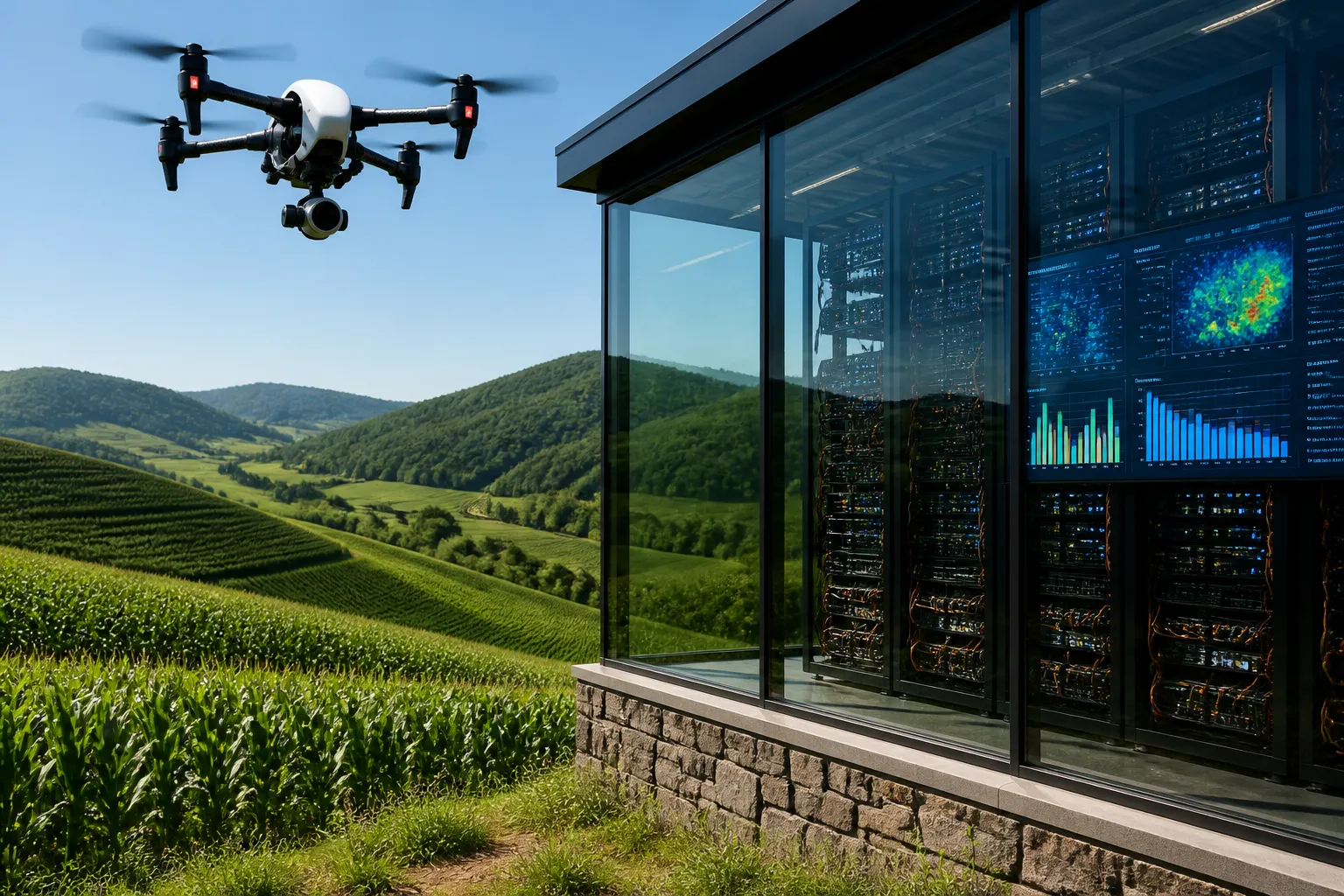
California’s Central Valley is set to become a new center of computational power, with Fresno State, the San Diego Supercomputer Center (SDSC) at UC San Diego, and F3 Innovate announcing the opening of a regional supercomputing hub on Fresno State’s campus. The facility will give growers, processors, manufacturers, researchers and startups shared access to high‑performance computing resources that can be used to develop AI applications, analyze large datasets and test emerging technologies without the need to build their own infrastructure.
The formal ribbon‑cutting will take place Thursday at 10 a.m. in the Fresno State Library. Attendees will see live demonstrations of AI tools, hear case studies from the ag‑food industry, and listen to panelists discuss agriculture, food security and workforce development. The partnership blends Fresno State’s agricultural research and workforce programs with SDSC’s technical expertise and F3 Innovate’s industry network.
F3 Innovate CEO Priscilla Koepke said advanced computing infrastructure is becoming essential for industries that rely on artificial intelligence, robotics and data analysis. “The technologies shaping agriculture’s future … all depend on the ability to process and apply massive amounts of information,” she said.
According to the partnership, the center will help organizations throughout the food and agriculture supply chain apply AI technologies while making advanced computing resources more accessible. The focus will be on three primary areas: shared high‑performance computing resources, applied AI consulting and technical support, and workforce development through student and professional training programs.
Fresno State Vice President for Information Technology and Chief Information Officer Bao Johri added that the center will expand opportunities for students and faculty by connecting them with emerging technologies and industry partners. “By hosting this center, Fresno State will help prepare the next generation of engineers, researchers, agricultural professionals and entrepreneurs while strengthening the innovation ecosystem that supports the Central Valley’s economy,” he said.
The San Diego Supercomputer Center has spent decades supporting scientific computing and cyberinfrastructure, including projects funded by the National Science Foundation. The new center is part of F3 Innovate’s broader effort to strengthen the Central Valley’s innovation ecosystem by connecting universities, businesses, investors and public agencies to accelerate the commercialization and adoption of new agricultural technologies.
The facility will provide a shared HPC environment that includes CPU and GPU nodes, high‑speed storage and networking. Users will be able to run machine‑learning workloads, process satellite imagery, model crop yields and simulate supply‑chain scenarios. In addition to the hardware, the center will offer consulting services to help clients design AI pipelines, optimize models and integrate results into decision‑making processes. Training programs will target both students and industry professionals, covering topics such as data science, AI ethics and the practical application of HPC in agriculture.
The launch reflects a growing recognition that the Central Valley’s agricultural productivity depends increasingly on data‑driven insights. By lowering the barrier to high‑performance computing, the center aims to accelerate innovation across the supply chain and support the region’s economic resilience. The partnership also signals a broader trend of universities and research institutions collaborating with industry to provide shared infrastructure that can be leveraged by a wide range of stakeholders.
As the center begins operations, it will likely attract research projects, startup incubations and industry pilots that require substantial computational power. The partnership’s focus on workforce development should help build a pipeline of talent equipped to work with advanced analytics and AI tools in the ag‑food sector. While the center’s long‑term impact remains to be seen, its establishment marks a concrete step toward integrating high‑performance computing into California’s agricultural innovation ecosystem.
The formal ribbon‑cutting will take place Thursday at 10 a.m. in the Fresno State Library. Attendees will see live demonstrations of AI tools, hear case studies from the ag‑food industry, and listen to panelists discuss agriculture, food security and workforce development. The partnership blends Fresno State’s agricultural research and workforce programs with SDSC’s technical expertise and F3 Innovate’s industry network.
F3 Innovate CEO Priscilla Koepke said advanced computing infrastructure is becoming essential for industries that rely on artificial intelligence, robotics and data analysis. “The technologies shaping agriculture’s future … all depend on the ability to process and apply massive amounts of information,” she said.
According to the partnership, the center will help organizations throughout the food and agriculture supply chain apply AI technologies while making advanced computing resources more accessible. The focus will be on three primary areas: shared high‑performance computing resources, applied AI consulting and technical support, and workforce development through student and professional training programs.
Fresno State Vice President for Information Technology and Chief Information Officer Bao Johri added that the center will expand opportunities for students and faculty by connecting them with emerging technologies and industry partners. “By hosting this center, Fresno State will help prepare the next generation of engineers, researchers, agricultural professionals and entrepreneurs while strengthening the innovation ecosystem that supports the Central Valley’s economy,” he said.
The San Diego Supercomputer Center has spent decades supporting scientific computing and cyberinfrastructure, including projects funded by the National Science Foundation. The new center is part of F3 Innovate’s broader effort to strengthen the Central Valley’s innovation ecosystem by connecting universities, businesses, investors and public agencies to accelerate the commercialization and adoption of new agricultural technologies.
The facility will provide a shared HPC environment that includes CPU and GPU nodes, high‑speed storage and networking. Users will be able to run machine‑learning workloads, process satellite imagery, model crop yields and simulate supply‑chain scenarios. In addition to the hardware, the center will offer consulting services to help clients design AI pipelines, optimize models and integrate results into decision‑making processes. Training programs will target both students and industry professionals, covering topics such as data science, AI ethics and the practical application of HPC in agriculture.
The launch reflects a growing recognition that the Central Valley’s agricultural productivity depends increasingly on data‑driven insights. By lowering the barrier to high‑performance computing, the center aims to accelerate innovation across the supply chain and support the region’s economic resilience. The partnership also signals a broader trend of universities and research institutions collaborating with industry to provide shared infrastructure that can be leveraged by a wide range of stakeholders.
As the center begins operations, it will likely attract research projects, startup incubations and industry pilots that require substantial computational power. The partnership’s focus on workforce development should help build a pipeline of talent equipped to work with advanced analytics and AI tools in the ag‑food sector. While the center’s long‑term impact remains to be seen, its establishment marks a concrete step toward integrating high‑performance computing into California’s agricultural innovation ecosystem.





