Blab AI
Utahs Stratos Data-Center Plan Sparks Environmental, Political, and Legal Backlash
In March 2026, the state of Utah unveiled the Stratos Project, a colossal hyperscale data‑center campus set to occupy more than 40,000 acres in Box Elder County—an area larger than Manhattan twice over. The proposal, backed by investor Kevin O’Leary and championed by the Military Installation Development Authority (MIDA), was cleared by the county commission on May 4, 2026 after MIDA routed the plan through its special‑district authority, allowing it to sidestep standard zoning and public‑review processes.
Stratos was pitched as a hub for advanced artificial‑intelligence training, defense computing, and a catalyst for local manufacturing. According to the proposal, the facility would consume more than twice Utah’s average electricity demand, drawing power from a dedicated natural‑gas supply. Its sheer scale immediately drew environmental scrutiny.
Utah State University professor Robert Davies warned that the heat radiated by the data center would raise daytime temperatures in the region by five degrees Fahrenheit and nighttime temperatures by 28 degrees—a thermal load equivalent to 23 atomic bombs. Ecology professor Ben Abbott added that such temperature spikes could shift the semiarid Box Elder County toward a climate resembling the Sahara. The project would also demand a large water draw in a territory already grappling with drought.
Despite these red flags, the county commission approved the project in a meeting on May 4—just two months after the announcement—thanks in part to MIDA’s expedited authority. The decision came amid growing public opposition; thousands of residents voiced their concerns, and the backlash intensified throughout May.
On May 29, Governor Spencer Cox issued an executive order directing state agencies to evaluate data‑center proposals more thoroughly. Although the order did not name Stratos specifically, the timing and the governor’s public remarks—“People are concerned about data centers…they’re concerned about the lake, they’re concerned about resources, and they should be concerned”—made it clear that the project had become a flashpoint.
Shortly after the executive order, O’Leary agreed to cut the proposed footprint from 40,000 acres to just over 20,000 acres. The reduction was announced less than a week after the governor’s directive.
The political fallout extended beyond the county. On June 23, Utah State Senate President J. Stuart Adams, who had chaired the agency that approved Stratos, lost his Senate seat to a challenger who criticized Adams’ support of the project.
Legal challenges have also emerged. Two lawsuits have been filed against the Stratos Project, each likely to slow the already scaled‑back development. The lawsuits are part of a broader pattern of litigation and delays affecting data‑center construction across the United States.
Industry analysts note that the Stratos controversy is not isolated. JPMorgan’s analysis of 2027 data‑center capacity projects found that more than 60 % of planned capacity was not yet under construction. Data Center Watch reported that in the first quarter of 2026, more than $130 billion worth of projects were delayed or canceled.
In response to growing community and regulatory pressure, several states have enacted new rules. Utah’s executive order, Maine’s bipartisan data‑center moratorium act (currently under consideration after the November 2026 elections), Ohio’s requirement that operators cover grid costs, and California’s mandate that operators disclose electricity consumption are examples of state‑level action.
Large technology firms have also announced plans to incorporate environmental safeguards into their data‑center development. Microsoft’s “Community‑First” AI infrastructure plan, announced in January 2026 after the cancellation of a Wisconsin site, commits the company to covering grid and electricity costs, minimizing water use, and paying full property taxes. OpenAI has called for significant renewable‑energy investment to modernize the U.S. grid, while Anthropic pledged to cover grid infrastructure improvements and electricity cost increases for the data centers it uses.
These corporate and state initiatives contrast with the federal stance. A July 2025 executive order from the Trump administration eased regulatory burdens on data centers costing at least $500 million, compressing review windows and streamlining environmental evaluations. The order made no reference to water consumption or community concerns that have driven the Stratos backlash.
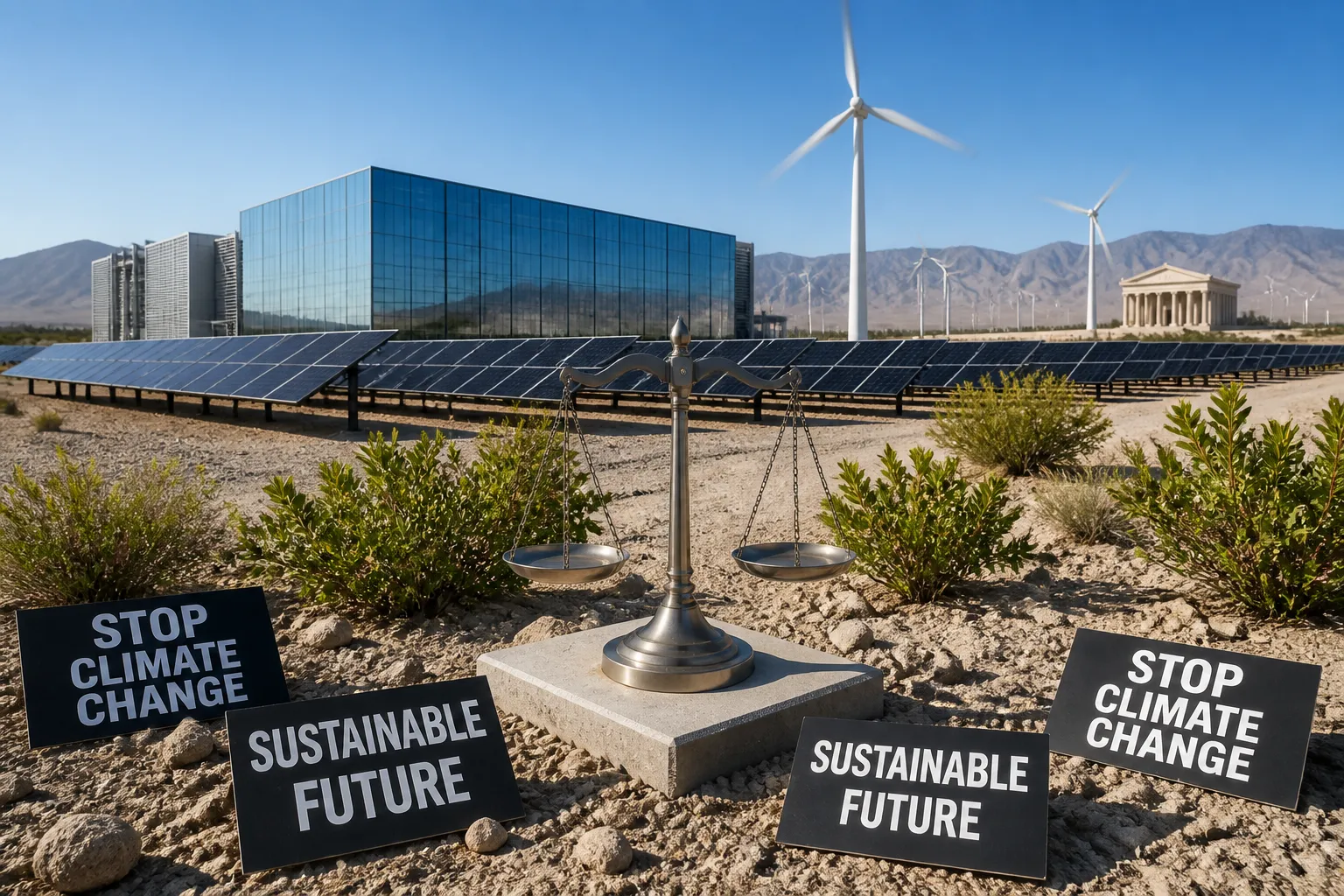
The Stratos case illustrates the tension between rapid data‑center expansion and the need for enforceable environmental and community safeguards. Investors face financial risk from lawsuits and delays, while local communities confront potential climate and water‑resource impacts. The situation underscores the urgency of establishing clear, enforceable standards that balance national AI and defense priorities with environmental protection and public acceptance.
As of July 2026, the Stratos Project remains scaled back to roughly 20,000 acres, but the legal and regulatory challenges continue. The outcome of the pending lawsuits and the effectiveness of new state regulations will shape the future of large‑scale data‑center development in Utah and beyond.
Stratos was pitched as a hub for advanced artificial‑intelligence training, defense computing, and a catalyst for local manufacturing. According to the proposal, the facility would consume more than twice Utah’s average electricity demand, drawing power from a dedicated natural‑gas supply. Its sheer scale immediately drew environmental scrutiny.
Utah State University professor Robert Davies warned that the heat radiated by the data center would raise daytime temperatures in the region by five degrees Fahrenheit and nighttime temperatures by 28 degrees—a thermal load equivalent to 23 atomic bombs. Ecology professor Ben Abbott added that such temperature spikes could shift the semiarid Box Elder County toward a climate resembling the Sahara. The project would also demand a large water draw in a territory already grappling with drought.
Despite these red flags, the county commission approved the project in a meeting on May 4—just two months after the announcement—thanks in part to MIDA’s expedited authority. The decision came amid growing public opposition; thousands of residents voiced their concerns, and the backlash intensified throughout May.
On May 29, Governor Spencer Cox issued an executive order directing state agencies to evaluate data‑center proposals more thoroughly. Although the order did not name Stratos specifically, the timing and the governor’s public remarks—“People are concerned about data centers…they’re concerned about the lake, they’re concerned about resources, and they should be concerned”—made it clear that the project had become a flashpoint.
Shortly after the executive order, O’Leary agreed to cut the proposed footprint from 40,000 acres to just over 20,000 acres. The reduction was announced less than a week after the governor’s directive.
The political fallout extended beyond the county. On June 23, Utah State Senate President J. Stuart Adams, who had chaired the agency that approved Stratos, lost his Senate seat to a challenger who criticized Adams’ support of the project.
Legal challenges have also emerged. Two lawsuits have been filed against the Stratos Project, each likely to slow the already scaled‑back development. The lawsuits are part of a broader pattern of litigation and delays affecting data‑center construction across the United States.
Industry analysts note that the Stratos controversy is not isolated. JPMorgan’s analysis of 2027 data‑center capacity projects found that more than 60 % of planned capacity was not yet under construction. Data Center Watch reported that in the first quarter of 2026, more than $130 billion worth of projects were delayed or canceled.
In response to growing community and regulatory pressure, several states have enacted new rules. Utah’s executive order, Maine’s bipartisan data‑center moratorium act (currently under consideration after the November 2026 elections), Ohio’s requirement that operators cover grid costs, and California’s mandate that operators disclose electricity consumption are examples of state‑level action.
Large technology firms have also announced plans to incorporate environmental safeguards into their data‑center development. Microsoft’s “Community‑First” AI infrastructure plan, announced in January 2026 after the cancellation of a Wisconsin site, commits the company to covering grid and electricity costs, minimizing water use, and paying full property taxes. OpenAI has called for significant renewable‑energy investment to modernize the U.S. grid, while Anthropic pledged to cover grid infrastructure improvements and electricity cost increases for the data centers it uses.
These corporate and state initiatives contrast with the federal stance. A July 2025 executive order from the Trump administration eased regulatory burdens on data centers costing at least $500 million, compressing review windows and streamlining environmental evaluations. The order made no reference to water consumption or community concerns that have driven the Stratos backlash.
The Stratos case illustrates the tension between rapid data‑center expansion and the need for enforceable environmental and community safeguards. Investors face financial risk from lawsuits and delays, while local communities confront potential climate and water‑resource impacts. The situation underscores the urgency of establishing clear, enforceable standards that balance national AI and defense priorities with environmental protection and public acceptance.
As of July 2026, the Stratos Project remains scaled back to roughly 20,000 acres, but the legal and regulatory challenges continue. The outcome of the pending lawsuits and the effectiveness of new state regulations will shape the future of large‑scale data‑center development in Utah and beyond.





