Blab AI
iPhones 2007 Launch Linked to U.S. Birth-Rate Decline, Study Finds; Musks AI Prototype Rumor Debunked
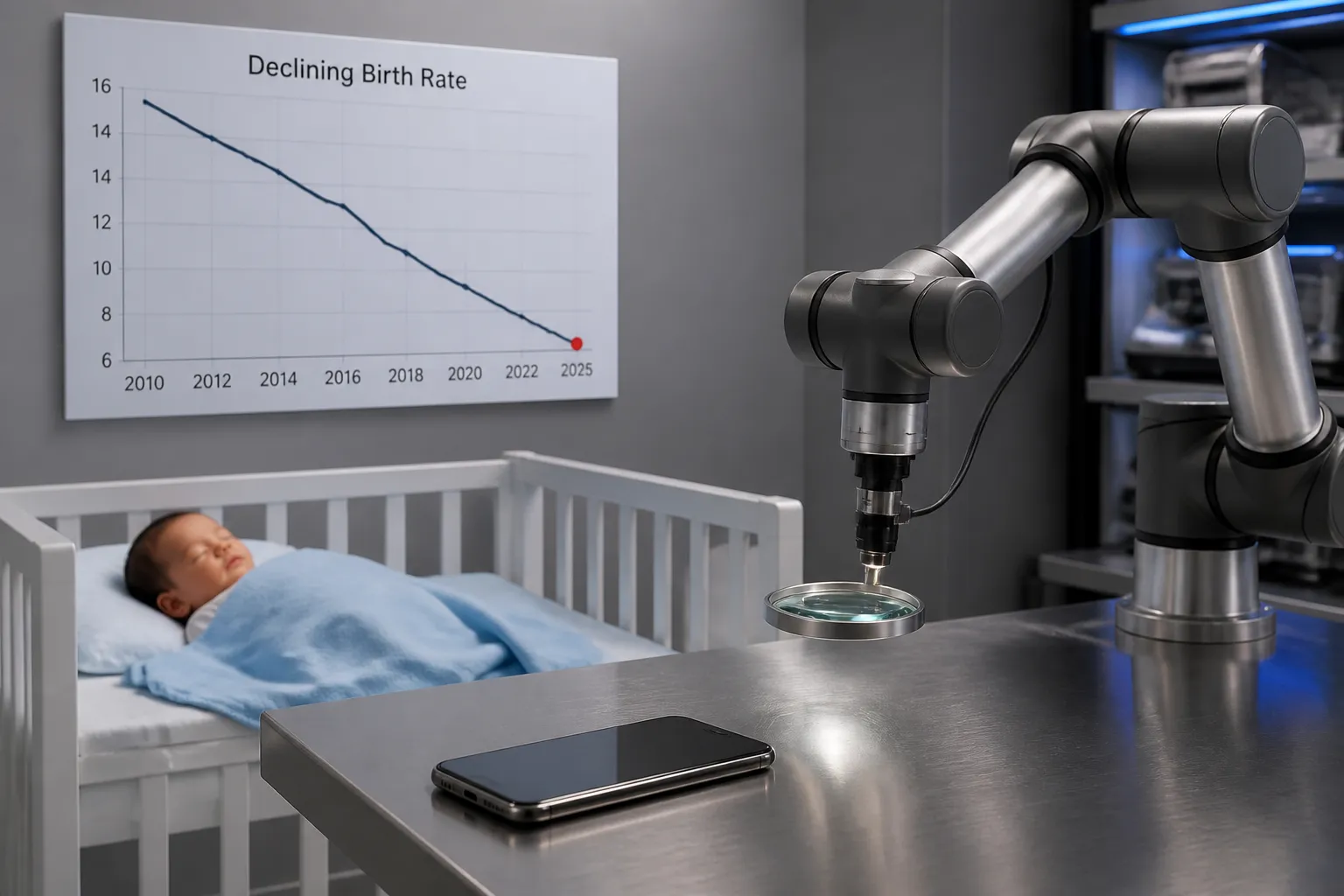
A working paper released by the National Bureau of Economic Research (NBER) in June 2026 links Apple’s first iPhone to a measurable drop in U.S. fertility rates. The study, Is the iPhone Birth Control? Causal Evidence from AT&T’s 2007–2011 Rollout, uses the fact that the iPhone was sold exclusively through AT&T during its first four years as a natural experiment. By comparing birth‑rate trends in regions with high AT&T broadband coverage to those with lower coverage, the authors estimate that the iPhone accounts for between 33 % and 52 % of the decline in births from 2007 to 2011, with the strongest effect among women aged 15 to 24.
The authors note that the iPhone was not the only smartphone on the market during the period. AT&T also offered BlackBerry, HTC, Nokia, and other devices that could serve similar functions. Accordingly, the estimate reflects the contribution of the “modern smartphone” rather than the iPhone alone. The study points out that the decline in birth rates began in 2007, the same year the iPhone entered the market, and that the effect appears concentrated among younger women.
Critics of the analysis raise several methodological concerns. The data come from AT&T customers, a subset of the U.S. population that may differ demographically from the broader public in ways that affect fertility. The study does not control for other factors that could influence birth rates, such as changes in contraceptive access, economic conditions, or cultural shifts. The authors also admit that the paper demonstrates a correlation that is consistent with, but does not prove, the hypothesis that smartphones reduce in‑person interactions and increase pornography consumption.
Supporting evidence from other sources shows that searches for pornography rose sharply in 2014 but fell back to 2009 levels by 2024, suggesting that the novelty of online adult content may have worn off. The NBER paper does not claim that the iPhone was the sole cause of the birth‑rate decline, but it does suggest that the device played a “sizable role.”
Separately, a rumor that surfaced in early 2026 alleged that SpaceX’s subsidiary xAI had shown a prototype AI device to investors. The claim was reportedly made by an unnamed source and was later denied by Elon Musk, who called the story “utterly false.” No official documentation or product announcement has been released, and the rumor has not been corroborated by any credible source. The story gained traction partly because it followed two high‑profile AI‑device failures: Humane’s AI pin and the Rabbit R1.
Industry observers note that the hardware side of AI devices is largely solved, with many companies capable of producing thin, low‑power chips that can run large language models. The challenge remains to integrate these chips into consumer‑friendly products that deliver useful services. Apple, for example, has long rumored plans to add cameras to AirPods or develop smart glasses that would feed visual data to the iPhone’s on‑device AI engine. Such devices would not need to be standalone; they could simply act as sensors for the iPhone.
The Musk rumor underscores a broader trend of speculation around AI hardware. While companies like OpenAI and Anthropic have explored hardware‑accelerated inference, no major launch has yet materialized. The lack of a confirmed prototype from xAI suggests that, if a device is in development, it remains in the early design phase.
In summary, the NBER study presents evidence that the iPhone’s introduction coincided with a measurable drop in U.S. birth rates, though the causal link remains debated. Meanwhile, the Musk AI prototype claim has been officially denied, and no tangible product has emerged from the rumor. Both stories illustrate the ongoing scrutiny of how emerging technologies intersect with societal trends and the caution required when interpreting early research or unverified reports.
The authors note that the iPhone was not the only smartphone on the market during the period. AT&T also offered BlackBerry, HTC, Nokia, and other devices that could serve similar functions. Accordingly, the estimate reflects the contribution of the “modern smartphone” rather than the iPhone alone. The study points out that the decline in birth rates began in 2007, the same year the iPhone entered the market, and that the effect appears concentrated among younger women.
Critics of the analysis raise several methodological concerns. The data come from AT&T customers, a subset of the U.S. population that may differ demographically from the broader public in ways that affect fertility. The study does not control for other factors that could influence birth rates, such as changes in contraceptive access, economic conditions, or cultural shifts. The authors also admit that the paper demonstrates a correlation that is consistent with, but does not prove, the hypothesis that smartphones reduce in‑person interactions and increase pornography consumption.
Supporting evidence from other sources shows that searches for pornography rose sharply in 2014 but fell back to 2009 levels by 2024, suggesting that the novelty of online adult content may have worn off. The NBER paper does not claim that the iPhone was the sole cause of the birth‑rate decline, but it does suggest that the device played a “sizable role.”
Separately, a rumor that surfaced in early 2026 alleged that SpaceX’s subsidiary xAI had shown a prototype AI device to investors. The claim was reportedly made by an unnamed source and was later denied by Elon Musk, who called the story “utterly false.” No official documentation or product announcement has been released, and the rumor has not been corroborated by any credible source. The story gained traction partly because it followed two high‑profile AI‑device failures: Humane’s AI pin and the Rabbit R1.
Industry observers note that the hardware side of AI devices is largely solved, with many companies capable of producing thin, low‑power chips that can run large language models. The challenge remains to integrate these chips into consumer‑friendly products that deliver useful services. Apple, for example, has long rumored plans to add cameras to AirPods or develop smart glasses that would feed visual data to the iPhone’s on‑device AI engine. Such devices would not need to be standalone; they could simply act as sensors for the iPhone.
The Musk rumor underscores a broader trend of speculation around AI hardware. While companies like OpenAI and Anthropic have explored hardware‑accelerated inference, no major launch has yet materialized. The lack of a confirmed prototype from xAI suggests that, if a device is in development, it remains in the early design phase.
In summary, the NBER study presents evidence that the iPhone’s introduction coincided with a measurable drop in U.S. birth rates, though the causal link remains debated. Meanwhile, the Musk AI prototype claim has been officially denied, and no tangible product has emerged from the rumor. Both stories illustrate the ongoing scrutiny of how emerging technologies intersect with societal trends and the caution required when interpreting early research or unverified reports.





