Blab AI
AI Workshop at Prairie View A&M Shows How Small Businesses Can Use AI to Win Contracts and Grants
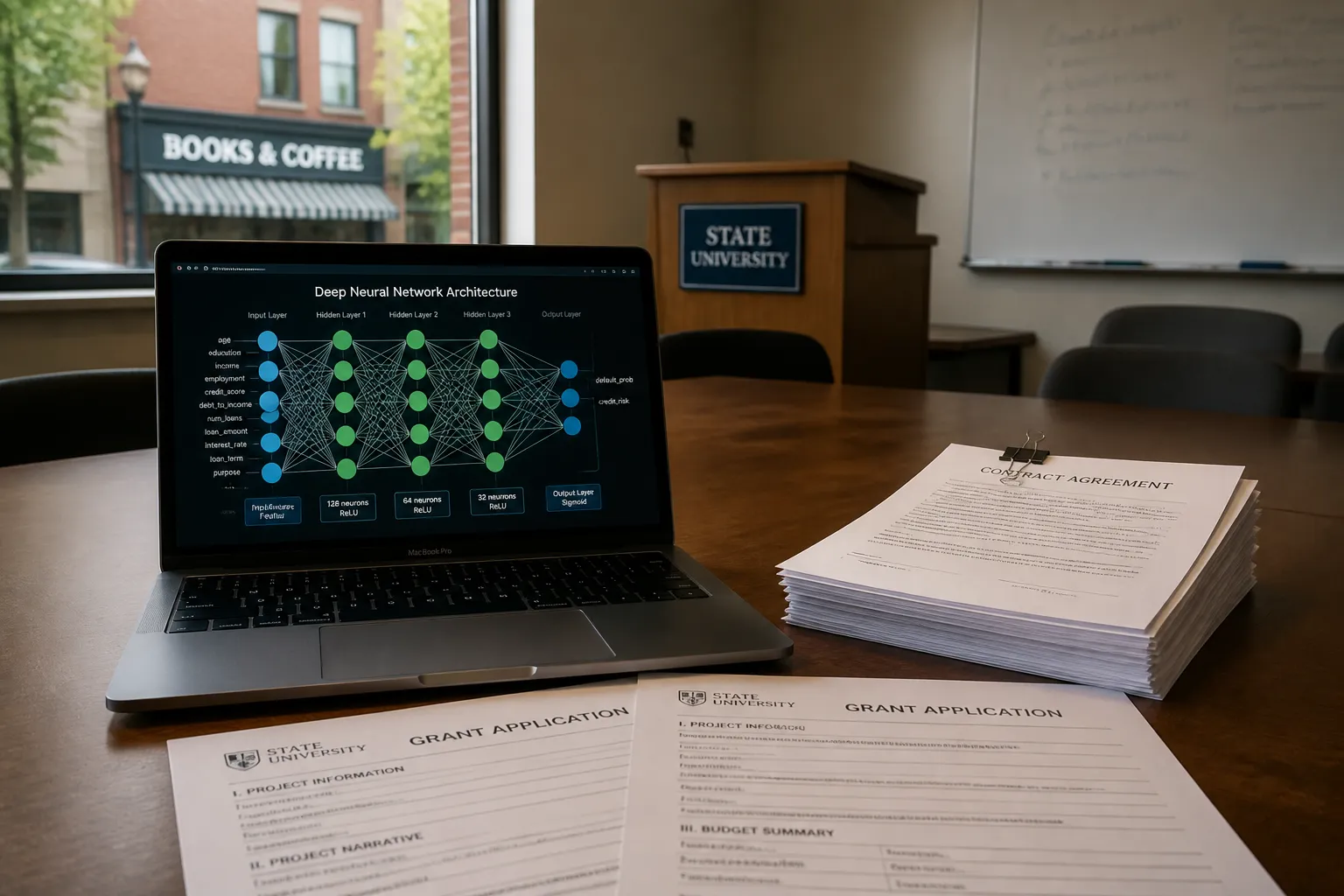
In a quiet evening on the Prairie View A&M campus, entrepreneurs from Central Texas discovered that artificial intelligence could be more than a quick‑reply chatbot. The second session of the university’s Business Innovation Development (B.I.D.) Academy turned the spotlight on government contracting, financing, and technology, offering attendees a hands‑on look at how AI can become a strategic partner.
Co‑hosted by Prairie View A&M University Extension and the Epsilon Gamma Sigma Chapter of Phi Beta Sigma Fraternity Inc., the workshop featured a key presentation from Clyde Hardin, co‑founder of Hardin Enterprise Services LLC. Hardin, who once described himself as “not an AI person,” explained how the technology has become integral to his company’s daily operations.
Hardin’s central point was the distinction between transactional and relational AI. In a transactional model, a user asks a question, receives an answer, and the interaction ends. In a relational model, the system remembers information about a business over time, enabling more detailed and personalized responses. “If it’s not holding it and remembering it, it’s transactional,” Hardin said. “If it remembers you every time, it’s relational.”
To illustrate the relational approach, Hardin showcased several AI assistants—dubbed “Gems” in Google’s Gemini platform—that perform specialized tasks. One Gem scans government procurement sites each morning for contract opportunities that match his company’s certifications and capabilities. Another parses lengthy requests for proposals, summarizing key deadlines, required documents, compliance issues, and potential risks. A third compares completed proposals against solicitation requirements before submission, flagging missing information that could disqualify a bid.
Hardin noted that these tools cut the time his company spends reviewing government documents, which often exceed 100 pages and contain technical specifications, legal language, and compliance requirements. By summarizing the material, businesses can focus on strategy and execution.
The presentation underscored that AI’s effectiveness hinges on the quality of data supplied. Hardin urged entrepreneurs to upload capability statements, equipment inventories, certifications, service areas, and company histories so the technology can generate responses specific to their businesses. He also demonstrated how to give the system role‑based instructions—such as asking it to respond as a seasoned government procurement officer or as an experienced construction estimator.
Hardin’s wife and business partner, Tanya Hardin, explained how she uses AI differently. While he focuses on government contracts, she uses the technology to research grants, sponsorship opportunities, and nonprofit funding. “I go after grants while he goes after contracts,” Tanya said. She described how AI helps identify funding opportunities, draft letters, organize research, and prepare sponsorship packets, freeing time for relationship building and pursuing additional opportunities.
Audience members asked practical questions. One attendee asked whether AI could help identify funding sources for grocery stores in underserved neighborhoods. Hardin replied that AI can analyze demographic data, research grant opportunities, and identify organizations that support community development projects when supplied with sufficient data. Another raised privacy concerns. Hardin acknowledged the issue and advised businesses to avoid entering highly sensitive personal information while using AI for operational data.
The workshop’s organizers said the AI presentation reflected the broader purpose of the B.I.D. Academy: equipping entrepreneurs with practical tools they can immediately apply to their businesses. For many attendees, the session offered a first look at AI as a strategic resource capable of supporting government contracting, proposal preparation, research, and business planning.
By the end of the event, participants had moved beyond a generic view of AI as a digital assistant. They left with concrete examples of how the technology can automate repetitive tasks, simplify complex documents, identify funding opportunities, and help small businesses compete in a digital economy.
As AI continues to evolve, presenters encouraged entrepreneurs to view it not as a replacement for human decision‑making but as another member of their business team—one capable of processing information, solving problems, and helping businesses adapt to a rapidly changing marketplace.
Co‑hosted by Prairie View A&M University Extension and the Epsilon Gamma Sigma Chapter of Phi Beta Sigma Fraternity Inc., the workshop featured a key presentation from Clyde Hardin, co‑founder of Hardin Enterprise Services LLC. Hardin, who once described himself as “not an AI person,” explained how the technology has become integral to his company’s daily operations.
Hardin’s central point was the distinction between transactional and relational AI. In a transactional model, a user asks a question, receives an answer, and the interaction ends. In a relational model, the system remembers information about a business over time, enabling more detailed and personalized responses. “If it’s not holding it and remembering it, it’s transactional,” Hardin said. “If it remembers you every time, it’s relational.”
To illustrate the relational approach, Hardin showcased several AI assistants—dubbed “Gems” in Google’s Gemini platform—that perform specialized tasks. One Gem scans government procurement sites each morning for contract opportunities that match his company’s certifications and capabilities. Another parses lengthy requests for proposals, summarizing key deadlines, required documents, compliance issues, and potential risks. A third compares completed proposals against solicitation requirements before submission, flagging missing information that could disqualify a bid.
Hardin noted that these tools cut the time his company spends reviewing government documents, which often exceed 100 pages and contain technical specifications, legal language, and compliance requirements. By summarizing the material, businesses can focus on strategy and execution.
The presentation underscored that AI’s effectiveness hinges on the quality of data supplied. Hardin urged entrepreneurs to upload capability statements, equipment inventories, certifications, service areas, and company histories so the technology can generate responses specific to their businesses. He also demonstrated how to give the system role‑based instructions—such as asking it to respond as a seasoned government procurement officer or as an experienced construction estimator.
Hardin’s wife and business partner, Tanya Hardin, explained how she uses AI differently. While he focuses on government contracts, she uses the technology to research grants, sponsorship opportunities, and nonprofit funding. “I go after grants while he goes after contracts,” Tanya said. She described how AI helps identify funding opportunities, draft letters, organize research, and prepare sponsorship packets, freeing time for relationship building and pursuing additional opportunities.
Audience members asked practical questions. One attendee asked whether AI could help identify funding sources for grocery stores in underserved neighborhoods. Hardin replied that AI can analyze demographic data, research grant opportunities, and identify organizations that support community development projects when supplied with sufficient data. Another raised privacy concerns. Hardin acknowledged the issue and advised businesses to avoid entering highly sensitive personal information while using AI for operational data.
The workshop’s organizers said the AI presentation reflected the broader purpose of the B.I.D. Academy: equipping entrepreneurs with practical tools they can immediately apply to their businesses. For many attendees, the session offered a first look at AI as a strategic resource capable of supporting government contracting, proposal preparation, research, and business planning.
By the end of the event, participants had moved beyond a generic view of AI as a digital assistant. They left with concrete examples of how the technology can automate repetitive tasks, simplify complex documents, identify funding opportunities, and help small businesses compete in a digital economy.
As AI continues to evolve, presenters encouraged entrepreneurs to view it not as a replacement for human decision‑making but as another member of their business team—one capable of processing information, solving problems, and helping businesses adapt to a rapidly changing marketplace.





