Blab AI
Hanwha Group Announces 55-Trillion-Won Investment in Korean Space and AI Infrastructure
On July 3 2026, Hanwha Group, South Korea’s largest defense and aerospace conglomerate, revealed a plan to pour 55 trillion won (about $35.6 billion) into aerospace and artificial‑intelligence (AI) projects through 2040. The announcement came during a public briefing in Jinju, presided over by President Lee Jae Myung, and aligns with the government’s broader effort to attract large‑scale investment in AI and high‑tech industries.
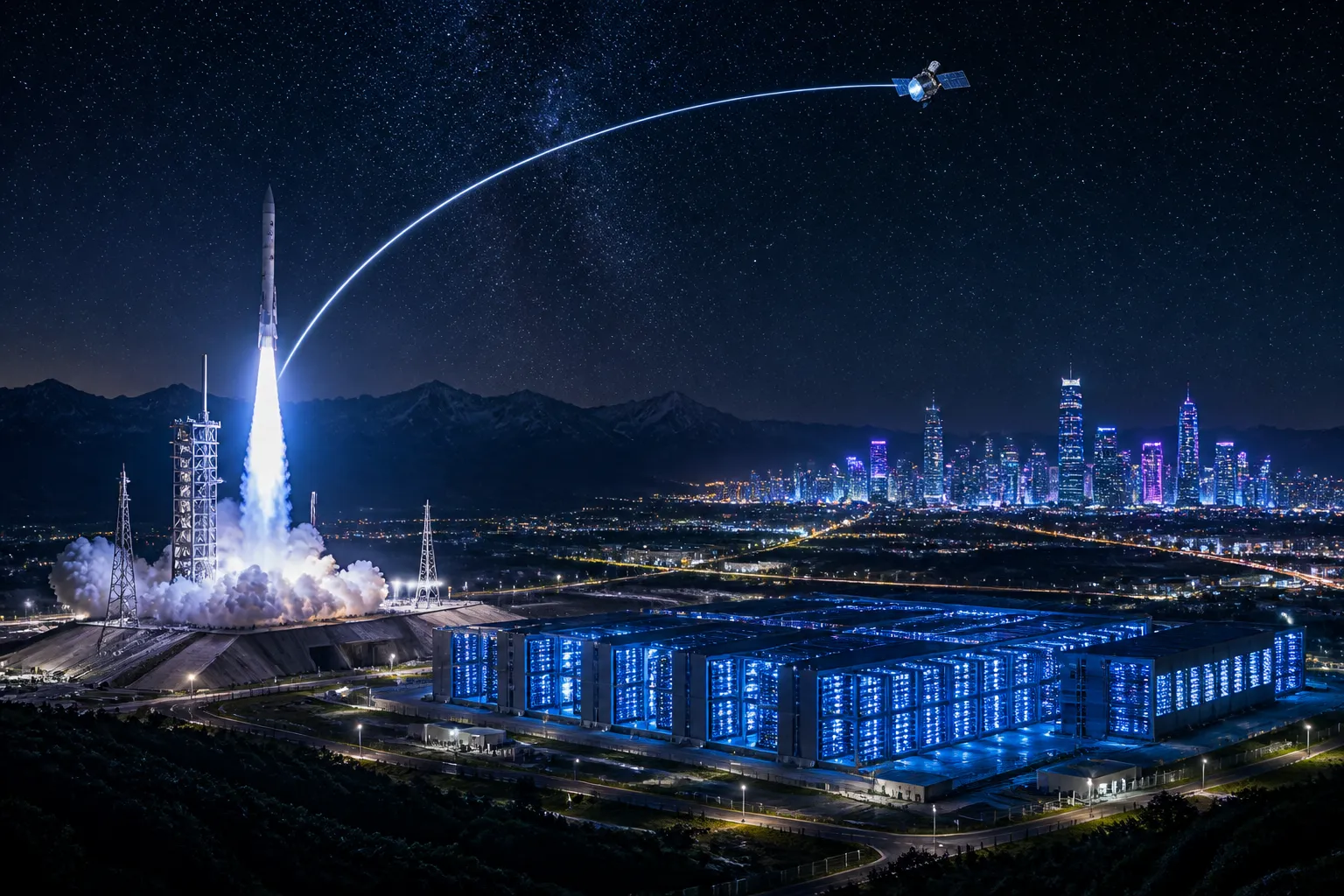
The funding will be divided across several key initiatives. Hanwha Aerospace is earmarking roughly 23 trillion won for launch‑vehicle development, the construction of assembly facilities, and the establishment of launch‑vehicle testing infrastructure. An additional 20 trillion won will finance the launch of ultra‑low Earth orbit synthetic‑aperture radar (SAR) satellites, the creation of a space‑based AI data center, and the deployment of a low‑Earth‑orbit satellite‑communications network.
The company plans to build a constellation of observation satellites operating at about 350 km altitude, a space AI data center at 400 km, and a communications network at 900 km to transmit images and other data in real time.
Hanwha Systems, a subsidiary, has set a schedule to launch 64 SAR satellites by 2031, delivering continuous, real‑time Earth observation. It also aims to deploy 192 low‑Earth‑orbit communications satellites, followed by an additional 60 satellites to extend service life and broaden coverage into the Arctic region. In parallel, Hanwha will establish a defense AI data center in Changwon, a southeastern industrial hub. The data center is slated to begin operations this year with a 45‑megawatt (MW) capacity and will be expanded in phases to 135 MW by 2032.
The strategy reflects South Korea’s push to strengthen indigenous defense capabilities and reduce dependence on foreign satellite and intelligence infrastructure. By developing launch vehicles, satellite manufacturing facilities—such as the one opened on Jeju Island in December—and AI‑enabled data processing, the group aims to create a self‑sufficient chain for collecting, analyzing, and leveraging space‑based information.
The announced spending marks a significant commitment to the domestic space sector. It positions Hanwha Group as a central player in Korea’s move toward a fully integrated space and AI ecosystem, potentially influencing defense, commercial, and scientific applications. The plan also signals to international partners and investors that South Korea is expanding its capacity to produce launch vehicles, satellites, and AI infrastructure.
Current milestones include the construction of the satellite manufacturing facility, the launch of the first SAR satellites, and the commissioning of the Changwon AI data center. The timeline for the development of launch vehicles and the full deployment of the satellite constellations remains to be detailed. Funding mechanisms, regulatory approvals, and integration with national defense systems are among the remaining steps that will shape the rollout.
In summary, Hanwha Group’s 55‑trillion‑won investment outlines a comprehensive roadmap for building launch vehicles, satellites, and AI data centers by 2040. The initiative aligns with South Korea’s national strategy to secure information, analyze it, and use it to strengthen national security and technological independence. The next phases will involve the execution of satellite launches, expansion of AI infrastructure, and coordination with defense and commercial stakeholders.
The funding will be divided across several key initiatives. Hanwha Aerospace is earmarking roughly 23 trillion won for launch‑vehicle development, the construction of assembly facilities, and the establishment of launch‑vehicle testing infrastructure. An additional 20 trillion won will finance the launch of ultra‑low Earth orbit synthetic‑aperture radar (SAR) satellites, the creation of a space‑based AI data center, and the deployment of a low‑Earth‑orbit satellite‑communications network.
The company plans to build a constellation of observation satellites operating at about 350 km altitude, a space AI data center at 400 km, and a communications network at 900 km to transmit images and other data in real time.
Hanwha Systems, a subsidiary, has set a schedule to launch 64 SAR satellites by 2031, delivering continuous, real‑time Earth observation. It also aims to deploy 192 low‑Earth‑orbit communications satellites, followed by an additional 60 satellites to extend service life and broaden coverage into the Arctic region. In parallel, Hanwha will establish a defense AI data center in Changwon, a southeastern industrial hub. The data center is slated to begin operations this year with a 45‑megawatt (MW) capacity and will be expanded in phases to 135 MW by 2032.
The strategy reflects South Korea’s push to strengthen indigenous defense capabilities and reduce dependence on foreign satellite and intelligence infrastructure. By developing launch vehicles, satellite manufacturing facilities—such as the one opened on Jeju Island in December—and AI‑enabled data processing, the group aims to create a self‑sufficient chain for collecting, analyzing, and leveraging space‑based information.
The announced spending marks a significant commitment to the domestic space sector. It positions Hanwha Group as a central player in Korea’s move toward a fully integrated space and AI ecosystem, potentially influencing defense, commercial, and scientific applications. The plan also signals to international partners and investors that South Korea is expanding its capacity to produce launch vehicles, satellites, and AI infrastructure.
Current milestones include the construction of the satellite manufacturing facility, the launch of the first SAR satellites, and the commissioning of the Changwon AI data center. The timeline for the development of launch vehicles and the full deployment of the satellite constellations remains to be detailed. Funding mechanisms, regulatory approvals, and integration with national defense systems are among the remaining steps that will shape the rollout.
In summary, Hanwha Group’s 55‑trillion‑won investment outlines a comprehensive roadmap for building launch vehicles, satellites, and AI data centers by 2040. The initiative aligns with South Korea’s national strategy to secure information, analyze it, and use it to strengthen national security and technological independence. The next phases will involve the execution of satellite launches, expansion of AI infrastructure, and coordination with defense and commercial stakeholders.





