Blab AI
BBVA Completes First AI Agent-Initiated Card Purchase in Europe
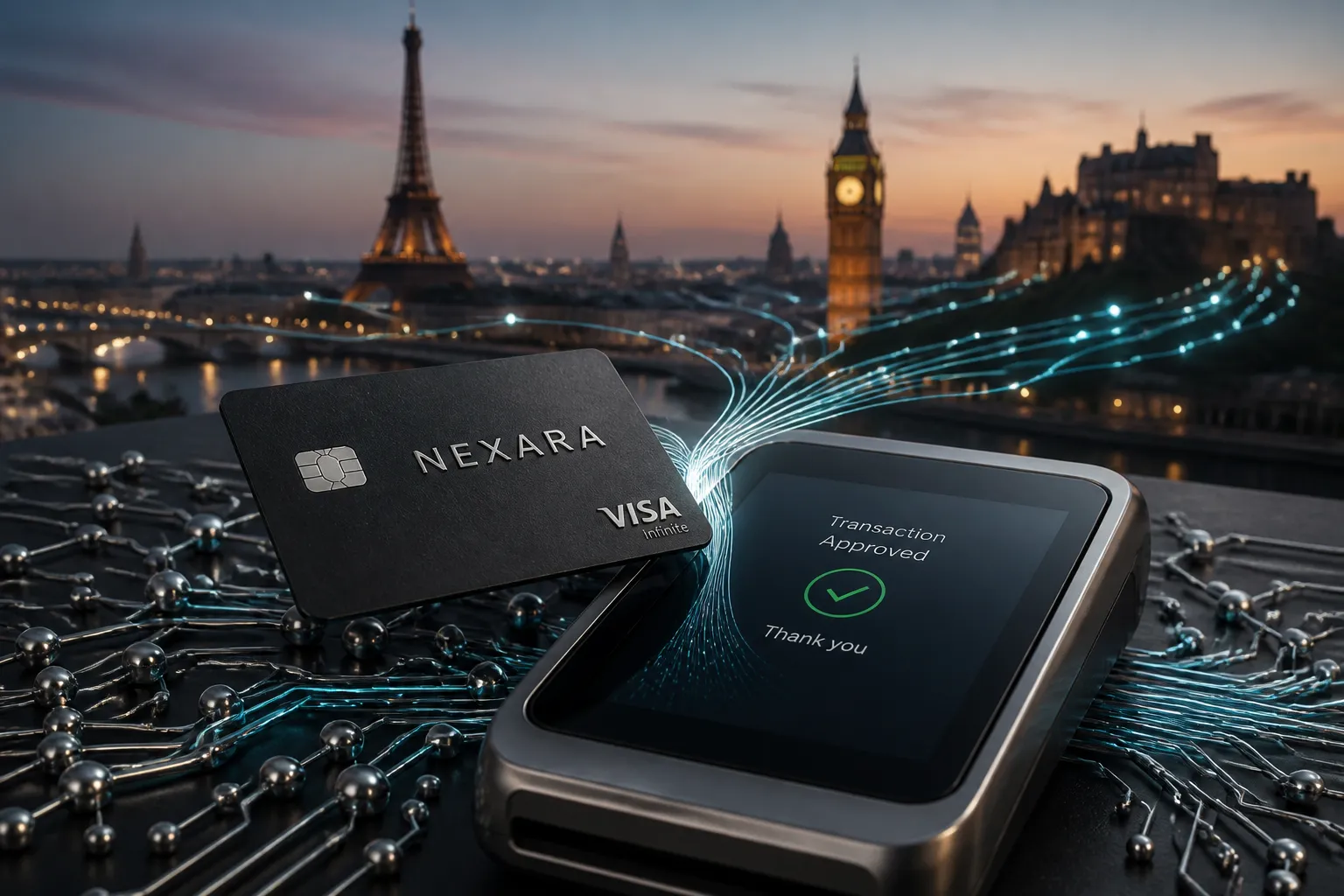
On July 2, BBVA announced a historic first: a transaction completed by an artificial‑intelligence (AI) agent on behalf of a cardholder, using real card credentials and a merchant’s live payment system. The test, part of Visa’s Agentic Ready programme, shows that AI agents can securely drive commerce within the existing payments infrastructure while meeting the European Union’s regulatory framework.
The purchase was powered by Visa Intelligent Commerce (VIC), a platform that fuses tokenisation, real‑time fraud monitoring and the Visa Payment Passkeys system. Tokenisation replaces a card’s primary account number with a surrogate token that merchants can accept without exposing sensitive data. Passkeys provide biometric authentication that satisfies the EU’s Strong Customer Authentication (SCA) rules, allowing consumers to authorise online payments without passwords or SMS codes. Together, these technologies ensured the AI‑initiated purchase stayed compliant with SCA and other security standards.
According to BBVA’s press release, the test confirmed that AI agents can operate within the current regulatory framework, with cardholder consent, issuer oversight and existing protections fully preserved. BBVA’s Head of Consumer Payments, Roberto Pagán, said the bank was “focused on developing new payment experiences that are both seamless and reliable” and that participation in Visa’s programme “allows us to participate in the next phase of commerce, where AI agents can initiate transactions on behalf of cardholders using an infrastructure that already delivers scale, security and control.”
Visa’s Country Manager for Spain, Eduardo Prieto, added that the company’s role is “to ensure that every transaction remains secure, transparent and trusted.” He noted that the network connects issuers, merchants and AI systems, enabling the next phase of commerce using existing protections.
The milestone was highlighted at the Visa Payments Forum in Paris, where demonstrations of AI‑initiated purchases were shown across retail and travel sectors. Visa’s data, derived from a 2025 Morning Consult survey of 1,000 Spanish adults, indicated that 62 % of respondents use AI tools to look for gift ideas, research products and compare prices.
Launched in March 2026, the Agentic Ready programme has already involved more than 30 European issuers and merchants such as lastminute.com, Frasers and Cleverbridge. Visa’s expansion of the programme to Asia‑Pacific and Latin America in April 2026 signals a broader industry push toward agent‑led commerce.
While the BBVA test confirms that AI‑initiated payments can be executed securely and transparently, it also underscores the need for clear permissions and controls. As the technology matures, the programme will likely explore additional use cases, always operating within defined regulatory and security frameworks.
At present, BBVA and Visa are continuing to refine the technology and evaluate its scalability. No further product launches or regulatory decisions have been announced, but the successful test suggests that AI‑driven payment experiences could become more common in the near future.
The event marks a significant step for both banks and payment networks, illustrating how AI can be integrated into everyday commerce without compromising security or compliance.
The purchase was powered by Visa Intelligent Commerce (VIC), a platform that fuses tokenisation, real‑time fraud monitoring and the Visa Payment Passkeys system. Tokenisation replaces a card’s primary account number with a surrogate token that merchants can accept without exposing sensitive data. Passkeys provide biometric authentication that satisfies the EU’s Strong Customer Authentication (SCA) rules, allowing consumers to authorise online payments without passwords or SMS codes. Together, these technologies ensured the AI‑initiated purchase stayed compliant with SCA and other security standards.
According to BBVA’s press release, the test confirmed that AI agents can operate within the current regulatory framework, with cardholder consent, issuer oversight and existing protections fully preserved. BBVA’s Head of Consumer Payments, Roberto Pagán, said the bank was “focused on developing new payment experiences that are both seamless and reliable” and that participation in Visa’s programme “allows us to participate in the next phase of commerce, where AI agents can initiate transactions on behalf of cardholders using an infrastructure that already delivers scale, security and control.”
Visa’s Country Manager for Spain, Eduardo Prieto, added that the company’s role is “to ensure that every transaction remains secure, transparent and trusted.” He noted that the network connects issuers, merchants and AI systems, enabling the next phase of commerce using existing protections.
The milestone was highlighted at the Visa Payments Forum in Paris, where demonstrations of AI‑initiated purchases were shown across retail and travel sectors. Visa’s data, derived from a 2025 Morning Consult survey of 1,000 Spanish adults, indicated that 62 % of respondents use AI tools to look for gift ideas, research products and compare prices.
Launched in March 2026, the Agentic Ready programme has already involved more than 30 European issuers and merchants such as lastminute.com, Frasers and Cleverbridge. Visa’s expansion of the programme to Asia‑Pacific and Latin America in April 2026 signals a broader industry push toward agent‑led commerce.
While the BBVA test confirms that AI‑initiated payments can be executed securely and transparently, it also underscores the need for clear permissions and controls. As the technology matures, the programme will likely explore additional use cases, always operating within defined regulatory and security frameworks.
At present, BBVA and Visa are continuing to refine the technology and evaluate its scalability. No further product launches or regulatory decisions have been announced, but the successful test suggests that AI‑driven payment experiences could become more common in the near future.
The event marks a significant step for both banks and payment networks, illustrating how AI can be integrated into everyday commerce without compromising security or compliance.





