Blab AI
Amazons 2025 Data-Center Expansion Drives 16% Rise in Carbon Emissions, Prompting EU to Re-examine Climate Rules
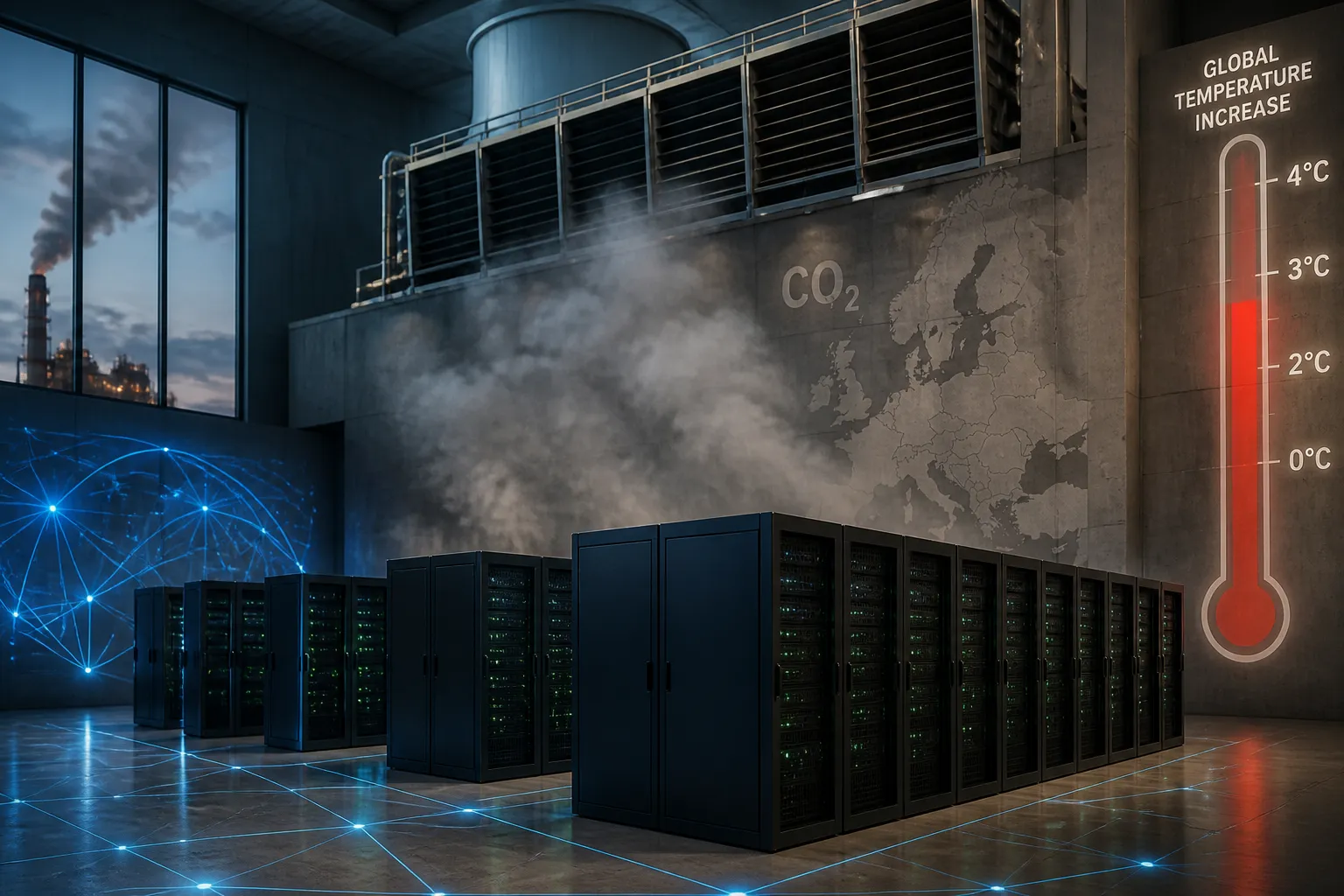
Amazon.com Inc. revealed a 16 % jump in total carbon emissions for 2025, marking the second straight year of growth in its sustainability ledger. The spike comes almost entirely from the company’s multi‑billion‑dollar build‑out of data centers that back Amazon Web Services (AWS) and the escalating demand for artificial‑intelligence workloads.
In a note to Semafor, Amazon’s chief sustainability officer acknowledged that emissions are expected to keep climbing for several years as the firm scales its AI infrastructure. While the company’s 2040 net‑zero pledge remains unchanged, the 2025 report makes clear that reaching that goal will require significant new investment in renewable energy and efficiency upgrades.
Despite the headline‑grabbing rise, the report also highlights progress in other areas. Amazon’s data centers are reported to be seven times more water‑efficient than the industry average, and the company has cut carbon emissions per shipped unit by 7 %. Its electric‑vehicle fleet has also advanced, now operating more than half of its 2023 goal of 100 000 electric delivery vehicles worldwide.
The trend is not unique to Amazon. Google and Meta have both logged emissions hikes in recent years, driven by the need to power fresh AI models and services. The pattern suggests that the rapid expansion of AI workloads is placing a measurable strain on corporate sustainability metrics.
The European Union has taken notice. According to a Financial Times report, EU policymakers are weighing the possibility of easing climate regulations to facilitate the construction of new data centers. The EU’s Fit for 55 package, which targets a 55 % cut in greenhouse‑gas emissions by 2030, includes provisions that could relax restrictions on building and operating large‑scale computing facilities. The proposal arrives amid a historic heatwave that underscored the urgency of climate action.
A key driver behind the EU’s deliberations is the continent’s limited AI‑ready compute capacity. Current estimates indicate that the EU has only about one‑fifteenth of the AI‑ready compute available in the United States. As AI becomes increasingly central to economic competitiveness, the EU faces a dilemma: how to balance the need for new data centers with its climate‑neutrality commitments.
Amazon’s 2025 emissions figure is part of a broader trend in the tech sector. While the company’s data‑center operations are more efficient, they still consume large amounts of electricity. Even with improvements in water use and vehicle electrification, the net effect is a measurable increase in CO₂ emissions.
If the EU were to relax its rules, it could set a precedent for other jurisdictions. Such a shift might accelerate data‑center construction across the continent, potentially raising emissions unless matched by a corresponding rise in renewable energy supply.
In the United States, AWS already commands a significant share of the cloud‑computing market. The company’s expansion plans include new facilities in regions with abundant renewable resources, but the overall carbon footprint continues to climb as AI demand grows.
The situation underscores a tension that many large technology firms face: balancing the economic benefits of AI infrastructure against the environmental costs. Amazon’s public commitment to net‑zero by 2040 remains, but the 2025 report indicates that achieving that target will require a sustained effort to offset the emissions generated by its expanding data‑center footprint.
As the EU considers policy adjustments, stakeholders will likely scrutinize how new regulations could influence the pace of data‑center development and the associated environmental impacts. The outcome will shape the trajectory of AI infrastructure growth in Europe and could influence similar debates in other regions.
In short, while AI‑driven data‑center expansion is accelerating, both corporate and regulatory actors are grappling with how to reconcile this growth with climate‑change mitigation goals. The next few years will be critical in determining whether new infrastructure can be built in a way that aligns with global sustainability commitments.
In a note to Semafor, Amazon’s chief sustainability officer acknowledged that emissions are expected to keep climbing for several years as the firm scales its AI infrastructure. While the company’s 2040 net‑zero pledge remains unchanged, the 2025 report makes clear that reaching that goal will require significant new investment in renewable energy and efficiency upgrades.
Despite the headline‑grabbing rise, the report also highlights progress in other areas. Amazon’s data centers are reported to be seven times more water‑efficient than the industry average, and the company has cut carbon emissions per shipped unit by 7 %. Its electric‑vehicle fleet has also advanced, now operating more than half of its 2023 goal of 100 000 electric delivery vehicles worldwide.
The trend is not unique to Amazon. Google and Meta have both logged emissions hikes in recent years, driven by the need to power fresh AI models and services. The pattern suggests that the rapid expansion of AI workloads is placing a measurable strain on corporate sustainability metrics.
The European Union has taken notice. According to a Financial Times report, EU policymakers are weighing the possibility of easing climate regulations to facilitate the construction of new data centers. The EU’s Fit for 55 package, which targets a 55 % cut in greenhouse‑gas emissions by 2030, includes provisions that could relax restrictions on building and operating large‑scale computing facilities. The proposal arrives amid a historic heatwave that underscored the urgency of climate action.
A key driver behind the EU’s deliberations is the continent’s limited AI‑ready compute capacity. Current estimates indicate that the EU has only about one‑fifteenth of the AI‑ready compute available in the United States. As AI becomes increasingly central to economic competitiveness, the EU faces a dilemma: how to balance the need for new data centers with its climate‑neutrality commitments.
Amazon’s 2025 emissions figure is part of a broader trend in the tech sector. While the company’s data‑center operations are more efficient, they still consume large amounts of electricity. Even with improvements in water use and vehicle electrification, the net effect is a measurable increase in CO₂ emissions.
If the EU were to relax its rules, it could set a precedent for other jurisdictions. Such a shift might accelerate data‑center construction across the continent, potentially raising emissions unless matched by a corresponding rise in renewable energy supply.
In the United States, AWS already commands a significant share of the cloud‑computing market. The company’s expansion plans include new facilities in regions with abundant renewable resources, but the overall carbon footprint continues to climb as AI demand grows.
The situation underscores a tension that many large technology firms face: balancing the economic benefits of AI infrastructure against the environmental costs. Amazon’s public commitment to net‑zero by 2040 remains, but the 2025 report indicates that achieving that target will require a sustained effort to offset the emissions generated by its expanding data‑center footprint.
As the EU considers policy adjustments, stakeholders will likely scrutinize how new regulations could influence the pace of data‑center development and the associated environmental impacts. The outcome will shape the trajectory of AI infrastructure growth in Europe and could influence similar debates in other regions.
In short, while AI‑driven data‑center expansion is accelerating, both corporate and regulatory actors are grappling with how to reconcile this growth with climate‑change mitigation goals. The next few years will be critical in determining whether new infrastructure can be built in a way that aligns with global sustainability commitments.





