Blab AI
Israels MIXiii Health-Tech Conference Highlights AI, Bioprinting and Resilient Investment Amid Ongoing Conflict
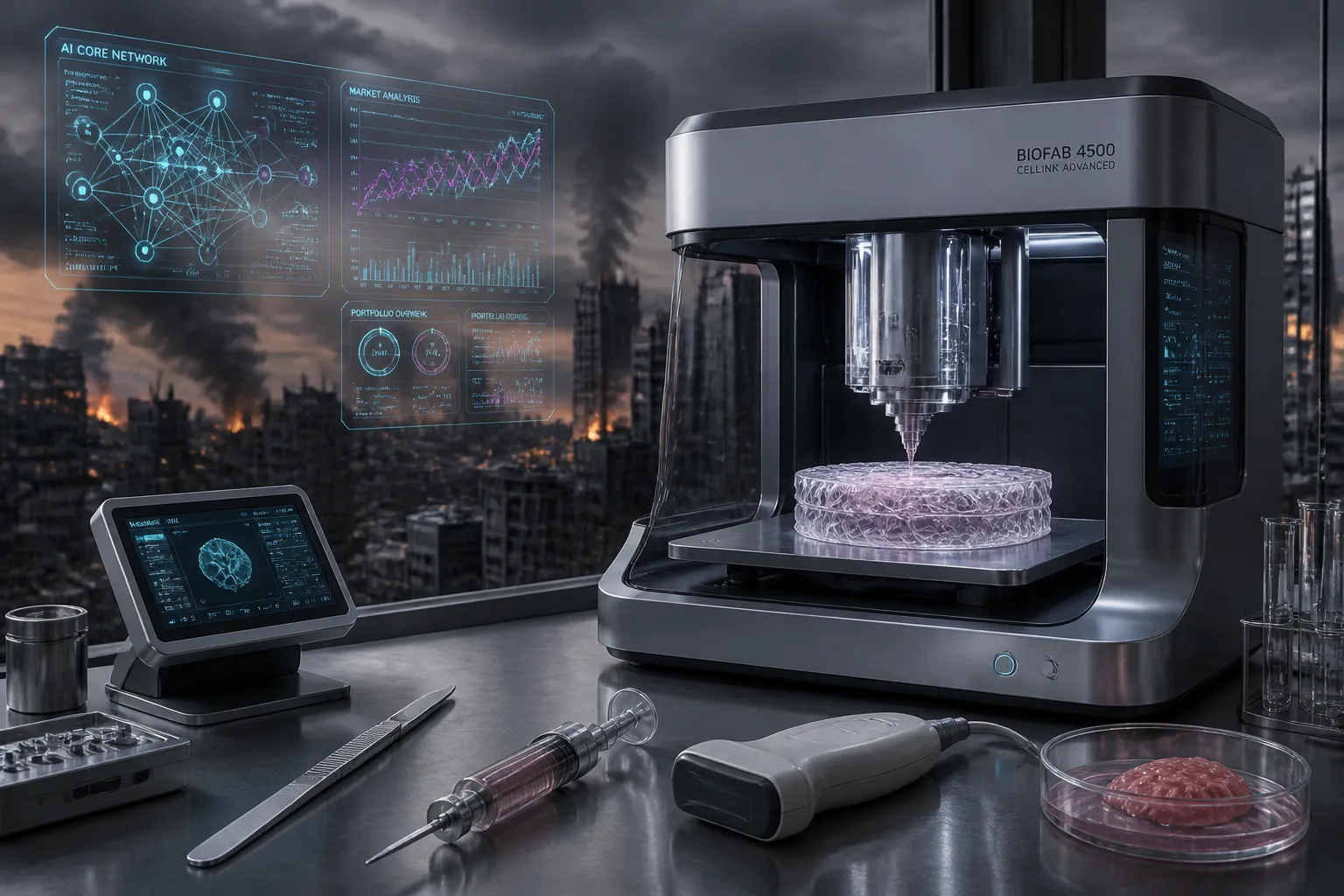
Jerusalem’s skyline flickered against the backdrop of conflict as the MIXiii Health‑Tech.IL conference opened its doors on June 29‑30, drawing more than 1,800 innovators, investors, and policymakers from Israel and abroad. Organized by the Israel Advanced Technology Industries Association (IATI), the two‑day event turned the International Convention Center into a crucible for ideas that span artificial intelligence, regenerative medicine, and 3D bioprinting. Even as rockets illuminated the night, the city’s health‑tech community gathered to chart a future that balances innovation with resilience.
The agenda centered on how AI can accelerate medical discovery and how rapid translation from laboratory to clinic gives Israel a competitive edge. Speakers stressed that breakthrough technology is only the first step; the country’s capacity to move research into clinical applications quickly sets it apart. The conference also highlighted the importance of linking venture capital with Israeli startups and strengthening ties with global partners.
Investment, the lifeblood of innovation, took center stage. Chairman Yaacov Michlin, CEO of BioLight Life Sciences, opened the conference by stressing that capital remains essential for progress. Alon Stopel, chairman of the Israel Innovation Authority, described AI as the next accelerator of medical discovery while noting that investment in Israel’s technology sector has declined by roughly 40 %. He added that the challenge is integrating AI throughout the development process—from laboratory research to clinical care—while continuing to attract international investment.
Technion professor Shulamit Levenberg delivered a keynote on bioprinting and prosthetics, describing efforts to engineer living tissues that combine muscle, fat, and blood‑vessel components to improve rehabilitation for patients requiring prosthetic limbs. Although the technology remains under development, she highlighted tissue engineering as one of the most promising directions in regenerative medicine, especially for soldiers and civilians recovering from severe injuries.
Professor Yoram Weiss, director‑general of Hadassah Medical Organization, spoke about how Israel’s healthcare system has adapted during wartime while maintaining long‑term research investments. Hadassah has continued stem‑cell collaborations with institutions in Berlin and placed renewed emphasis on infection control and rehabilitation. American physician and healthcare innovator Dr. Stephen Klasko followed with a forward‑looking keynote that imagined medicine in 2035. Klasko argued that AI will increasingly handle routine analysis and administrative tasks, allowing clinicians to spend more time with patients. He identified two emerging roles: clinicians enhanced by AI technology and AI agents that help patients achieve personal health goals. He cited mental healthcare as an area where AI‑powered triage could reduce waiting times.
Despite regional instability, international investors expressed confidence in Israel’s innovation ecosystem. During a panel on European venture capital, participants agreed that Israel continues to earn respect for the quality of its scientific research and the resilience of its startup community. John Sinclair, a Toronto investor attending the conference for the second time, said he was struck by the pace of innovation and the rapid evolution of AI. "I’ve been amazed by the technology and the speed at which things are being built," he told JNS. "I even sent a note to my kids saying, ‘You should come.’" He noted how dramatically conversations had shifted in just a year. "Last year, AI wasn’t pervasive. One year later, it’s everywhere."
Phillip Shum of the Canadian Securities Exchange, who visited Israel for the first time, described his trip as a highlight of the conference. He explored Jerusalem, walked through the Old City, and rode public transportation back to his hotel. IATI released its eighth annual industry report during the event. Omer Gavish, head of pharmaceuticals and life sciences at PwC Israel and lead author of the report, described the findings as a mixed assessment. Biotechnology remained strong, but certain medical‑device segments declined. Tel Aviv retained its position as Israel’s leading life‑sciences hub.
IATI CEO and president Karin Mayer Rubinstein acknowledged the challenges of the past year but remained optimistic. "It has been a challenging year," she told JNS. "The report shows some downside, but this was one of the best MIXiii conferences we’ve had." She emphasized the quality of international speakers and investor participation despite disruptions to travel. Throughout the conference, the International Convention Center hosted one‑on‑one business meetings. Startups pitched technologies to prospective investors in private sessions and organized forums. The event underscored Israel’s belief that the next generation of breakthroughs—whether AI‑assisted healthcare, regenerative medicine or other emerging technologies—will emerge even amid the uncertainties of war. In summary, the MIXiii Health‑Tech.IL conference highlighted Israel’s continued focus on AI integration, bioprinting research, and resilient investment flows, reaffirming the country’s reputation as a hub for life‑sciences innovation and suggesting that, despite geopolitical challenges, the health‑tech ecosystem remains dynamic and globally connected.
The agenda centered on how AI can accelerate medical discovery and how rapid translation from laboratory to clinic gives Israel a competitive edge. Speakers stressed that breakthrough technology is only the first step; the country’s capacity to move research into clinical applications quickly sets it apart. The conference also highlighted the importance of linking venture capital with Israeli startups and strengthening ties with global partners.
Investment, the lifeblood of innovation, took center stage. Chairman Yaacov Michlin, CEO of BioLight Life Sciences, opened the conference by stressing that capital remains essential for progress. Alon Stopel, chairman of the Israel Innovation Authority, described AI as the next accelerator of medical discovery while noting that investment in Israel’s technology sector has declined by roughly 40 %. He added that the challenge is integrating AI throughout the development process—from laboratory research to clinical care—while continuing to attract international investment.
Technion professor Shulamit Levenberg delivered a keynote on bioprinting and prosthetics, describing efforts to engineer living tissues that combine muscle, fat, and blood‑vessel components to improve rehabilitation for patients requiring prosthetic limbs. Although the technology remains under development, she highlighted tissue engineering as one of the most promising directions in regenerative medicine, especially for soldiers and civilians recovering from severe injuries.
Professor Yoram Weiss, director‑general of Hadassah Medical Organization, spoke about how Israel’s healthcare system has adapted during wartime while maintaining long‑term research investments. Hadassah has continued stem‑cell collaborations with institutions in Berlin and placed renewed emphasis on infection control and rehabilitation. American physician and healthcare innovator Dr. Stephen Klasko followed with a forward‑looking keynote that imagined medicine in 2035. Klasko argued that AI will increasingly handle routine analysis and administrative tasks, allowing clinicians to spend more time with patients. He identified two emerging roles: clinicians enhanced by AI technology and AI agents that help patients achieve personal health goals. He cited mental healthcare as an area where AI‑powered triage could reduce waiting times.
Despite regional instability, international investors expressed confidence in Israel’s innovation ecosystem. During a panel on European venture capital, participants agreed that Israel continues to earn respect for the quality of its scientific research and the resilience of its startup community. John Sinclair, a Toronto investor attending the conference for the second time, said he was struck by the pace of innovation and the rapid evolution of AI. "I’ve been amazed by the technology and the speed at which things are being built," he told JNS. "I even sent a note to my kids saying, ‘You should come.’" He noted how dramatically conversations had shifted in just a year. "Last year, AI wasn’t pervasive. One year later, it’s everywhere."
Phillip Shum of the Canadian Securities Exchange, who visited Israel for the first time, described his trip as a highlight of the conference. He explored Jerusalem, walked through the Old City, and rode public transportation back to his hotel. IATI released its eighth annual industry report during the event. Omer Gavish, head of pharmaceuticals and life sciences at PwC Israel and lead author of the report, described the findings as a mixed assessment. Biotechnology remained strong, but certain medical‑device segments declined. Tel Aviv retained its position as Israel’s leading life‑sciences hub.
IATI CEO and president Karin Mayer Rubinstein acknowledged the challenges of the past year but remained optimistic. "It has been a challenging year," she told JNS. "The report shows some downside, but this was one of the best MIXiii conferences we’ve had." She emphasized the quality of international speakers and investor participation despite disruptions to travel. Throughout the conference, the International Convention Center hosted one‑on‑one business meetings. Startups pitched technologies to prospective investors in private sessions and organized forums. The event underscored Israel’s belief that the next generation of breakthroughs—whether AI‑assisted healthcare, regenerative medicine or other emerging technologies—will emerge even amid the uncertainties of war. In summary, the MIXiii Health‑Tech.IL conference highlighted Israel’s continued focus on AI integration, bioprinting research, and resilient investment flows, reaffirming the country’s reputation as a hub for life‑sciences innovation and suggesting that, despite geopolitical challenges, the health‑tech ecosystem remains dynamic and globally connected.





