Blab AI
House Subcommittee Hears Rep. Johnson on AI-Driven Copyright Theft and the Need to Protect Creators
When the hum of servers meets the clatter of typewriters, lawmakers confront a new kind of piracy.
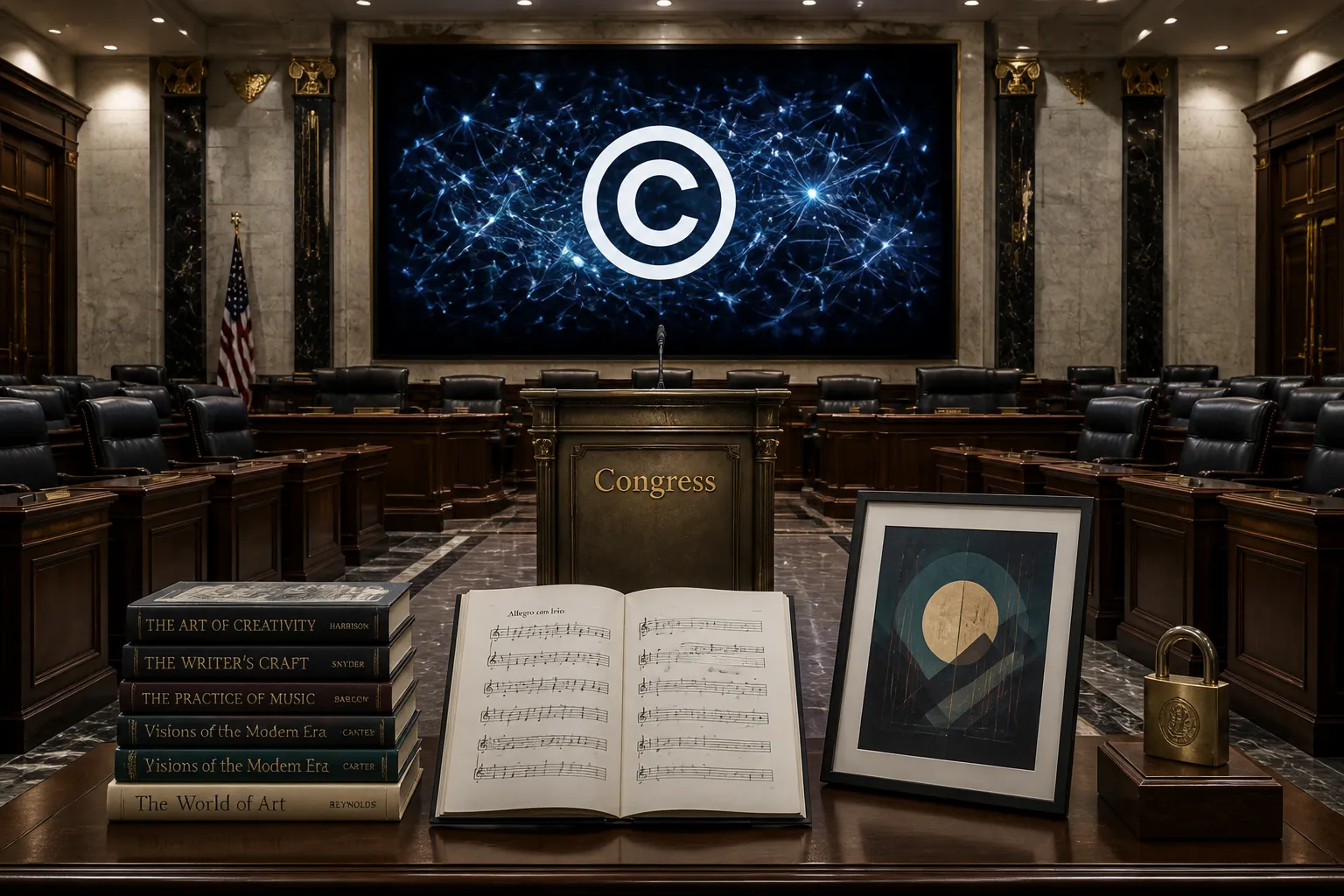
On June 30, 2026, Rep. Hank Johnson—ranking member of the House Judiciary Subcommittee on Courts, Intellectual Property, Artificial Intelligence, and the Internet—opened a hearing in Washington, D.C. that centered on how artificial‑intelligence firms are training large language models on copyrighted text, music, and visual media without permission or compensation.
Johnson’s remarks framed the issue as part of a broader crisis of piracy and privacy in the digital age. He traced the internet’s evolution from a 1983 Department of Defense project to a sprawling platform where creative works can be copied, modified, and distributed at scale. "We’re seeing a new generation of tools that can ingest vast amounts of copyrighted content and reproduce it in ways that the original creators never envisioned," he said. According to the transcript, the subcommittee is alarmed that AI companies are building models on these works without obtaining the rights of the original creators.
To illustrate the economic fallout, Johnson turned to Georgia’s film industry. In 2022, the state’s film and television sector generated $4.4 billion in spending across 412 productions. The following fiscal year saw a sharp decline to $2.3 billion and 245 productions—a trend he attributes, in part, to rising costs and the exploitation of creative labor. "Writers, actors, and other professionals in Georgia rely on fair compensation to keep producing content," Johnson noted.
The Representative also warned about counterfeit digital products. He described how websites can offer high‑quality replicas of movies, books, or branded merchandise that appear identical to the originals but are produced with harmful chemicals or malware. These knockoffs, he said, damage brand reputations and undermine legitimate sales.
Beyond economics, the hearing touched on privacy concerns. Johnson warned that AI systems can harvest personal data from online content, raising questions about consent and data protection. He called for clearer regulations that would require AI developers to obtain explicit permission before using copyrighted material.
The subcommittee’s jurisdiction covers federal copyright law, patent and trademark issues, and the broader legal framework surrounding AI. In his opening statement, Johnson urged witnesses to discuss how existing intellectual‑property statutes can be adapted to address the unique challenges posed by generative AI.
While no new legislation emerged from the session, the hearing set the stage for additional testimony from industry experts, legal scholars, and representatives of creative guilds. The subcommittee plans to hold further sessions to explore potential policy solutions, including licensing models for AI training data and stronger enforcement mechanisms for copyright infringement.
As AI technology continues to advance, the debate over how to balance innovation with the rights of creators remains a central focus for lawmakers. The outcomes of this hearing will likely influence future regulatory proposals and shape the legal landscape for AI‑generated content.
In summary, Rep. Johnson’s remarks underscored the growing concern that AI companies are exploiting copyrighted works without consent, the economic toll on creative industries—particularly in Georgia—and the need for updated legal frameworks to protect creators and ensure privacy.
The subcommittee will continue to gather evidence and craft policy recommendations in the coming months, with the goal of safeguarding intellectual property rights while fostering responsible AI development.
On June 30, 2026, Rep. Hank Johnson—ranking member of the House Judiciary Subcommittee on Courts, Intellectual Property, Artificial Intelligence, and the Internet—opened a hearing in Washington, D.C. that centered on how artificial‑intelligence firms are training large language models on copyrighted text, music, and visual media without permission or compensation.
Johnson’s remarks framed the issue as part of a broader crisis of piracy and privacy in the digital age. He traced the internet’s evolution from a 1983 Department of Defense project to a sprawling platform where creative works can be copied, modified, and distributed at scale. "We’re seeing a new generation of tools that can ingest vast amounts of copyrighted content and reproduce it in ways that the original creators never envisioned," he said. According to the transcript, the subcommittee is alarmed that AI companies are building models on these works without obtaining the rights of the original creators.
To illustrate the economic fallout, Johnson turned to Georgia’s film industry. In 2022, the state’s film and television sector generated $4.4 billion in spending across 412 productions. The following fiscal year saw a sharp decline to $2.3 billion and 245 productions—a trend he attributes, in part, to rising costs and the exploitation of creative labor. "Writers, actors, and other professionals in Georgia rely on fair compensation to keep producing content," Johnson noted.
The Representative also warned about counterfeit digital products. He described how websites can offer high‑quality replicas of movies, books, or branded merchandise that appear identical to the originals but are produced with harmful chemicals or malware. These knockoffs, he said, damage brand reputations and undermine legitimate sales.
Beyond economics, the hearing touched on privacy concerns. Johnson warned that AI systems can harvest personal data from online content, raising questions about consent and data protection. He called for clearer regulations that would require AI developers to obtain explicit permission before using copyrighted material.
The subcommittee’s jurisdiction covers federal copyright law, patent and trademark issues, and the broader legal framework surrounding AI. In his opening statement, Johnson urged witnesses to discuss how existing intellectual‑property statutes can be adapted to address the unique challenges posed by generative AI.
While no new legislation emerged from the session, the hearing set the stage for additional testimony from industry experts, legal scholars, and representatives of creative guilds. The subcommittee plans to hold further sessions to explore potential policy solutions, including licensing models for AI training data and stronger enforcement mechanisms for copyright infringement.
As AI technology continues to advance, the debate over how to balance innovation with the rights of creators remains a central focus for lawmakers. The outcomes of this hearing will likely influence future regulatory proposals and shape the legal landscape for AI‑generated content.
In summary, Rep. Johnson’s remarks underscored the growing concern that AI companies are exploiting copyrighted works without consent, the economic toll on creative industries—particularly in Georgia—and the need for updated legal frameworks to protect creators and ensure privacy.
The subcommittee will continue to gather evidence and craft policy recommendations in the coming months, with the goal of safeguarding intellectual property rights while fostering responsible AI development.





