Blab AI
Global Business Leaders Rank Technological and Geopolitical Risks as Highest Priorities, Survey Finds
Executives worldwide are now grappling with a double‑whammy of technological upheaval and geopolitical turbulence, a new Corporate Risk Radar 2026 survey by Clyde & Co reveals. The study, which polled 700 CEOs, CFOs, COOs, general counsel and board members from 11 industries across the globe, found that technology risk has surged to the top of leaders’ concerns.
According to the survey, 86 % of respondents now see technological risk as having a ‘high impact’ on their organisations – a jump from 46 % a year earlier and the largest year‑on‑year increase among all risk categories examined. The rapid pace of artificial intelligence (AI) was cited as the primary driver, with many firms scrambling to keep governance frameworks up to speed.
‘All businesses are trying to adapt to AI as quickly as they can, but the speed at which it changes makes that a big challenge,’ said Tim Crockford, partner at Clyde & Co. He added that a governance framework that is current today may be outdated tomorrow, and that organisations need to know when, how and why AI is used and to have safeguards against misuse.
Beyond AI, the survey highlighted additional technology‑related pressures. Sixty‑eight per cent of leaders flagged transformational delivery – the process of implementing new technology – as a high‑risk activity, while 57 % felt pressure to demonstrate a return on technology investment. Seventy‑two per cent identified technology implementation and systems integration as one of the greatest operational challenges. The findings suggest that reliance on third‑party AI providers adds exposure points and the potential for cascading failures.
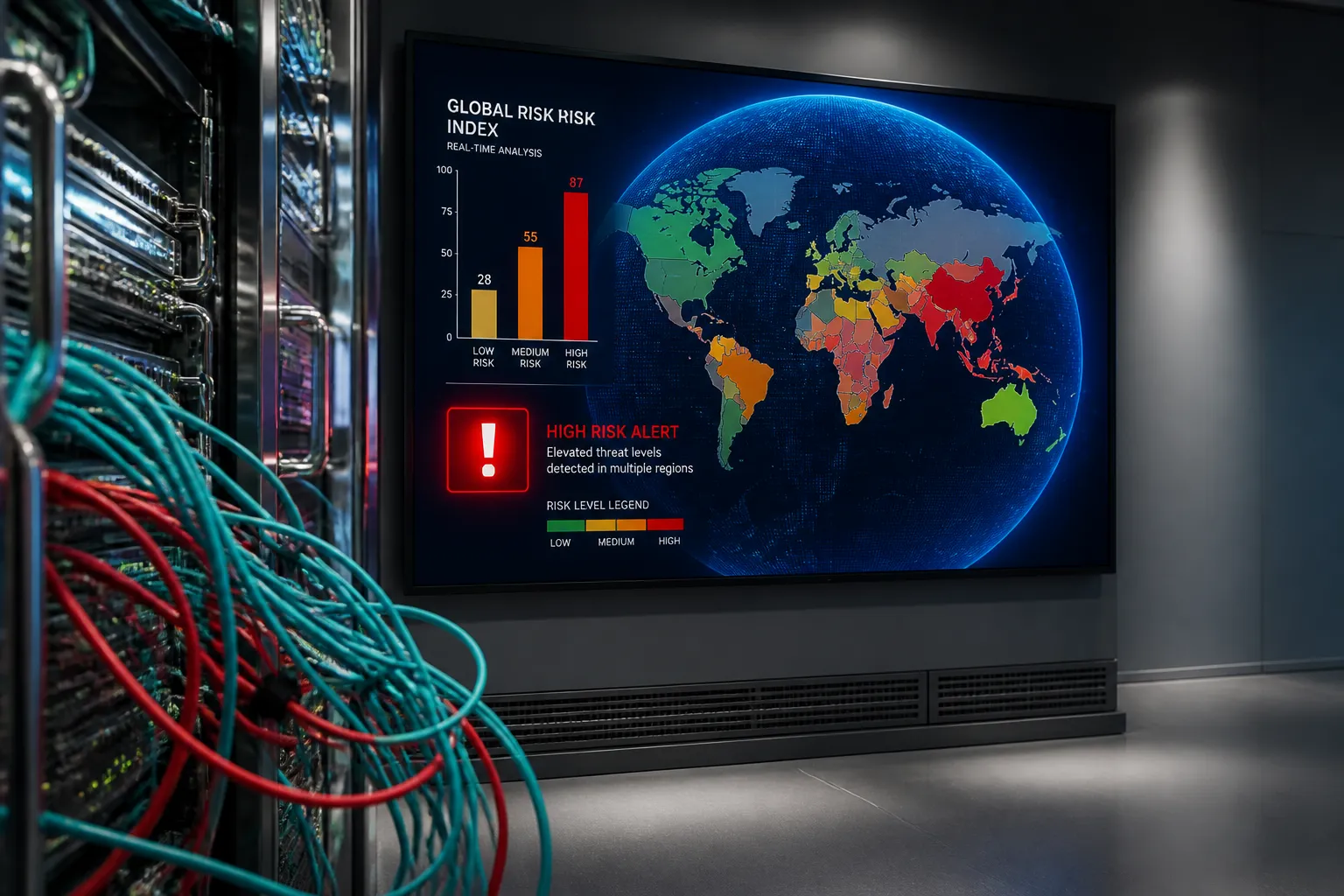
Geopolitical risk has also climbed to the top of the risk agenda. Seventy‑two per cent of respondents said geopolitical events now have a direct commercial impact, compared with roughly 50 % in 2025. The survey identified conflict escalation and instability (60 %) and trade restrictions and sanctions (57 %) as the most significant geopolitical factors. Four out of five organisations said geopolitical shifts affect where and how they operate.
Jan Spittka, partner at Claude & Co, noted that geopolitical issues were once ‘monitored in the background,’ but today they ‘directly shape investor sentiment, buyer behaviour and confidence.’ She urged firms to reduce dependency on providers and suppliers in any one region and to accept the reality of rapid geopolitical change in order to remain agile.
The convergence of risks – rapid AI adoption, the need for robust governance, and the growing commercial impact of geopolitical events – places pressure on senior leaders to balance innovation with risk mitigation. Firms that align their technology strategies with evolving governance frameworks and diversify their supply chains are likely to be better positioned to manage these intertwined challenges.
In short, the Corporate Risk Radar 2026 shows that technology and geopolitical risks dominate the risk landscape for global business leaders. The study underscores the urgency of updating AI governance, strengthening supply‑chain resilience, and developing strategies to navigate the shifting geopolitical environment.
According to the survey, 86 % of respondents now see technological risk as having a ‘high impact’ on their organisations – a jump from 46 % a year earlier and the largest year‑on‑year increase among all risk categories examined. The rapid pace of artificial intelligence (AI) was cited as the primary driver, with many firms scrambling to keep governance frameworks up to speed.
‘All businesses are trying to adapt to AI as quickly as they can, but the speed at which it changes makes that a big challenge,’ said Tim Crockford, partner at Clyde & Co. He added that a governance framework that is current today may be outdated tomorrow, and that organisations need to know when, how and why AI is used and to have safeguards against misuse.
Beyond AI, the survey highlighted additional technology‑related pressures. Sixty‑eight per cent of leaders flagged transformational delivery – the process of implementing new technology – as a high‑risk activity, while 57 % felt pressure to demonstrate a return on technology investment. Seventy‑two per cent identified technology implementation and systems integration as one of the greatest operational challenges. The findings suggest that reliance on third‑party AI providers adds exposure points and the potential for cascading failures.
Geopolitical risk has also climbed to the top of the risk agenda. Seventy‑two per cent of respondents said geopolitical events now have a direct commercial impact, compared with roughly 50 % in 2025. The survey identified conflict escalation and instability (60 %) and trade restrictions and sanctions (57 %) as the most significant geopolitical factors. Four out of five organisations said geopolitical shifts affect where and how they operate.
Jan Spittka, partner at Claude & Co, noted that geopolitical issues were once ‘monitored in the background,’ but today they ‘directly shape investor sentiment, buyer behaviour and confidence.’ She urged firms to reduce dependency on providers and suppliers in any one region and to accept the reality of rapid geopolitical change in order to remain agile.
The convergence of risks – rapid AI adoption, the need for robust governance, and the growing commercial impact of geopolitical events – places pressure on senior leaders to balance innovation with risk mitigation. Firms that align their technology strategies with evolving governance frameworks and diversify their supply chains are likely to be better positioned to manage these intertwined challenges.
In short, the Corporate Risk Radar 2026 shows that technology and geopolitical risks dominate the risk landscape for global business leaders. The study underscores the urgency of updating AI governance, strengthening supply‑chain resilience, and developing strategies to navigate the shifting geopolitical environment.





