Blab AI
Rental Car AI Scanners Trigger Surprise Damage Bills, Customers Demand Clarity
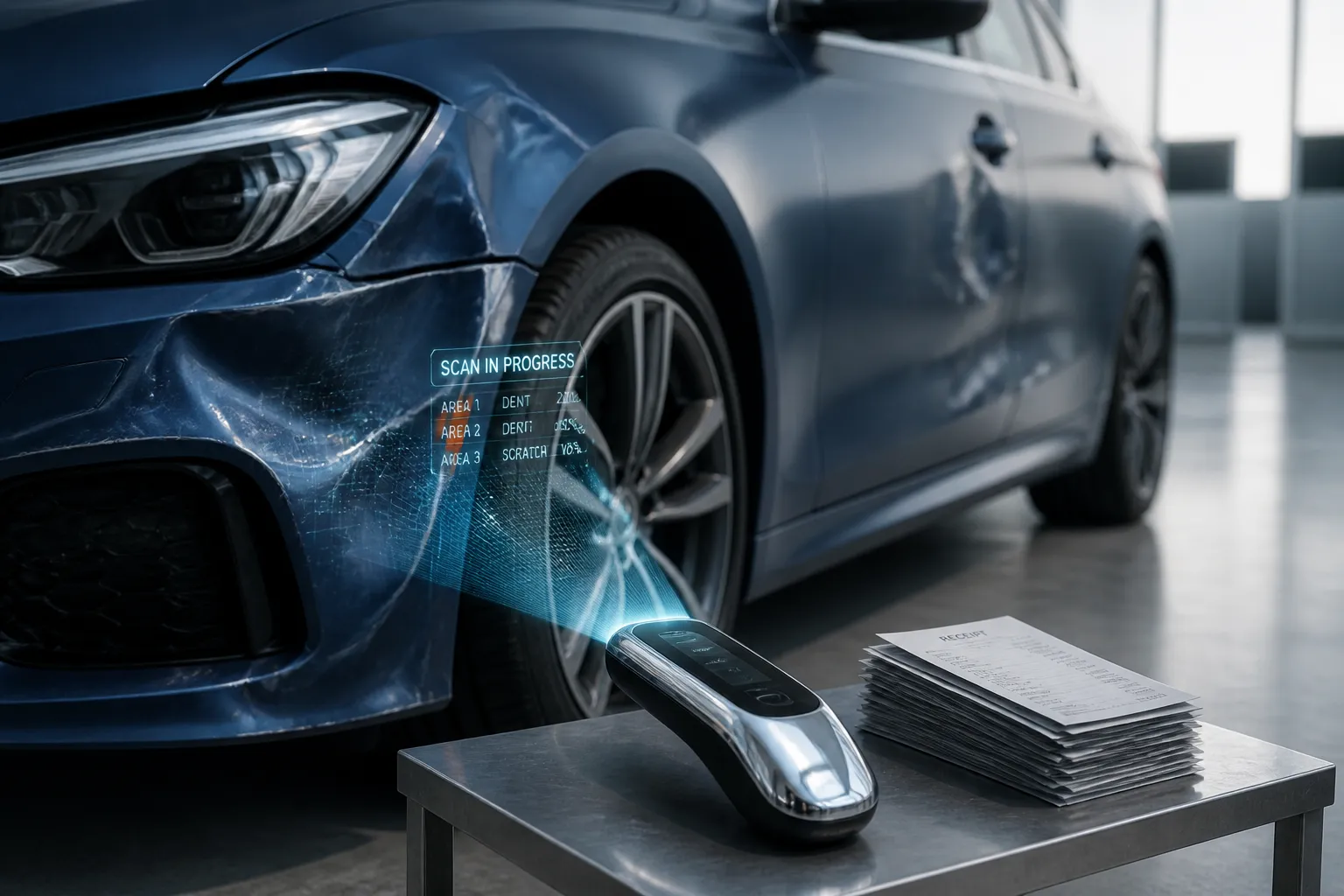
At airports across the United States, rental agencies are installing AI‑powered camera systems that snap high‑resolution images of cars as they enter and exit the lot. Within seconds, the software compares the new photos to a baseline taken at the start of the rental, and if it flags a scratch, dent or other alteration, the agency may add a damage charge to the renter’s bill.
The shift to automated inspections started two years ago, driven by a desire to cut labor costs and expedite vehicle returns. The Consumer Federation of America (CFA) reports that the cameras capture thousands of frames, which the AI then analyzes for color discrepancies, nicks and dents. However, the CFA warns that agencies are not obliged to disclose the systems’ accuracy, and that innocuous items—dirt, water droplets—can be mistaken for damage.
Two recent complaints highlight the issue. In July, Jessica Fields rented a 2025 Chevrolet Tahoe from Hertz at Atlanta’s airport. Roughly 17 minutes after she handed over the keys, Hertz sent her an email claiming the AI had spotted two minor dents. The message contained photos with orange boxes marking the alleged dents, but Fields could see no visible damage. She was told she could not view the car—or the images—in person, and the link to dispute the charge was broken. After months of calls and a complaint filed with the Georgia Consumer Protection Division, Hertz eventually closed the claim in full and absolved Fields of payment.
Jessica Paciolla’s experience was similar. She rented a Buick Envision from Sixt in Orlando, drove to Key West, and returned it at Fort Lauderdale. Two days later, an email informed her that the AI had flagged two scratches over 10 cm long. A week and a half later, a $1,500 bill—comprising depreciation, an appraiser fee and a processing fee—was sent. Paciolla noted that the AI photos displayed orange boxes but did not show the scratches. When she asked for a side‑by‑side comparison with the pre‑rental scan, Sixt declined and threatened to send the bill to collections. After InvestigateTV reached out, Sixt apologized for a routing error, closed the claim as a goodwill gesture, and clarified that any potential damage is reviewed by a human before a charge is applied.
Ben Winters of the CFA pointed out that transparency is the crux of the problem. “We don’t know how accurate they are,” he said. “When the company defers to the AI, people might get charged for something they didn’t cause.” Winters added that a human inspector would typically dismiss dirt or water droplets, whereas the AI can flag them as damage.
Sixt’s spokesperson defended the system, describing its “car gates” as an industry standard for capturing vehicle condition. The gates automatically photograph the car as it enters and exits the lot. Sixt says that any potential damage is reviewed by a human before a charge is issued. The company also provided a link to its website where customers can learn more about the car gates.
Hertz’s spokesperson said the company has refined its digital inspection process in response to customer feedback. Hertz added that it has improved communication and support for customers who receive a damage charge.
In both cases, the companies ultimately closed the claims and absolved the customers of payment. The incidents underscore the need for clearer procedures for disputing AI‑detected damage. Experts advise renters to take photos or video of the vehicle at pickup and drop‑off, retain the AI scanner report, and request a human review if a charge appears.
Rental firms anticipate expanding AI‑based damage detection as they pursue greater automation. Still, the technology’s accuracy, the transparency of its decision‑making, and the availability of dispute mechanisms remain critical concerns for consumers.
The incidents have spurred calls for industry‑wide standards on AI inspection accuracy and dispute processes. Until such standards are adopted, renters are advised to document vehicle condition thoroughly and to seek a human review if they receive a damage charge.
The cases also illustrate that while AI can accelerate the rental process, it can also generate friction when customers believe they are being charged for unverified damage. The industry must balance automation with clear, fair dispute procedures to preserve customer trust.
The shift to automated inspections started two years ago, driven by a desire to cut labor costs and expedite vehicle returns. The Consumer Federation of America (CFA) reports that the cameras capture thousands of frames, which the AI then analyzes for color discrepancies, nicks and dents. However, the CFA warns that agencies are not obliged to disclose the systems’ accuracy, and that innocuous items—dirt, water droplets—can be mistaken for damage.
Two recent complaints highlight the issue. In July, Jessica Fields rented a 2025 Chevrolet Tahoe from Hertz at Atlanta’s airport. Roughly 17 minutes after she handed over the keys, Hertz sent her an email claiming the AI had spotted two minor dents. The message contained photos with orange boxes marking the alleged dents, but Fields could see no visible damage. She was told she could not view the car—or the images—in person, and the link to dispute the charge was broken. After months of calls and a complaint filed with the Georgia Consumer Protection Division, Hertz eventually closed the claim in full and absolved Fields of payment.
Jessica Paciolla’s experience was similar. She rented a Buick Envision from Sixt in Orlando, drove to Key West, and returned it at Fort Lauderdale. Two days later, an email informed her that the AI had flagged two scratches over 10 cm long. A week and a half later, a $1,500 bill—comprising depreciation, an appraiser fee and a processing fee—was sent. Paciolla noted that the AI photos displayed orange boxes but did not show the scratches. When she asked for a side‑by‑side comparison with the pre‑rental scan, Sixt declined and threatened to send the bill to collections. After InvestigateTV reached out, Sixt apologized for a routing error, closed the claim as a goodwill gesture, and clarified that any potential damage is reviewed by a human before a charge is applied.
Ben Winters of the CFA pointed out that transparency is the crux of the problem. “We don’t know how accurate they are,” he said. “When the company defers to the AI, people might get charged for something they didn’t cause.” Winters added that a human inspector would typically dismiss dirt or water droplets, whereas the AI can flag them as damage.
Sixt’s spokesperson defended the system, describing its “car gates” as an industry standard for capturing vehicle condition. The gates automatically photograph the car as it enters and exits the lot. Sixt says that any potential damage is reviewed by a human before a charge is issued. The company also provided a link to its website where customers can learn more about the car gates.
Hertz’s spokesperson said the company has refined its digital inspection process in response to customer feedback. Hertz added that it has improved communication and support for customers who receive a damage charge.
In both cases, the companies ultimately closed the claims and absolved the customers of payment. The incidents underscore the need for clearer procedures for disputing AI‑detected damage. Experts advise renters to take photos or video of the vehicle at pickup and drop‑off, retain the AI scanner report, and request a human review if a charge appears.
Rental firms anticipate expanding AI‑based damage detection as they pursue greater automation. Still, the technology’s accuracy, the transparency of its decision‑making, and the availability of dispute mechanisms remain critical concerns for consumers.
The incidents have spurred calls for industry‑wide standards on AI inspection accuracy and dispute processes. Until such standards are adopted, renters are advised to document vehicle condition thoroughly and to seek a human review if they receive a damage charge.
The cases also illustrate that while AI can accelerate the rental process, it can also generate friction when customers believe they are being charged for unverified damage. The industry must balance automation with clear, fair dispute procedures to preserve customer trust.





