Blab AI
Central Sanskrit University Launches Indias First AICTE-Approved BTech in Artificial Intelligence and Data Science
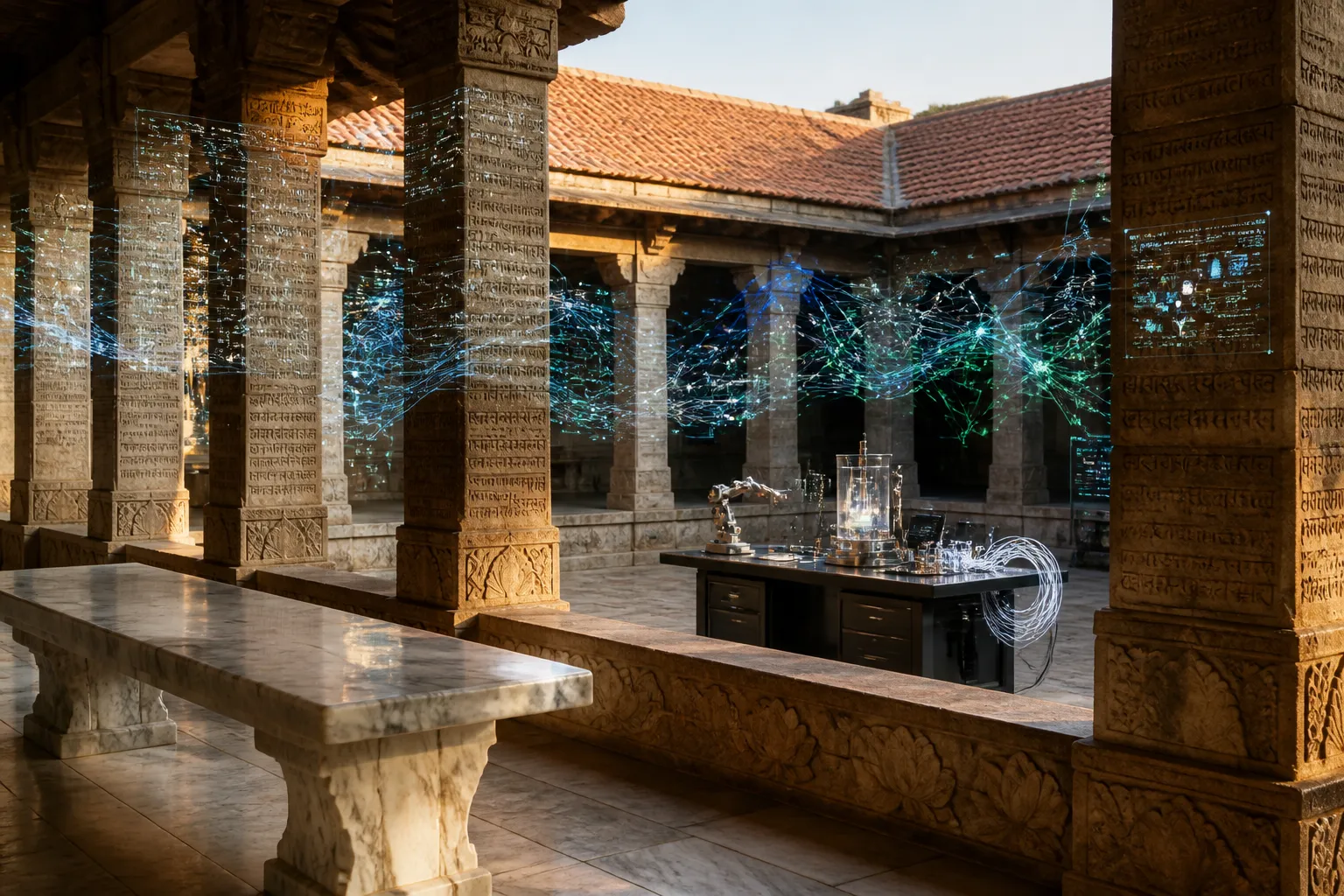
Central Sanskrit University (CSU) has unveiled a Bachelor of Technology in Artificial Intelligence and Data Science that will debut at its Nashik campus in the 2026‑27 academic year. The program is the first engineering course approved by the All India Council for Technical Education (AICTE) that is offered by a Sanskrit university, and it blends contemporary AI instruction with the study of India’s linguistic and cultural heritage.
The new BTech will admit 66 students—60 regular and six supernumerary—and will be the first engineering curriculum introduced under the National Education Policy (NEP) 2020 at a Sanskrit‑focused institution. The curriculum covers core computer science subjects such as Python, cloud computing, statistics, and deep learning, and adds specialised modules in natural language processing, computational linguistics, speech recognition, conversational AI, knowledge representation, and optical character recognition (OCR) for ancient manuscripts.
CSU’s goal is to create AI tools that can process and preserve Sanskrit and other Indian languages. According to the university’s announcement, students will apply machine‑learning techniques to traditional disciplines such as Ayurveda, Yoga, Jyotisha, Vastu, and Nyaya. The program also aims to support the digitisation of India’s vast collection of manuscripts, many of which remain untranslated or undigitised. AI‑based OCR and computer‑vision methods can accelerate the conversion of handwritten or printed texts into searchable digital formats, making them more accessible to researchers.
Prime Minister Narendra Modi highlighted the initiative during his recent “Mann Ki Baat” address, noting that the course reflects a national effort to equip young people with future‑ready skills while keeping them connected to their roots. The Prime Minister said the programme would help develop AI tools for Indian languages and speed up the digitisation and preservation of ancient texts.
The launch comes as India’s AI ecosystem expands rapidly. The government’s National Strategy for Artificial Intelligence and the Digital India programme have spurred investment in AI research, cloud infrastructure, and language technologies. AICTE’s 2026 curriculum overhaul, which makes AI a mandatory component of all engineering branches, reinforces the importance of AI education across the country.
Admissions for the BTech have already begun, and the university is encouraging students with a background in mathematics, physics, or computer science to apply. The program is expected to attract candidates interested in both technical careers and cultural preservation.
While the course represents a significant step toward integrating AI with India’s knowledge heritage, several questions remain. The university has not yet detailed the faculty composition or the specific research projects that will be undertaken. It also has not announced any partnerships with technology firms or research institutes that could provide practical training or internship opportunities.
In summary, Central Sanskrit University’s new BTech in Artificial Intelligence and Data Science marks the first AICTE‑approved engineering programme offered by a Sanskrit university. The course seeks to blend advanced AI training with the digitisation and preservation of India’s manuscript heritage, aligning with national priorities in AI education and cultural preservation. Admissions are open for the 2026‑27 session, and the programme’s impact on AI research and heritage preservation will become clearer as the first cohort of students enrolls.
The new BTech will admit 66 students—60 regular and six supernumerary—and will be the first engineering curriculum introduced under the National Education Policy (NEP) 2020 at a Sanskrit‑focused institution. The curriculum covers core computer science subjects such as Python, cloud computing, statistics, and deep learning, and adds specialised modules in natural language processing, computational linguistics, speech recognition, conversational AI, knowledge representation, and optical character recognition (OCR) for ancient manuscripts.
CSU’s goal is to create AI tools that can process and preserve Sanskrit and other Indian languages. According to the university’s announcement, students will apply machine‑learning techniques to traditional disciplines such as Ayurveda, Yoga, Jyotisha, Vastu, and Nyaya. The program also aims to support the digitisation of India’s vast collection of manuscripts, many of which remain untranslated or undigitised. AI‑based OCR and computer‑vision methods can accelerate the conversion of handwritten or printed texts into searchable digital formats, making them more accessible to researchers.
Prime Minister Narendra Modi highlighted the initiative during his recent “Mann Ki Baat” address, noting that the course reflects a national effort to equip young people with future‑ready skills while keeping them connected to their roots. The Prime Minister said the programme would help develop AI tools for Indian languages and speed up the digitisation and preservation of ancient texts.
The launch comes as India’s AI ecosystem expands rapidly. The government’s National Strategy for Artificial Intelligence and the Digital India programme have spurred investment in AI research, cloud infrastructure, and language technologies. AICTE’s 2026 curriculum overhaul, which makes AI a mandatory component of all engineering branches, reinforces the importance of AI education across the country.
Admissions for the BTech have already begun, and the university is encouraging students with a background in mathematics, physics, or computer science to apply. The program is expected to attract candidates interested in both technical careers and cultural preservation.
While the course represents a significant step toward integrating AI with India’s knowledge heritage, several questions remain. The university has not yet detailed the faculty composition or the specific research projects that will be undertaken. It also has not announced any partnerships with technology firms or research institutes that could provide practical training or internship opportunities.
In summary, Central Sanskrit University’s new BTech in Artificial Intelligence and Data Science marks the first AICTE‑approved engineering programme offered by a Sanskrit university. The course seeks to blend advanced AI training with the digitisation and preservation of India’s manuscript heritage, aligning with national priorities in AI education and cultural preservation. Admissions are open for the 2026‑27 session, and the programme’s impact on AI research and heritage preservation will become clearer as the first cohort of students enrolls.





