Blab AI
Lawmakers Push to Shift AI Data Center Power Costs onto Tech Giants
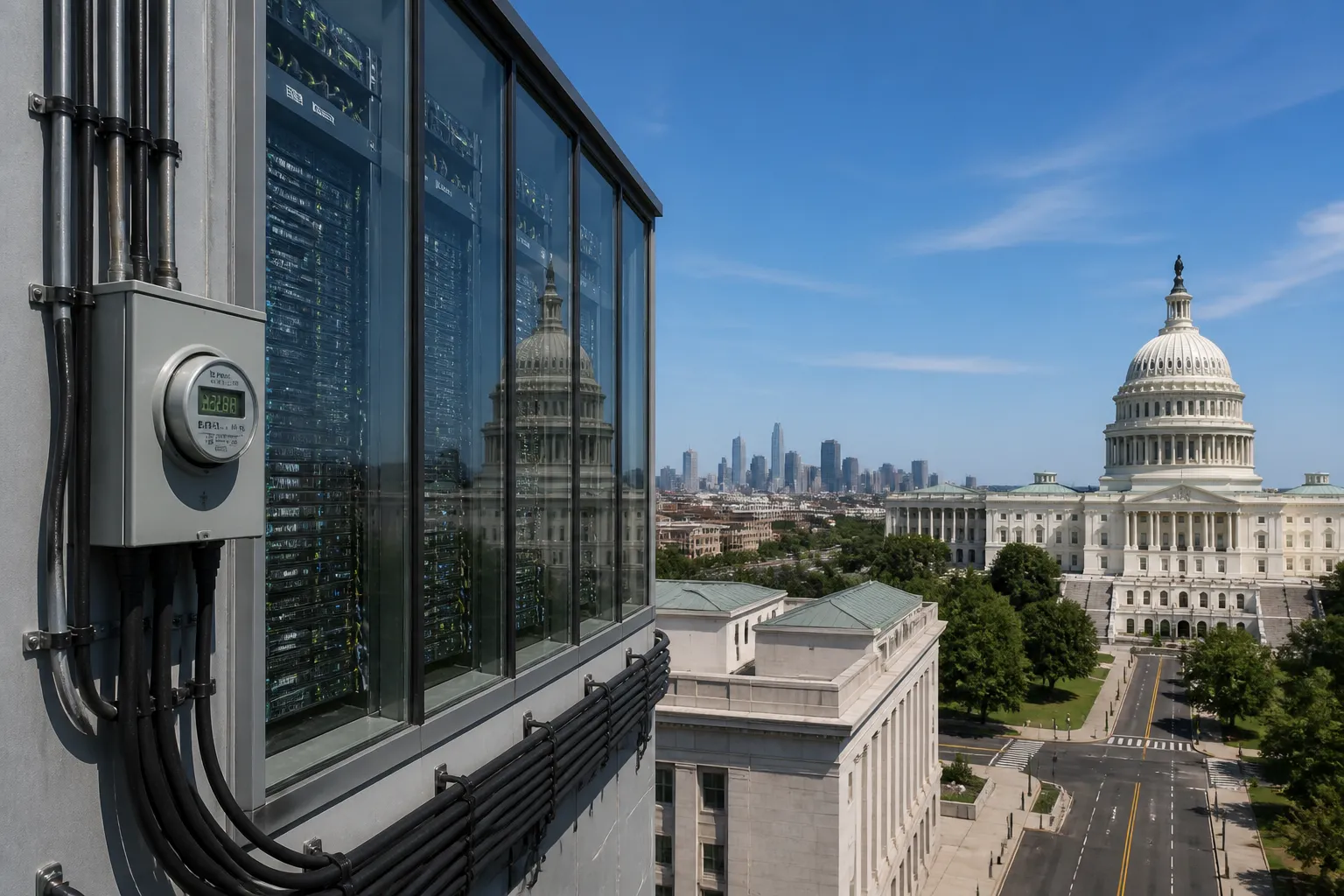
Washington’s Capitol is abuzz with a new proposal that could change how the electric grid’s expansion is paid for. Lawmakers are debating the Ratepayer Protection Act, a bill that would force utilities to charge large‑load customers—especially AI data centers—directly for the cost of grid upgrades, rather than spreading those expenses across residential ratepayers.
The push comes amid a rapid rise in the energy appetite of data centers. A Business Insider analysis projected that U.S. data centers would consume between 224 and 359 terawatt‑hours (TWh) of electricity by 2025, a jump of roughly 50% from the previous year. Gartner added that global data‑center electricity use is set to climb 26% in 2026, reaching 565 TWh, with AI‑optimized servers expected to account for 31% of that total.
In the United States, data centers already account for about 4.5 % of all electricity consumed across the country, and industry estimates suggest that share could double in the coming years. The International Energy Agency (IEA) notes that AI data centers alone are projected to consume 134 TWh by 2027—more than the entire electricity use of the Netherlands—and that global AI data‑center consumption could reach 950 TWh by 2030.
Electricity is not the only resource under strain. Water usage for cooling is becoming a major concern. In Texas, a July 2025 investigation by the Austin Chronicle found that data centers—including those operated by Microsoft and the U.S. Army Corps—used a combined 463 million gallons of water in 2023 and 2024. An industry analyst’s LinkedIn post echoed similar figures, noting that some large facilities can consume millions of gallons per day.
Consumer advocates argue that households should not subsidize the power costs of the world’s wealthiest technology companies. They point to the fact that AI data centers are often built in communities that may not receive proportional economic benefits. The technology industry counters that data centers create jobs, generate tax revenue, and frequently improve local infrastructure.
Under the Ratepayer Protection Act, state regulators would be required to adopt a “large‑load standard” that covers the full cost of any grid upgrades needed to support new AI projects. A QZ article reported that the bipartisan bill has already passed a House subcommittee, while a Food & Water Watch piece described it as a “handout to big tech.” Supporters say the measure protects ratepayers from bearing the cost of infrastructure that is driven by corporate demand.
As the AI boom continues, the debate centers on whether the strain on the electric grid and water supply should be borne by the technology sector or the public. The bill’s final fate remains uncertain, but its passage would mark one of the first federal attempts to assign the cost of AI‑related energy demand to technology companies.
Today, AI data centers are expanding rapidly across the United States, with new facilities under construction in Virginia, Georgia, Arizona, Ohio, and Texas. The Ratepayer Protection Act is still in the legislative process, and utilities are beginning to assess the potential impact of large‑load customers on grid upgrades. Meanwhile, water‑conservation groups are calling for stricter oversight of data‑center cooling practices, particularly in drought‑prone regions. The outcome of this debate will shape how the AI industry’s infrastructure needs are financed and how residential customers may be affected in the coming years.
The push comes amid a rapid rise in the energy appetite of data centers. A Business Insider analysis projected that U.S. data centers would consume between 224 and 359 terawatt‑hours (TWh) of electricity by 2025, a jump of roughly 50% from the previous year. Gartner added that global data‑center electricity use is set to climb 26% in 2026, reaching 565 TWh, with AI‑optimized servers expected to account for 31% of that total.
In the United States, data centers already account for about 4.5 % of all electricity consumed across the country, and industry estimates suggest that share could double in the coming years. The International Energy Agency (IEA) notes that AI data centers alone are projected to consume 134 TWh by 2027—more than the entire electricity use of the Netherlands—and that global AI data‑center consumption could reach 950 TWh by 2030.
Electricity is not the only resource under strain. Water usage for cooling is becoming a major concern. In Texas, a July 2025 investigation by the Austin Chronicle found that data centers—including those operated by Microsoft and the U.S. Army Corps—used a combined 463 million gallons of water in 2023 and 2024. An industry analyst’s LinkedIn post echoed similar figures, noting that some large facilities can consume millions of gallons per day.
Consumer advocates argue that households should not subsidize the power costs of the world’s wealthiest technology companies. They point to the fact that AI data centers are often built in communities that may not receive proportional economic benefits. The technology industry counters that data centers create jobs, generate tax revenue, and frequently improve local infrastructure.
Under the Ratepayer Protection Act, state regulators would be required to adopt a “large‑load standard” that covers the full cost of any grid upgrades needed to support new AI projects. A QZ article reported that the bipartisan bill has already passed a House subcommittee, while a Food & Water Watch piece described it as a “handout to big tech.” Supporters say the measure protects ratepayers from bearing the cost of infrastructure that is driven by corporate demand.
As the AI boom continues, the debate centers on whether the strain on the electric grid and water supply should be borne by the technology sector or the public. The bill’s final fate remains uncertain, but its passage would mark one of the first federal attempts to assign the cost of AI‑related energy demand to technology companies.
Today, AI data centers are expanding rapidly across the United States, with new facilities under construction in Virginia, Georgia, Arizona, Ohio, and Texas. The Ratepayer Protection Act is still in the legislative process, and utilities are beginning to assess the potential impact of large‑load customers on grid upgrades. Meanwhile, water‑conservation groups are calling for stricter oversight of data‑center cooling practices, particularly in drought‑prone regions. The outcome of this debate will shape how the AI industry’s infrastructure needs are financed and how residential customers may be affected in the coming years.





