Blab AI
Howard County Sheriff's Office Deploys AI Translation on Body Cameras to Improve Community Communication
When a deputy in Howard County speaks, a voice from another language can answer instantly.
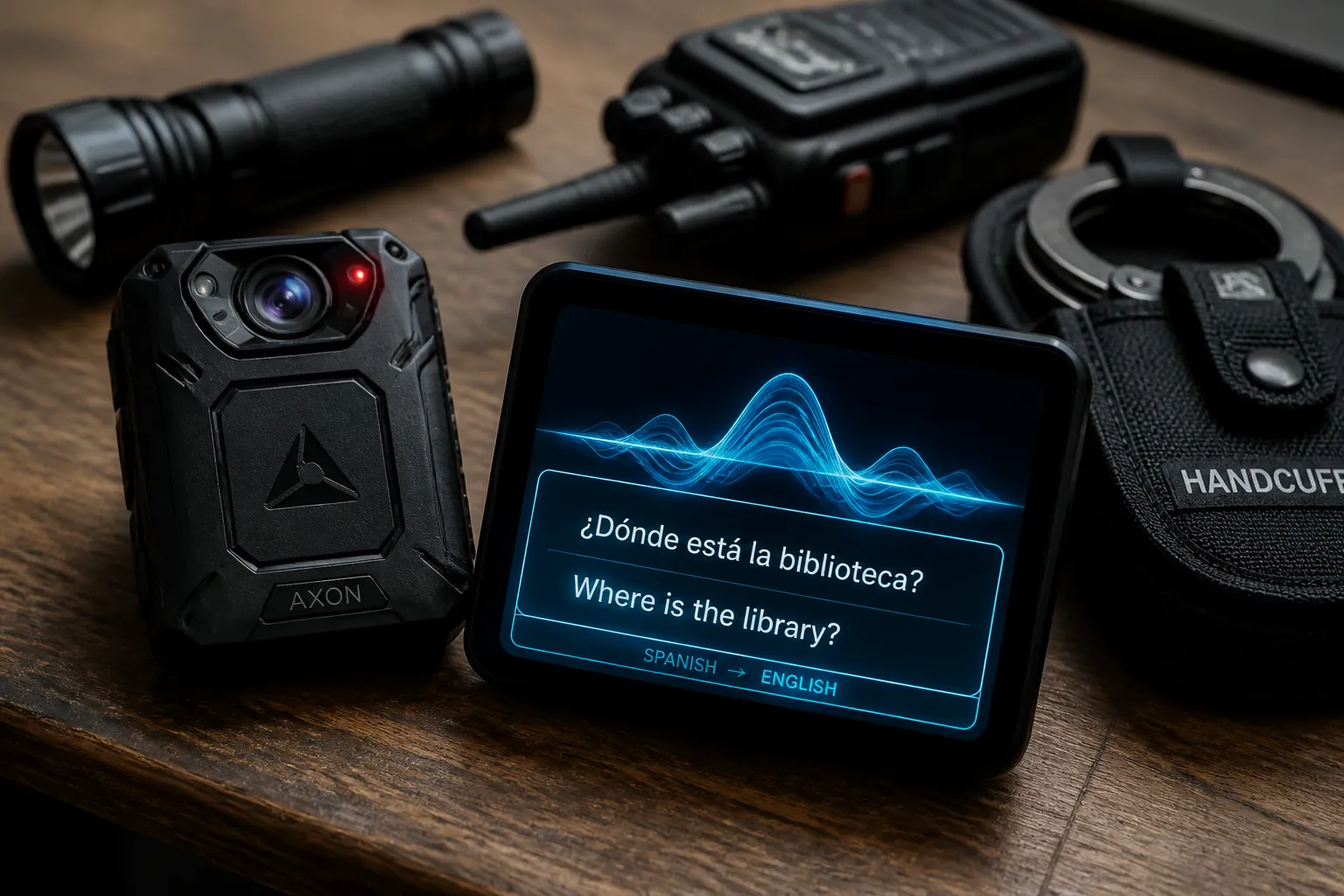
On July 16, 2026 the Howard County Sheriff’s Office (HCSO) announced that its body‑worn cameras will now run an artificial‑intelligence–powered translation system. The new feature can translate more than 50 languages in real time, automatically detecting the speaker’s language and delivering a spoken translation through the camera’s speaker. The goal is to enable deputies to communicate clearly with residents who have limited English proficiency during traffic stops, court‑security duties, warrant service, and other public‑safety encounters.
The technology is part of Axon Enterprise’s Real‑Time Translation product, built into the company’s Axon Body 4 cameras. According to the HCSO, the system records audio and video while the deputy speaks, then streams a spoken translation in the deputy’s chosen language, allowing the interaction to continue without a human interpreter. The HCSO noted that the feature is already in use by Fairfax County police and has been demonstrated in Philadelphia and other jurisdictions.
Sheriff Marcus Harris said clear communication is essential for effective law enforcement and building trust within the community. "This technology helps our deputies better serve Howard County’s diverse population by breaking down language barriers and ensuring everyone can understand important information during interactions with our Office," Harris said.
Howard County is one of the United States’ most affluent counties, with a 2020 population of 328,200 and a median household income of $124,042. About 63.6 % of residents hold a bachelor’s degree or higher, and a significant number of households are non‑English speaking. The HCSO’s decision to deploy AI translation is aimed at addressing this linguistic diversity and improving the quality of interactions between deputies and the public.
The agency plans to launch a pilot program in the coming weeks. Deputies will receive training on how to use the translation feature and how to interpret the translated output. The pilot will focus on high‑volume areas such as the main traffic corridors on Route 32 and the courthouse in Ellicott City. Officials said the pilot will last several months before a broader deployment, but a full rollout date has not yet been announced.
The introduction of AI translation in body cameras reflects a broader trend in law‑enforcement technology. Several departments across the country are exploring or have already adopted similar systems, citing benefits such as reduced misunderstandings, faster resolution of encounters, and increased officer safety. Critics point to potential challenges, including the accuracy of real‑time translation for complex legal terminology, the handling of recorded audio data, and privacy concerns related to continuous audio capture.
The HCSO’s move comes at a time when public scrutiny of law‑enforcement practices is high and communities are demanding greater transparency and accountability. By providing deputies with a tool that can bridge language gaps, the agency hopes to improve the overall safety and trust of its interactions with residents.
At present, the technology is in the early stages of deployment. The HCSO has not released data on how many cameras will be equipped or how many deputies will use the feature. The agency also has not announced any partnerships beyond the use of Axon’s product. The pilot’s outcomes will likely inform future decisions about expanding AI translation to other departments in the region.
In summary, Howard County’s adoption of AI‑powered translation in body cameras marks a significant step toward more inclusive policing. The initiative is still in its infancy, and its effectiveness will be measured by the pilot’s results and the feedback from both deputies and community members.
On July 16, 2026 the Howard County Sheriff’s Office (HCSO) announced that its body‑worn cameras will now run an artificial‑intelligence–powered translation system. The new feature can translate more than 50 languages in real time, automatically detecting the speaker’s language and delivering a spoken translation through the camera’s speaker. The goal is to enable deputies to communicate clearly with residents who have limited English proficiency during traffic stops, court‑security duties, warrant service, and other public‑safety encounters.
The technology is part of Axon Enterprise’s Real‑Time Translation product, built into the company’s Axon Body 4 cameras. According to the HCSO, the system records audio and video while the deputy speaks, then streams a spoken translation in the deputy’s chosen language, allowing the interaction to continue without a human interpreter. The HCSO noted that the feature is already in use by Fairfax County police and has been demonstrated in Philadelphia and other jurisdictions.
Sheriff Marcus Harris said clear communication is essential for effective law enforcement and building trust within the community. "This technology helps our deputies better serve Howard County’s diverse population by breaking down language barriers and ensuring everyone can understand important information during interactions with our Office," Harris said.
Howard County is one of the United States’ most affluent counties, with a 2020 population of 328,200 and a median household income of $124,042. About 63.6 % of residents hold a bachelor’s degree or higher, and a significant number of households are non‑English speaking. The HCSO’s decision to deploy AI translation is aimed at addressing this linguistic diversity and improving the quality of interactions between deputies and the public.
The agency plans to launch a pilot program in the coming weeks. Deputies will receive training on how to use the translation feature and how to interpret the translated output. The pilot will focus on high‑volume areas such as the main traffic corridors on Route 32 and the courthouse in Ellicott City. Officials said the pilot will last several months before a broader deployment, but a full rollout date has not yet been announced.
The introduction of AI translation in body cameras reflects a broader trend in law‑enforcement technology. Several departments across the country are exploring or have already adopted similar systems, citing benefits such as reduced misunderstandings, faster resolution of encounters, and increased officer safety. Critics point to potential challenges, including the accuracy of real‑time translation for complex legal terminology, the handling of recorded audio data, and privacy concerns related to continuous audio capture.
The HCSO’s move comes at a time when public scrutiny of law‑enforcement practices is high and communities are demanding greater transparency and accountability. By providing deputies with a tool that can bridge language gaps, the agency hopes to improve the overall safety and trust of its interactions with residents.
At present, the technology is in the early stages of deployment. The HCSO has not released data on how many cameras will be equipped or how many deputies will use the feature. The agency also has not announced any partnerships beyond the use of Axon’s product. The pilot’s outcomes will likely inform future decisions about expanding AI translation to other departments in the region.
In summary, Howard County’s adoption of AI‑powered translation in body cameras marks a significant step toward more inclusive policing. The initiative is still in its infancy, and its effectiveness will be measured by the pilot’s results and the feedback from both deputies and community members.





