Blab AI
Indias Manufacturing Future, Tax Reform and AI: Insights from Former NITI Aayog Member Arvind Virmani
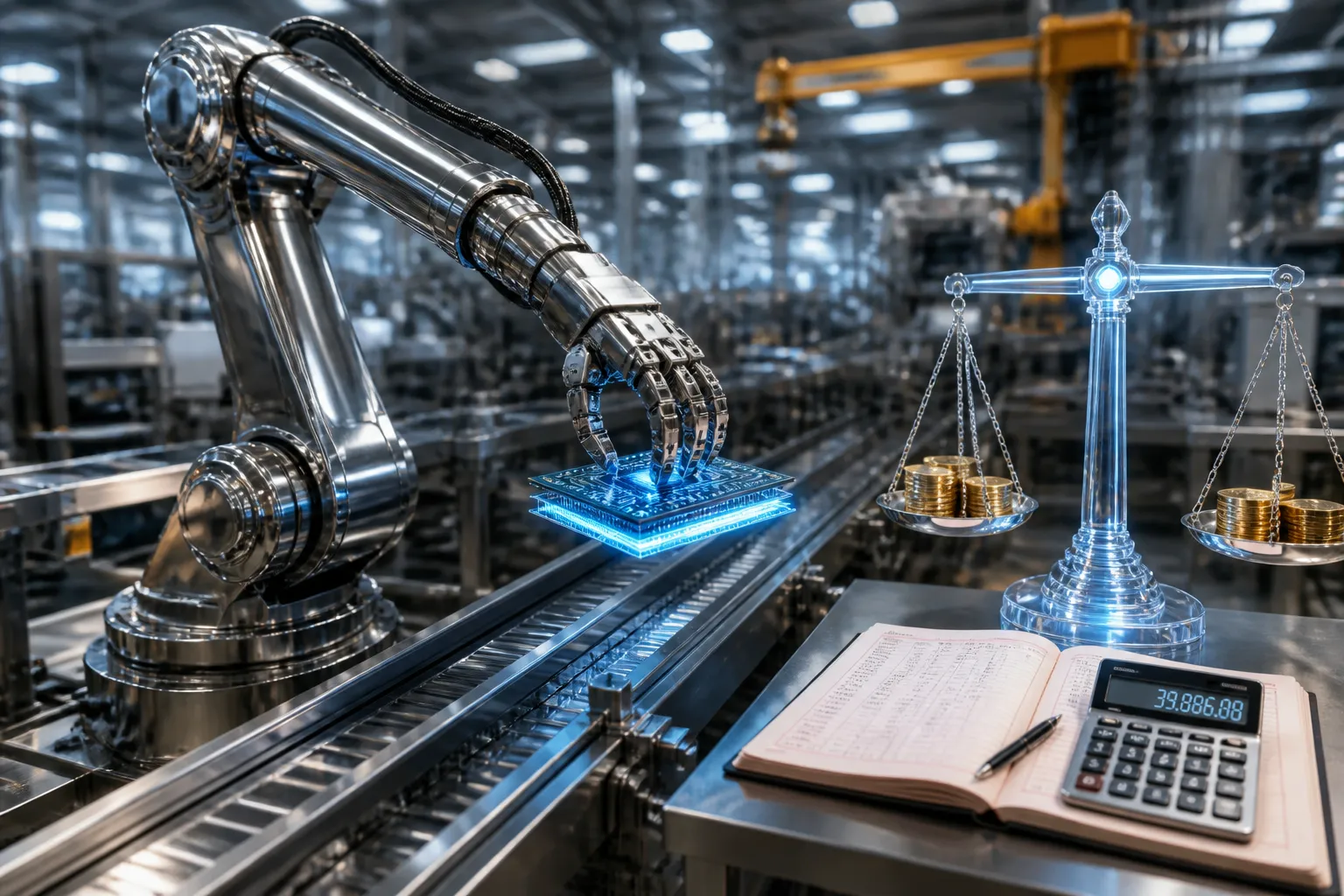
Former NITI Aayog member Arvind Virmani, who served as a full‑time member from November 2022 until March 2026, argues that manufacturing will be the engine that powers India’s economic growth over the next decade and a half. In a recent video interview with the Economic Times, Virmani called for a simpler, more predictable tax system and warned that artificial intelligence (AI) could "completely transform the whole tax system." He also urged India to prioritise free‑trade agreements (FTAs) with complementary developed economies, especially the European Union, to strengthen trusted supply chains and support manufacturing expansion.
Virmani’s remarks arrive as India is actively pursuing a new FTA with the EU. The agreement, signed on 27 January 2026, is expected to reduce tariffs and create a framework for deeper economic cooperation. Prime Minister Narendra Modi highlighted the pact as a step toward an "ambitious India," encouraging manufacturers to tap new markets. The EU has projected that the FTA could save European companies about €4 billion a year in duties once fully implemented.
The manufacturing argument is consistent with Virmani’s broader economic outlook. He has repeatedly emphasised that domestic consumption, infrastructure investment and manufacturing growth under initiatives such as "Make in India" are key to sustaining India’s growth trajectory. In a February 2026 interview, Virmani noted that a predictable tax environment would lower compliance costs and attract investment.
India’s tax landscape has undergone significant changes in recent years. The Goods and Services Tax (GST), introduced on 1 July 2017, replaced a complex mix of indirect taxes with a unified, multistage, destination‑based system. In September 2025, the government reduced the number of GST slabs from six to two—5 % and 18 %—to simplify the system and make goods more affordable. While the GST framework has been praised for reducing interstate travel time and streamlining compliance, critics have pointed to lingering administrative burdens.
Virmani’s suggestion that AI could overhaul the tax system aligns with broader trends in Indian tax administration. The Central Board of Direct Taxes (CBDT) and the Central Board of Indirect Taxes & Customs (CBIC) have begun experimenting with AI, data analytics and robotic process automation to improve compliance and fraud detection. However, no public announcement confirms that a fully AI‑driven tax system has been deployed.
The potential impact of AI on tax administration is twofold. First, AI can automate routine tasks such as data entry, form validation and cross‑checking of taxpayer records, potentially freeing up human resources for higher‑value analysis. Second, machine‑learning models can identify anomalies and patterns that signal tax evasion or non‑compliance, enabling targeted audits. While these capabilities promise greater efficiency, they also raise questions about data privacy, algorithmic transparency and the need for robust governance frameworks.
Virmani’s call for a simpler tax system also dovetails with recent policy discussions. In 2024, the Indian government announced a new rate card that reduced the overall tax burden on goods, and the GST Council has been working to further streamline tax rates and compliance procedures. The proposed AI‑enabled tax system would need to align with these reforms to avoid duplication of effort.
The manufacturing emphasis is reinforced by the EU‑India FTA’s focus on industrial cooperation. The agreement includes provisions for joint research and development, technology transfer and the creation of trusted supply chains. By aligning India’s manufacturing policy with the FTA, policymakers aim to position Indian firms as reliable partners for European companies seeking to diversify their supply chains.
In summary, Arvind Virmani’s remarks highlight three interrelated priorities for India: 1) boosting manufacturing as a growth engine, 2) simplifying the tax system to reduce compliance costs, and 3) leveraging AI to transform tax administration. The recent EU‑India FTA provides a strategic backdrop that could accelerate manufacturing growth and supply‑chain integration. Whether AI will deliver on its promise to overhaul the tax system remains to be seen, but the convergence of policy, technology and trade agreements signals a concerted effort to modernise India’s economic infrastructure.
The next few months will be critical. The Indian government is expected to release detailed guidelines on AI deployment in tax services, and the EU‑India FTA will move toward implementation in 2027. Observers will watch how these developments affect manufacturing investment, tax compliance costs and the broader economic outlook for India.
Virmani’s remarks arrive as India is actively pursuing a new FTA with the EU. The agreement, signed on 27 January 2026, is expected to reduce tariffs and create a framework for deeper economic cooperation. Prime Minister Narendra Modi highlighted the pact as a step toward an "ambitious India," encouraging manufacturers to tap new markets. The EU has projected that the FTA could save European companies about €4 billion a year in duties once fully implemented.
The manufacturing argument is consistent with Virmani’s broader economic outlook. He has repeatedly emphasised that domestic consumption, infrastructure investment and manufacturing growth under initiatives such as "Make in India" are key to sustaining India’s growth trajectory. In a February 2026 interview, Virmani noted that a predictable tax environment would lower compliance costs and attract investment.
India’s tax landscape has undergone significant changes in recent years. The Goods and Services Tax (GST), introduced on 1 July 2017, replaced a complex mix of indirect taxes with a unified, multistage, destination‑based system. In September 2025, the government reduced the number of GST slabs from six to two—5 % and 18 %—to simplify the system and make goods more affordable. While the GST framework has been praised for reducing interstate travel time and streamlining compliance, critics have pointed to lingering administrative burdens.
Virmani’s suggestion that AI could overhaul the tax system aligns with broader trends in Indian tax administration. The Central Board of Direct Taxes (CBDT) and the Central Board of Indirect Taxes & Customs (CBIC) have begun experimenting with AI, data analytics and robotic process automation to improve compliance and fraud detection. However, no public announcement confirms that a fully AI‑driven tax system has been deployed.
The potential impact of AI on tax administration is twofold. First, AI can automate routine tasks such as data entry, form validation and cross‑checking of taxpayer records, potentially freeing up human resources for higher‑value analysis. Second, machine‑learning models can identify anomalies and patterns that signal tax evasion or non‑compliance, enabling targeted audits. While these capabilities promise greater efficiency, they also raise questions about data privacy, algorithmic transparency and the need for robust governance frameworks.
Virmani’s call for a simpler tax system also dovetails with recent policy discussions. In 2024, the Indian government announced a new rate card that reduced the overall tax burden on goods, and the GST Council has been working to further streamline tax rates and compliance procedures. The proposed AI‑enabled tax system would need to align with these reforms to avoid duplication of effort.
The manufacturing emphasis is reinforced by the EU‑India FTA’s focus on industrial cooperation. The agreement includes provisions for joint research and development, technology transfer and the creation of trusted supply chains. By aligning India’s manufacturing policy with the FTA, policymakers aim to position Indian firms as reliable partners for European companies seeking to diversify their supply chains.
In summary, Arvind Virmani’s remarks highlight three interrelated priorities for India: 1) boosting manufacturing as a growth engine, 2) simplifying the tax system to reduce compliance costs, and 3) leveraging AI to transform tax administration. The recent EU‑India FTA provides a strategic backdrop that could accelerate manufacturing growth and supply‑chain integration. Whether AI will deliver on its promise to overhaul the tax system remains to be seen, but the convergence of policy, technology and trade agreements signals a concerted effort to modernise India’s economic infrastructure.
The next few months will be critical. The Indian government is expected to release detailed guidelines on AI deployment in tax services, and the EU‑India FTA will move toward implementation in 2027. Observers will watch how these developments affect manufacturing investment, tax compliance costs and the broader economic outlook for India.





