Blab AI
Virgin Atlantic Chief Charts AI-Driven Future for Airline Retailing
When Virgin Atlantic’s Chief Customer Officer Juha Jaervinen stepped onto the stage at the APEX FTE EMEA and Ancillary & Retailing 2026 conference in Dublin, he didn’t merely outline a roadmap; he sketched a future where artificial intelligence becomes invisible to the passenger and invisible to the airline, yet profoundly smarter.
As a long‑time member of the APEX Future Travel Experience Board, Jaervinen stressed that AI’s purpose should be to give passengers more control and airlines more precision, rather than to simply automate routine tasks. He framed the technology’s value in terms of timing, recovery, catering, offers and crew support. "The best outcome is not a more automated airline that feels colder; it is an airline where technology disappears into better timing, better recovery, better catering, better offers and better crew support," he said. "The future customer experience is not about selling more items but about knowing what matters, when it matters, and making the moment feel brilliantly different at scale."
Booking
Jaervinen began by turning the economics of retailing on its head. He described a shift from "human shopping" to "machine shopping," noting that an AI agent can monitor fares, rules, seat maps, loyalty value, disruption risk and competitor offers around the clock. In no‑change‑fee environments, the agent could seek better economics after purchase if fare rules allow, adding pressure on revenue‑management teams.
To adapt, airlines must offer clear, trusted, machine‑readable offers. "A transparent approach cultivates a brand image that is trustworthy to both AI agents and passengers," Jaervinen said. With that foundation, airlines can recommend a compelling "buy now" limited‑time offer that reduces uncertainty for both parties.
Inflight
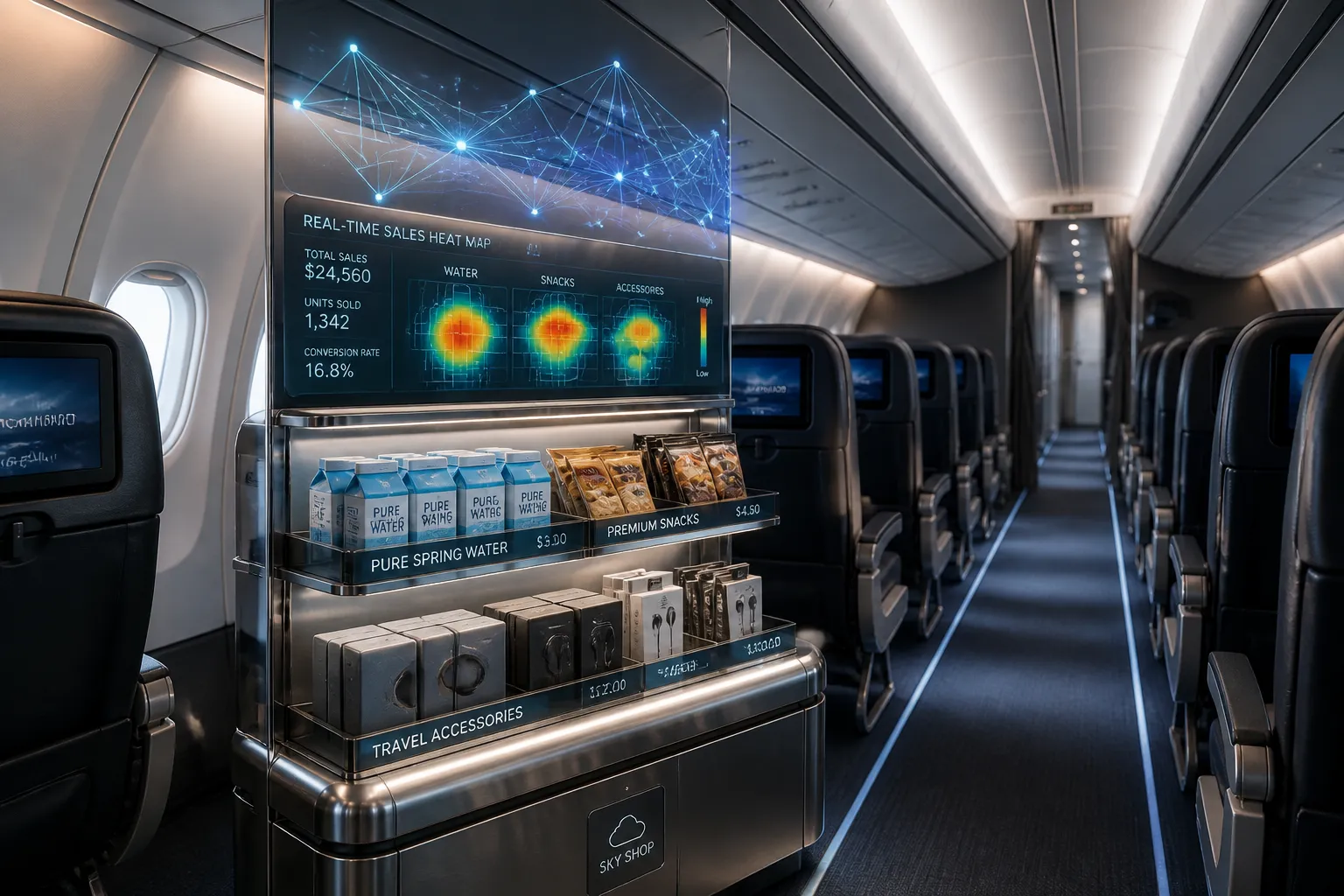
Personalised offers delivered at the right time and via the right channel can boost revenue, cut crew workload and lower fuel consumption. Jaervinen cited a GlobalData survey that found Gen Z and millennials consider tailoring an essential purchase factor.
For food and beverage, he suggested airlines make premium items available across cabins when reserved in advance and catered with certainty. "If an airline has purchased, chilled, loaded and carried a perishable item, the customer should understand that the item may not be refundable unless they bought protection or the airline caused the disruption," Jaervinen said. The customer value is confidence; the airline value is revenue with lower waste and better provisioning.
This approach supports smarter catering loading, which currently reduces waste to the high teens to low twenties percentage points. AI can further optimise loading by considering route, departure time, holiday periods, religious observances, local events and loyalty preferences.
Jaervinen acknowledged concerns that a "dine‑on‑demand" model could increase crew work, but countered that if passengers reserve what they want and trust it will be available later, they do not all need to eat immediately after take‑off. Offering guided service windows can smooth the service peak and keep crews engaged.
Once cabins become connected, Virgin Atlantic will complete its Starlink rollout by 2027, paving the way for a range of offers spanning transfers, destination experiences, lounge access, home‑delivery retail and premium food and beverage.
Disruptions
Jaervinen linked disruption management to retailing, stating that AI can present choices, reattach ancillary purchases and suggest fair service recovery. "This is a place where airlines can build enormous trust," he said. Airlines should offer recovery options that match the severity of the disruption, allowing passengers to choose from the fastest, simplest or an alternative flight in the same cabin.
He also highlighted the value of a single trusted journey on a passenger’s phone, including identity, wallet, loyalty, bags and trip servicing. IATA passenger research points to strong customer interest in smartphone‑based identity and real‑time bag tracking, enabling airlines to know what was promised, what was purchased, what changed and what should happen next.
AI for Employees
Jaervinen concluded that AI and state‑of‑the‑art technology will revolutionise how airline employees work, plan, operate and serve customers. The technology will unlock revenue opportunities while improving the experience, but only people and human‑designed experiences can create emotion. "Technology should remove effort so people can create emotion: a handwritten welcome note; a cold Redhead cocktail waiting in the Clubhouse; your favourite seat on the plane reserved," he said.
Upcoming Events
Virgin Atlantic will participate in FTE Global – the "CES of Aviation" – in Dallas, Texas, from 8 to 10 September 2026, and in APEX FTE EXPO Asia in Singapore on 18 to 19 November 2026.
The airline’s AI‑driven retail vision, combined with its planned Starlink connectivity, signals a broader industry trend toward data‑driven, passenger‑centric services that aim to reduce waste, improve recovery and enhance the overall travel experience.
As a long‑time member of the APEX Future Travel Experience Board, Jaervinen stressed that AI’s purpose should be to give passengers more control and airlines more precision, rather than to simply automate routine tasks. He framed the technology’s value in terms of timing, recovery, catering, offers and crew support. "The best outcome is not a more automated airline that feels colder; it is an airline where technology disappears into better timing, better recovery, better catering, better offers and better crew support," he said. "The future customer experience is not about selling more items but about knowing what matters, when it matters, and making the moment feel brilliantly different at scale."
Booking
Jaervinen began by turning the economics of retailing on its head. He described a shift from "human shopping" to "machine shopping," noting that an AI agent can monitor fares, rules, seat maps, loyalty value, disruption risk and competitor offers around the clock. In no‑change‑fee environments, the agent could seek better economics after purchase if fare rules allow, adding pressure on revenue‑management teams.
To adapt, airlines must offer clear, trusted, machine‑readable offers. "A transparent approach cultivates a brand image that is trustworthy to both AI agents and passengers," Jaervinen said. With that foundation, airlines can recommend a compelling "buy now" limited‑time offer that reduces uncertainty for both parties.
Inflight
Personalised offers delivered at the right time and via the right channel can boost revenue, cut crew workload and lower fuel consumption. Jaervinen cited a GlobalData survey that found Gen Z and millennials consider tailoring an essential purchase factor.
For food and beverage, he suggested airlines make premium items available across cabins when reserved in advance and catered with certainty. "If an airline has purchased, chilled, loaded and carried a perishable item, the customer should understand that the item may not be refundable unless they bought protection or the airline caused the disruption," Jaervinen said. The customer value is confidence; the airline value is revenue with lower waste and better provisioning.
This approach supports smarter catering loading, which currently reduces waste to the high teens to low twenties percentage points. AI can further optimise loading by considering route, departure time, holiday periods, religious observances, local events and loyalty preferences.
Jaervinen acknowledged concerns that a "dine‑on‑demand" model could increase crew work, but countered that if passengers reserve what they want and trust it will be available later, they do not all need to eat immediately after take‑off. Offering guided service windows can smooth the service peak and keep crews engaged.
Once cabins become connected, Virgin Atlantic will complete its Starlink rollout by 2027, paving the way for a range of offers spanning transfers, destination experiences, lounge access, home‑delivery retail and premium food and beverage.
Disruptions
Jaervinen linked disruption management to retailing, stating that AI can present choices, reattach ancillary purchases and suggest fair service recovery. "This is a place where airlines can build enormous trust," he said. Airlines should offer recovery options that match the severity of the disruption, allowing passengers to choose from the fastest, simplest or an alternative flight in the same cabin.
He also highlighted the value of a single trusted journey on a passenger’s phone, including identity, wallet, loyalty, bags and trip servicing. IATA passenger research points to strong customer interest in smartphone‑based identity and real‑time bag tracking, enabling airlines to know what was promised, what was purchased, what changed and what should happen next.
AI for Employees
Jaervinen concluded that AI and state‑of‑the‑art technology will revolutionise how airline employees work, plan, operate and serve customers. The technology will unlock revenue opportunities while improving the experience, but only people and human‑designed experiences can create emotion. "Technology should remove effort so people can create emotion: a handwritten welcome note; a cold Redhead cocktail waiting in the Clubhouse; your favourite seat on the plane reserved," he said.
Upcoming Events
Virgin Atlantic will participate in FTE Global – the "CES of Aviation" – in Dallas, Texas, from 8 to 10 September 2026, and in APEX FTE EXPO Asia in Singapore on 18 to 19 November 2026.
The airline’s AI‑driven retail vision, combined with its planned Starlink connectivity, signals a broader industry trend toward data‑driven, passenger‑centric services that aim to reduce waste, improve recovery and enhance the overall travel experience.





