Blab AI
TigerConnect Unveils AI-Powered Scheduling Tool to Streamline Clinical Workflows
TigerConnect, a Los Angeles‑based healthcare communication platform, announced the launch of TigerConnect Scheduling on 25 June 2026. The new tool adds artificial‑intelligence (AI) automation to the company’s existing instant‑messaging and collaboration suite, allowing hospitals and health systems to build, manage and adjust clinical schedules in real time.
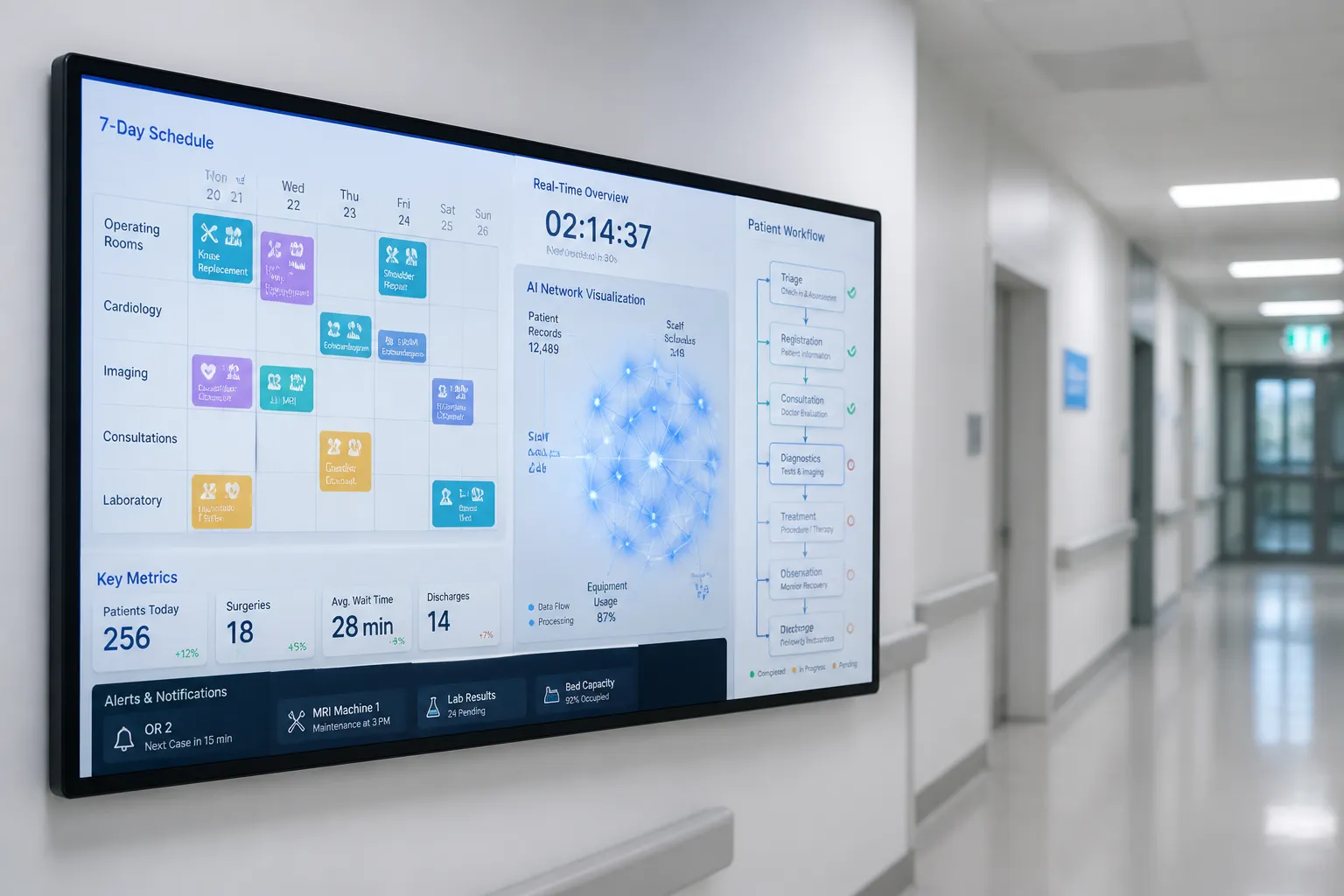
TigerConnect Scheduling incorporates several AI‑driven features. An automated scheduling engine creates shift plans in minutes, while a real‑time AI‑generated gap‑detection system highlights coverage holes as they arise. The platform also offers conversational workflows that let staff ask questions in natural language and receive instant answers, and intelligent assignment logic that balances workload across clinicians.
"Healthcare has accepted scheduling chaos as a fact of life for so long that we've stopped questioning it,” said Peter Stetson, M.D., TigerConnect’s chief medical informatics officer, in a statement to Fierce Healthcare. "The average clinical manager spends hours every week on a process that should take minutes—time that isn't spent on patient care or team leadership."
Stetson added that feedback from early adopters shows the problem is “universal” across the industry. He emphasized that the tool’s value lies not only in efficiency but also in the awareness it gives leaders to anticipate gaps rather than scramble to fill them.
TigerConnect was founded in 2010 under the name TigerText and has grown to serve nearly 6,000 healthcare organizations, according to the company. Its network now reaches more than one million care providers worldwide.
One early adopter of the new scheduling platform is Hartford HealthCare, a Connecticut‑based health system that operates hospitals such as Windham Hospital and the Hartford HealthCare Amphitheater. Ajay Kumar, M.D., Chief Clinical Officer of Hartford HealthCare, said in a statement that “effective workforce communication and coordination are essential for high‑quality care and clinician support.” He added that the system’s goal is to streamline operations, improve communication and reduce administrative burden.
The introduction of AI scheduling addresses a long‑standing pain point in clinical operations. Manual scheduling often requires staff to review multiple calendars, negotiate availability and resolve conflicts manually—tasks that can consume hours each week. By automating routine decisions and providing real‑time visibility into coverage gaps, TigerConnect Scheduling aims to free schedulers and clinical leaders to focus on patient care.
Industry analysts note that AI‑based scheduling tools are part of a broader trend toward digital transformation in healthcare. Companies that can deliver reliable, HIPAA‑compliant scheduling solutions that integrate with existing communication platforms are positioned to capture growing demand for operational efficiencies.
TigerConnect’s expansion also highlights the company’s strategy to deepen its footprint beyond messaging. The platform now offers a full suite of scheduling, on‑call management and workflow automation features, all delivered through the same cloud‑based infrastructure that powers its instant‑messaging services.
As of the announcement, TigerConnect Scheduling is available to all existing TigerConnect customers and is being piloted in several large health systems, including Hartford HealthCare. The company has not disclosed pricing details, but it has indicated that the solution will be offered as part of its existing subscription model.
The launch comes at a time when many health systems are looking to reduce administrative overhead and improve clinician satisfaction. While the exact impact on scheduling efficiency remains to be measured, the integration of AI into routine scheduling tasks represents a significant step toward more proactive workforce management in clinical settings.
In the coming months, TigerConnect plans to release additional enhancements, including deeper analytics on shift utilization and expanded natural‑language interaction capabilities. The company also intends to broaden its partner ecosystem to integrate with electronic health record and workforce management systems.
For now, TigerConnect Scheduling provides a concrete example of how AI can be applied to a core operational function in healthcare, offering a potential pathway to smoother, more responsive clinical staffing.
TigerConnect Scheduling incorporates several AI‑driven features. An automated scheduling engine creates shift plans in minutes, while a real‑time AI‑generated gap‑detection system highlights coverage holes as they arise. The platform also offers conversational workflows that let staff ask questions in natural language and receive instant answers, and intelligent assignment logic that balances workload across clinicians.
"Healthcare has accepted scheduling chaos as a fact of life for so long that we've stopped questioning it,” said Peter Stetson, M.D., TigerConnect’s chief medical informatics officer, in a statement to Fierce Healthcare. "The average clinical manager spends hours every week on a process that should take minutes—time that isn't spent on patient care or team leadership."
Stetson added that feedback from early adopters shows the problem is “universal” across the industry. He emphasized that the tool’s value lies not only in efficiency but also in the awareness it gives leaders to anticipate gaps rather than scramble to fill them.
TigerConnect was founded in 2010 under the name TigerText and has grown to serve nearly 6,000 healthcare organizations, according to the company. Its network now reaches more than one million care providers worldwide.
One early adopter of the new scheduling platform is Hartford HealthCare, a Connecticut‑based health system that operates hospitals such as Windham Hospital and the Hartford HealthCare Amphitheater. Ajay Kumar, M.D., Chief Clinical Officer of Hartford HealthCare, said in a statement that “effective workforce communication and coordination are essential for high‑quality care and clinician support.” He added that the system’s goal is to streamline operations, improve communication and reduce administrative burden.
The introduction of AI scheduling addresses a long‑standing pain point in clinical operations. Manual scheduling often requires staff to review multiple calendars, negotiate availability and resolve conflicts manually—tasks that can consume hours each week. By automating routine decisions and providing real‑time visibility into coverage gaps, TigerConnect Scheduling aims to free schedulers and clinical leaders to focus on patient care.
Industry analysts note that AI‑based scheduling tools are part of a broader trend toward digital transformation in healthcare. Companies that can deliver reliable, HIPAA‑compliant scheduling solutions that integrate with existing communication platforms are positioned to capture growing demand for operational efficiencies.
TigerConnect’s expansion also highlights the company’s strategy to deepen its footprint beyond messaging. The platform now offers a full suite of scheduling, on‑call management and workflow automation features, all delivered through the same cloud‑based infrastructure that powers its instant‑messaging services.
As of the announcement, TigerConnect Scheduling is available to all existing TigerConnect customers and is being piloted in several large health systems, including Hartford HealthCare. The company has not disclosed pricing details, but it has indicated that the solution will be offered as part of its existing subscription model.
The launch comes at a time when many health systems are looking to reduce administrative overhead and improve clinician satisfaction. While the exact impact on scheduling efficiency remains to be measured, the integration of AI into routine scheduling tasks represents a significant step toward more proactive workforce management in clinical settings.
In the coming months, TigerConnect plans to release additional enhancements, including deeper analytics on shift utilization and expanded natural‑language interaction capabilities. The company also intends to broaden its partner ecosystem to integrate with electronic health record and workforce management systems.
For now, TigerConnect Scheduling provides a concrete example of how AI can be applied to a core operational function in healthcare, offering a potential pathway to smoother, more responsive clinical staffing.





