Blab AI
Jamaica Adopts Agentic AI for Recruitment Amid EU and Local Data-Protection Compliance
Jamaican companies are turning to agentic artificial intelligence (AI) to streamline the early stages of hiring, a shift that dovetails with the European Union’s AI Act and the nation’s Data Protection Act 2020. The move was reported on 25 June 2026, following the EU’s decision to classify recruitment‑focused AI as a high‑risk system that must undergo stringent audits for algorithmic bias.
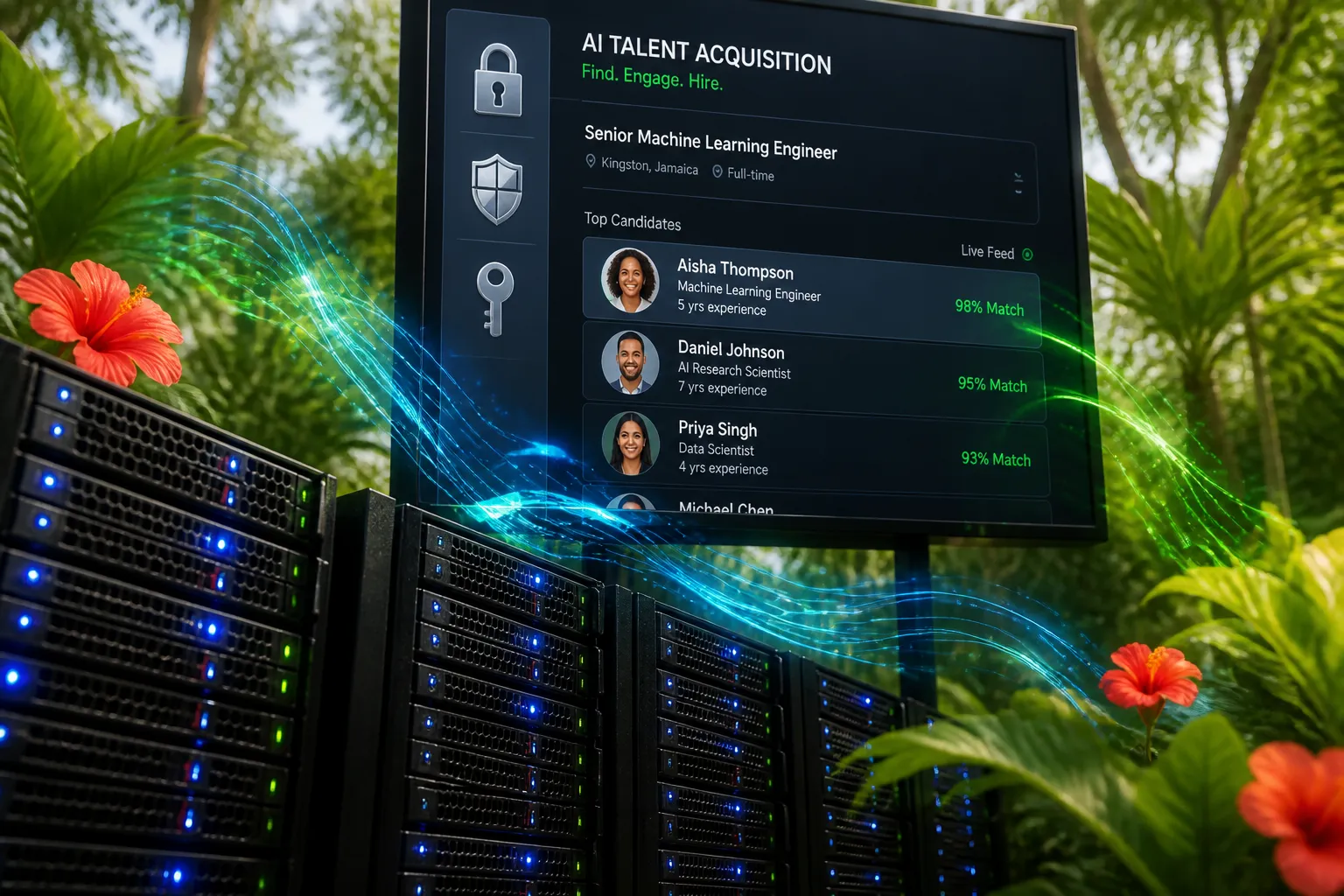
Agentic AI—an advanced tier of systems that can pursue objectives, employ tools, and act autonomously—has matured to the point where it can scour professional networks like LinkedIn and GitHub, sift through market data, and craft personalized outreach messages without human prompting. When a candidate is flagged, the platform parses portfolios, syncs calendars to schedule interviews, and administers preliminary behavioral and technical screenings via phone, text, or interactive video avatars. It then compiles summaries of each interaction and updates applicant databases automatically, creating a seamless, end‑to‑end pipeline.
This automation is reshaping how qualifications are weighed. Generative AI models such as Gemini and ChatGPT can polish resumes, which means traditional credentials and job titles are no longer the sole determinants of a candidate’s suitability. Instead, agentic tools emphasize demonstrable skills and potential, leveraging predictive analytics and asynchronous simulations that map a candidate’s capabilities directly onto real‑world business challenges.
In practice, Jamaica’s largest firms in financial services, telecommunications, and high‑volume business process outsourcing (BPO) are piloting automated screening and structured assessment solutions to alleviate administrative bottlenecks. By offloading routine tasks—scheduling, résumé sorting, and initial screening—human resources professionals can focus on strategic workforce planning, cultural fit, and final‑stage relationship building.
Job seekers feel the ripple effects most acutely when applying for international or remote roles. A May Gleaner article warned that “Your next job interview could be with an AI bot,” and candidates are increasingly required to navigate asynchronous video and text interviews where clear, explicit, and descriptive verbal answers are essential for AI parsing.
Agentic AI is erasing geographic boundaries, making Jamaican talent visible to global companies seeking specialized skills. Localized AI models have also spawned remote opportunities for high‑end AI engineering and linguistic quality‑assurance roles that train AI systems to understand Jamaican cultural content and language nuances.
Compliance remains a cornerstone of the rollout. The EU AI Act’s high‑risk classification for recruitment AI is fully in force from 2 August 2025, and the General‑Purpose AI Code of Practice—issued by the European Commission on 10 July 2025—offers guidance for providers of large language models and other general‑purpose AI systems.
On the domestic front, the Jamaica Data Protection Act 2020 mandates that autonomous agents process applicant data transparently, uphold secure local data standards, and safeguard candidates’ privacy throughout the automated lifecycle. The Office of the Information Commissioner inaugurated a Data‑Protection Working Group on 23 March 2026 to strengthen data‑governance practices across the digital economy.
To support a skills‑first paradigm, institutions such as the HEART/NSTA Trust, the Ministry of Labour and Social Security, and local universities are encouraged to develop a verified skills registry. Secure digital portfolios and verifiable micro‑credentials would create a structured repository that agentic sourcing tools can index, boosting the visibility of Jamaican talent to global firms.
The HR Management Association of Jamaica (HRMAJ) and the Office of the Information Commissioner are expected to collaborate on a localized compliance framework tailored to AI hiring. A clear, actionable checklist would help companies audit third‑party agentic platforms before deployment, ensuring alignment with the JDPA and mitigating algorithmic‑bias liabilities.
Private‑sector leaders in finance, telecom, and enterprise—alongside educational institutions—should audit existing HR processes to pinpoint manual bottlenecks. Delegating tasks such as interview scheduling and résumé triage to agentic automation platforms, while teaching students how to use tools like Zapier AI, n8n, and HubSpot Breeze, would channel business hours into high‑touch cultural onboarding and strategic workforce development.
In sum, Jamaican firms are integrating agentic AI into recruitment to boost efficiency and broaden access to global talent markets. The technology is already in pilot programs, and compliance frameworks are emerging to align with EU and local data‑protection regulations. Upcoming regulatory updates—such as the EU AI Act’s high‑risk obligations—and the rollout of a national skills registry will shape the next phase of AI‑driven hiring in Jamaica.
Agentic AI—an advanced tier of systems that can pursue objectives, employ tools, and act autonomously—has matured to the point where it can scour professional networks like LinkedIn and GitHub, sift through market data, and craft personalized outreach messages without human prompting. When a candidate is flagged, the platform parses portfolios, syncs calendars to schedule interviews, and administers preliminary behavioral and technical screenings via phone, text, or interactive video avatars. It then compiles summaries of each interaction and updates applicant databases automatically, creating a seamless, end‑to‑end pipeline.
This automation is reshaping how qualifications are weighed. Generative AI models such as Gemini and ChatGPT can polish resumes, which means traditional credentials and job titles are no longer the sole determinants of a candidate’s suitability. Instead, agentic tools emphasize demonstrable skills and potential, leveraging predictive analytics and asynchronous simulations that map a candidate’s capabilities directly onto real‑world business challenges.
In practice, Jamaica’s largest firms in financial services, telecommunications, and high‑volume business process outsourcing (BPO) are piloting automated screening and structured assessment solutions to alleviate administrative bottlenecks. By offloading routine tasks—scheduling, résumé sorting, and initial screening—human resources professionals can focus on strategic workforce planning, cultural fit, and final‑stage relationship building.
Job seekers feel the ripple effects most acutely when applying for international or remote roles. A May Gleaner article warned that “Your next job interview could be with an AI bot,” and candidates are increasingly required to navigate asynchronous video and text interviews where clear, explicit, and descriptive verbal answers are essential for AI parsing.
Agentic AI is erasing geographic boundaries, making Jamaican talent visible to global companies seeking specialized skills. Localized AI models have also spawned remote opportunities for high‑end AI engineering and linguistic quality‑assurance roles that train AI systems to understand Jamaican cultural content and language nuances.
Compliance remains a cornerstone of the rollout. The EU AI Act’s high‑risk classification for recruitment AI is fully in force from 2 August 2025, and the General‑Purpose AI Code of Practice—issued by the European Commission on 10 July 2025—offers guidance for providers of large language models and other general‑purpose AI systems.
On the domestic front, the Jamaica Data Protection Act 2020 mandates that autonomous agents process applicant data transparently, uphold secure local data standards, and safeguard candidates’ privacy throughout the automated lifecycle. The Office of the Information Commissioner inaugurated a Data‑Protection Working Group on 23 March 2026 to strengthen data‑governance practices across the digital economy.
To support a skills‑first paradigm, institutions such as the HEART/NSTA Trust, the Ministry of Labour and Social Security, and local universities are encouraged to develop a verified skills registry. Secure digital portfolios and verifiable micro‑credentials would create a structured repository that agentic sourcing tools can index, boosting the visibility of Jamaican talent to global firms.
The HR Management Association of Jamaica (HRMAJ) and the Office of the Information Commissioner are expected to collaborate on a localized compliance framework tailored to AI hiring. A clear, actionable checklist would help companies audit third‑party agentic platforms before deployment, ensuring alignment with the JDPA and mitigating algorithmic‑bias liabilities.
Private‑sector leaders in finance, telecom, and enterprise—alongside educational institutions—should audit existing HR processes to pinpoint manual bottlenecks. Delegating tasks such as interview scheduling and résumé triage to agentic automation platforms, while teaching students how to use tools like Zapier AI, n8n, and HubSpot Breeze, would channel business hours into high‑touch cultural onboarding and strategic workforce development.
In sum, Jamaican firms are integrating agentic AI into recruitment to boost efficiency and broaden access to global talent markets. The technology is already in pilot programs, and compliance frameworks are emerging to align with EU and local data‑protection regulations. Upcoming regulatory updates—such as the EU AI Act’s high‑risk obligations—and the rollout of a national skills registry will shape the next phase of AI‑driven hiring in Jamaica.





