Blab AI
AI-driven Memory Demand Fuels Micron Surge While Apple Price Hikes Drag Down Tech Stocks
The U.S. stock market ended Thursday with a mixed performance. The S&P 500 slipped 0.1 percent after early swings, while the Nasdaq composite fell 0.6 percent. Apple’s shares dropped 6.3 percent after the company announced price increases on several Mac and iPad models, making it the largest contributor to the index’s decline.
Micron Technology (NASDAQ: MU) was the only major technology stock to rise sharply, jumping 14.2 percent. The memory‑chip maker reported second‑quarter fiscal 2026 results that exceeded analyst expectations. Revenue of $23.86 billion beat the prior‑quarter figure of $13.64 billion, and the company raised its revenue outlook for the current quarter. Micron’s earnings release said the stronger performance reflected heightened demand for high‑bandwidth memory used in artificial‑intelligence (AI) servers.
Micron’s surge comes amid a broader trend of rising memory prices. The company’s 2026 earnings report noted that 70 percent of its production is now destined for AI data centers, which are expanding rapidly. The memory‑chip manufacturer’s market cap reached $1 trillion in May, the first U.S. company to do so.
In a related development, Qualcomm (NASDAQ: QCOM) announced on its Investor Day that it will target $40 billion in non‑handset revenue for fiscal year 2029, roughly double the prior target. The company said the target reflects the acceleration of AI workloads and the shift of hyperscale cloud providers toward its AI‑optimized chips. Qualcomm’s shares rose 7.4 percent after the announcement.
Apple’s price hikes were driven by the company’s need to offset higher memory and component costs. The company increased the base price of several MacBook models by 15 percent to 20 percent, and raised prices for iPads and other devices. Apple’s price‑increase announcement was reported by several technology outlets on Thursday. The move was widely seen as a response to the global memory shortage that has pushed component costs higher.
Bond markets also moved lower as inflation data eased. The U.S. Consumer Price Index for May rose 4.1 percent year‑over‑year, up from 3.8 percent in April, but the increase was within economists’ expectations. The 10‑year Treasury yield fell to 4.38 percent from 4.41 percent late Wednesday and from 4.56 percent earlier in the month. The decline in yields was attributed to a drop in oil prices.
Oil prices themselves fell to $74.89 a barrel, a 1.4 percent increase from the previous day but still below the $100 level seen during the Strait of Hormuz closure. The price change was reported by the U.S. Energy Information Administration.
Global markets responded positively to the easing of bond yields and the AI‑driven demand for memory. South Korea’s Kospi index rose 5.4 percent, led by a 13.1 percent jump for SK Hynix. Japan’s Nikkei 225 gained 4.6 percent, and the United Kingdom’s FTSE 100 climbed 0.7 percent. Hong Kong’s Hang Seng index fell 1.4 percent, an outlier in the day’s market activity.
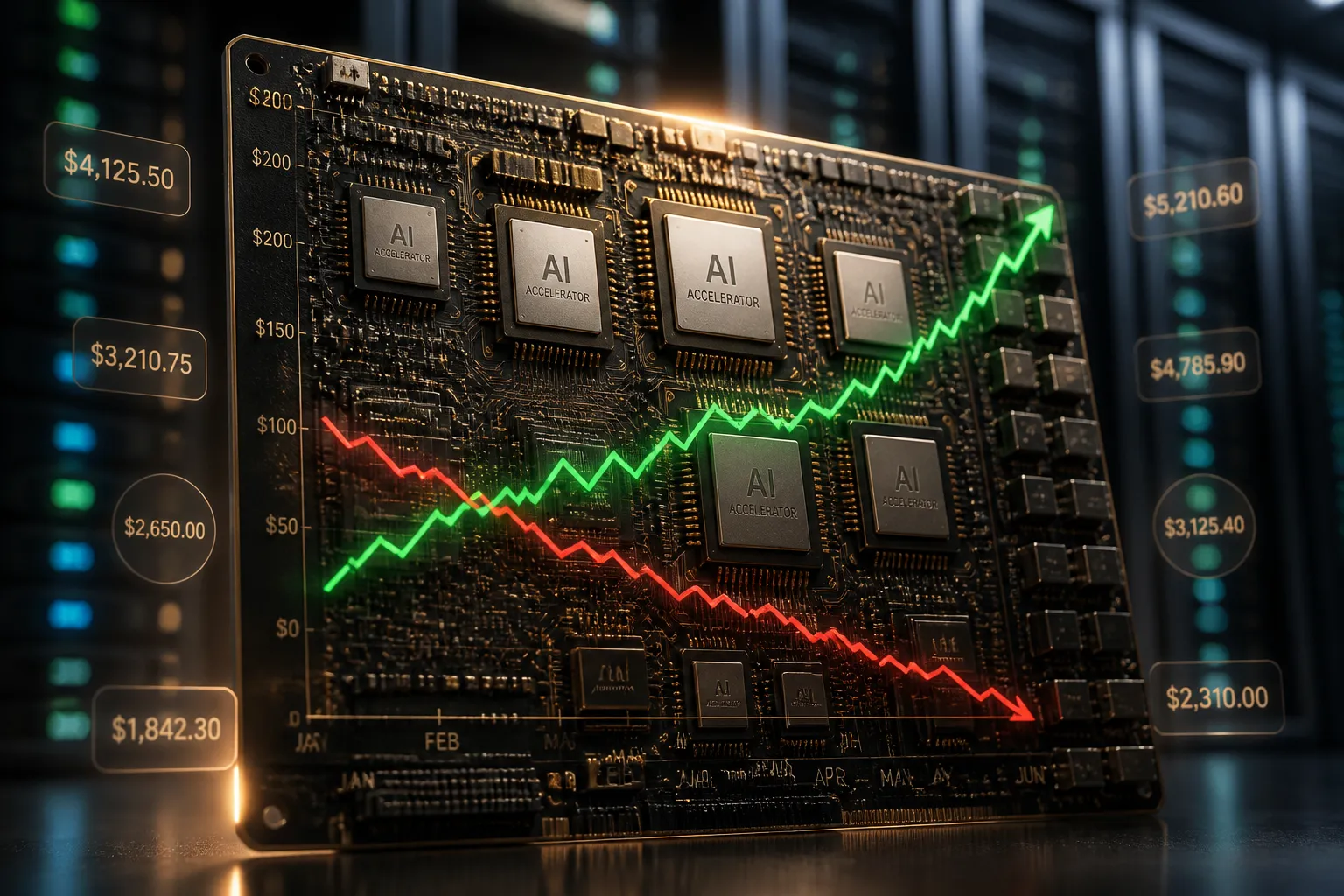
The day’s events underscore the growing influence of AI on the semiconductor supply chain. Micron’s earnings and Qualcomm’s revenue target highlight the high demand for memory and AI‑optimized chips, while Apple’s price hikes illustrate the cost pressures that ripple through the broader technology sector. Bond yields and inflation data continue to shape investor sentiment, and the global market’s reaction reflects the interconnected nature of technology, finance, and commodity markets.
As AI data centers expand, semiconductor firms are expected to maintain high memory and chip prices, potentially keeping pressure on consumer‑facing companies like Apple. The next quarter’s earnings reports and any further corporate pricing moves will likely be closely watched by investors.
Micron Technology (NASDAQ: MU) was the only major technology stock to rise sharply, jumping 14.2 percent. The memory‑chip maker reported second‑quarter fiscal 2026 results that exceeded analyst expectations. Revenue of $23.86 billion beat the prior‑quarter figure of $13.64 billion, and the company raised its revenue outlook for the current quarter. Micron’s earnings release said the stronger performance reflected heightened demand for high‑bandwidth memory used in artificial‑intelligence (AI) servers.
Micron’s surge comes amid a broader trend of rising memory prices. The company’s 2026 earnings report noted that 70 percent of its production is now destined for AI data centers, which are expanding rapidly. The memory‑chip manufacturer’s market cap reached $1 trillion in May, the first U.S. company to do so.
In a related development, Qualcomm (NASDAQ: QCOM) announced on its Investor Day that it will target $40 billion in non‑handset revenue for fiscal year 2029, roughly double the prior target. The company said the target reflects the acceleration of AI workloads and the shift of hyperscale cloud providers toward its AI‑optimized chips. Qualcomm’s shares rose 7.4 percent after the announcement.
Apple’s price hikes were driven by the company’s need to offset higher memory and component costs. The company increased the base price of several MacBook models by 15 percent to 20 percent, and raised prices for iPads and other devices. Apple’s price‑increase announcement was reported by several technology outlets on Thursday. The move was widely seen as a response to the global memory shortage that has pushed component costs higher.
Bond markets also moved lower as inflation data eased. The U.S. Consumer Price Index for May rose 4.1 percent year‑over‑year, up from 3.8 percent in April, but the increase was within economists’ expectations. The 10‑year Treasury yield fell to 4.38 percent from 4.41 percent late Wednesday and from 4.56 percent earlier in the month. The decline in yields was attributed to a drop in oil prices.
Oil prices themselves fell to $74.89 a barrel, a 1.4 percent increase from the previous day but still below the $100 level seen during the Strait of Hormuz closure. The price change was reported by the U.S. Energy Information Administration.
Global markets responded positively to the easing of bond yields and the AI‑driven demand for memory. South Korea’s Kospi index rose 5.4 percent, led by a 13.1 percent jump for SK Hynix. Japan’s Nikkei 225 gained 4.6 percent, and the United Kingdom’s FTSE 100 climbed 0.7 percent. Hong Kong’s Hang Seng index fell 1.4 percent, an outlier in the day’s market activity.
The day’s events underscore the growing influence of AI on the semiconductor supply chain. Micron’s earnings and Qualcomm’s revenue target highlight the high demand for memory and AI‑optimized chips, while Apple’s price hikes illustrate the cost pressures that ripple through the broader technology sector. Bond yields and inflation data continue to shape investor sentiment, and the global market’s reaction reflects the interconnected nature of technology, finance, and commodity markets.
As AI data centers expand, semiconductor firms are expected to maintain high memory and chip prices, potentially keeping pressure on consumer‑facing companies like Apple. The next quarter’s earnings reports and any further corporate pricing moves will likely be closely watched by investors.





