Blab AI
The Doctors Company Uses AI-Driven Workflows to Tighten Medical Malpractice Insurance Operations
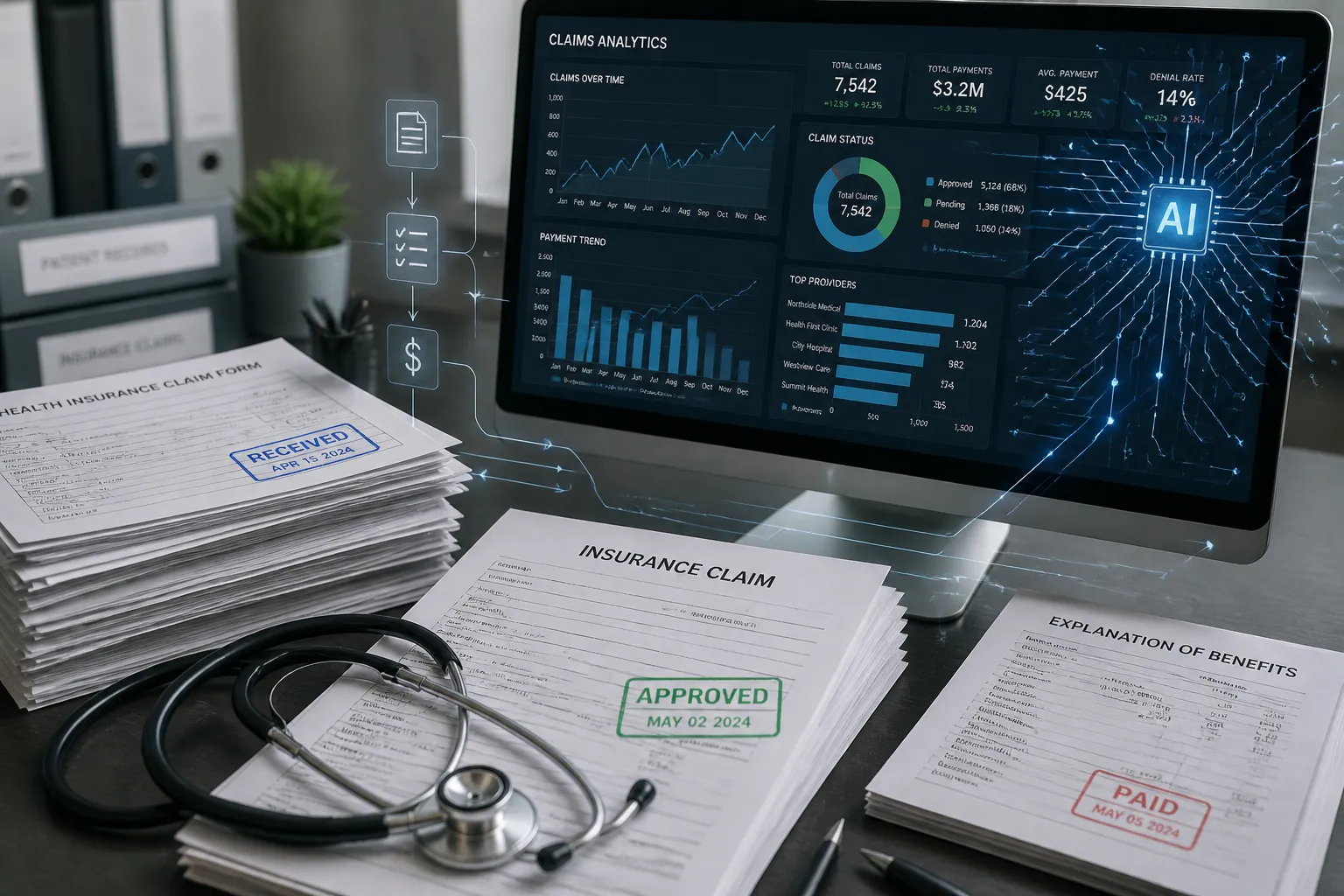
In the high‑stakes world of medical malpractice insurance, The Doctors Company has taken a decisive step forward, deploying AI‑driven workflows that cut through years‑long claims and razor‑thin margins. The physician‑owned insurer, the nation’s largest in its field, has expanded a decade‑long innovation program with new tools that streamline underwriting and claims processing, according to Chief Operating Officer Deepika Srivastava.
Malpractice insurance is a high‑stakes line in which claims can linger for years and a single verdict can reach tens of millions of dollars. In this environment, even small errors in underwriting or claims handling can erode margins. The Doctors Company serves more than 100,000 members and has built a 50‑year archive of claims data that it treats as a competitive asset.
The first major initiative is Technology Assisted Underwriting (TAU), a program that has been in operation for three years. Designed to tackle submission overload—a common problem in high‑volume insurance—TAU re‑engineered the workflow from dozens of steps to a handful. The result is a rapid filter that weeds out submissions that do not meet the company’s appetite while fast‑tracking those that do, freeing underwriters to focus on complex, subjective cases. Srivastava said, “We didn’t just digitize what existed; we re‑engineered it.” The program has reduced unintended variability in underwriting outcomes.
The second pillar is the Augmented Intelligence Data Experience (AIDE), a proprietary platform that targets the back end of the value chain. AIDE converts unstructured, scanned claims documents into structured data, allowing risk professionals to identify severity drivers earlier in the claims lifecycle. The platform replaces external vendor partnerships, and the company projects that it will save millions of dollars and cut processing times by 50 percent. Srivastava noted, “We’re not changing the nature of the business… We’re recognizing severity earlier.” The AI model learns from human review and feedback, maintaining a human‑in‑the‑loop approach.
Beyond these core systems, The Doctors Company has deployed Microsoft Copilot across the enterprise. The adoption has led to process step reductions of up to 90 percent in some workflows. To support this rollout, the company launched a digital literacy program that teaches practical skills such as prompt engineering to employees at all levels.
When evaluating external partners, Srivastava says the company prioritizes domain expertise. She explained, “My biggest concern when evaluating partnerships is this: generic AI can lead to wrong answers to the right questions.” The company applies strict criteria—repeatability, governability, and clear key performance indicators—to decide whether a new idea should advance.
The Doctors Company’s disciplined use of AI has earned external recognition. In October 2025 the company received a Datos Insights Impact Award for innovation, and American Best has rated its innovation culture as “Significant” for multiple consecutive years, the highest possible rating.
Industry analysts note that the broader medical malpractice market faces rising nuclear verdicts, social inflation, and structural shifts in healthcare. Srivastava believes that insurers who can convert complexity into measurable advantage will lead. She concluded, “There’s so much noise right now that it’s very easy to get lost. We are building an enterprise where data, AI, and deep expertise come together to redefine how risk is understood.”
Malpractice insurance is a high‑stakes line in which claims can linger for years and a single verdict can reach tens of millions of dollars. In this environment, even small errors in underwriting or claims handling can erode margins. The Doctors Company serves more than 100,000 members and has built a 50‑year archive of claims data that it treats as a competitive asset.
The first major initiative is Technology Assisted Underwriting (TAU), a program that has been in operation for three years. Designed to tackle submission overload—a common problem in high‑volume insurance—TAU re‑engineered the workflow from dozens of steps to a handful. The result is a rapid filter that weeds out submissions that do not meet the company’s appetite while fast‑tracking those that do, freeing underwriters to focus on complex, subjective cases. Srivastava said, “We didn’t just digitize what existed; we re‑engineered it.” The program has reduced unintended variability in underwriting outcomes.
The second pillar is the Augmented Intelligence Data Experience (AIDE), a proprietary platform that targets the back end of the value chain. AIDE converts unstructured, scanned claims documents into structured data, allowing risk professionals to identify severity drivers earlier in the claims lifecycle. The platform replaces external vendor partnerships, and the company projects that it will save millions of dollars and cut processing times by 50 percent. Srivastava noted, “We’re not changing the nature of the business… We’re recognizing severity earlier.” The AI model learns from human review and feedback, maintaining a human‑in‑the‑loop approach.
Beyond these core systems, The Doctors Company has deployed Microsoft Copilot across the enterprise. The adoption has led to process step reductions of up to 90 percent in some workflows. To support this rollout, the company launched a digital literacy program that teaches practical skills such as prompt engineering to employees at all levels.
When evaluating external partners, Srivastava says the company prioritizes domain expertise. She explained, “My biggest concern when evaluating partnerships is this: generic AI can lead to wrong answers to the right questions.” The company applies strict criteria—repeatability, governability, and clear key performance indicators—to decide whether a new idea should advance.
The Doctors Company’s disciplined use of AI has earned external recognition. In October 2025 the company received a Datos Insights Impact Award for innovation, and American Best has rated its innovation culture as “Significant” for multiple consecutive years, the highest possible rating.
Industry analysts note that the broader medical malpractice market faces rising nuclear verdicts, social inflation, and structural shifts in healthcare. Srivastava believes that insurers who can convert complexity into measurable advantage will lead. She concluded, “There’s so much noise right now that it’s very easy to get lost. We are building an enterprise where data, AI, and deep expertise come together to redefine how risk is understood.”





