Blab AI
RBI Introduces Kill Switch and Board-Level Oversight for AI Models in Indian Banks
India’s banking sector is set to receive a new safety net, as the Reserve Bank of India (RBI) unveiled a draft framework that would compel every regulated financial institution to install a kill switch for every artificial‑intelligence (AI) model it deploys.
The guidelines, released for public consultation, go beyond a single technical requirement. They mandate human oversight, transparent customer disclosure, a risk‑based tiering system, board‑level approval for high‑risk models, and tighter controls on third‑party AI providers.
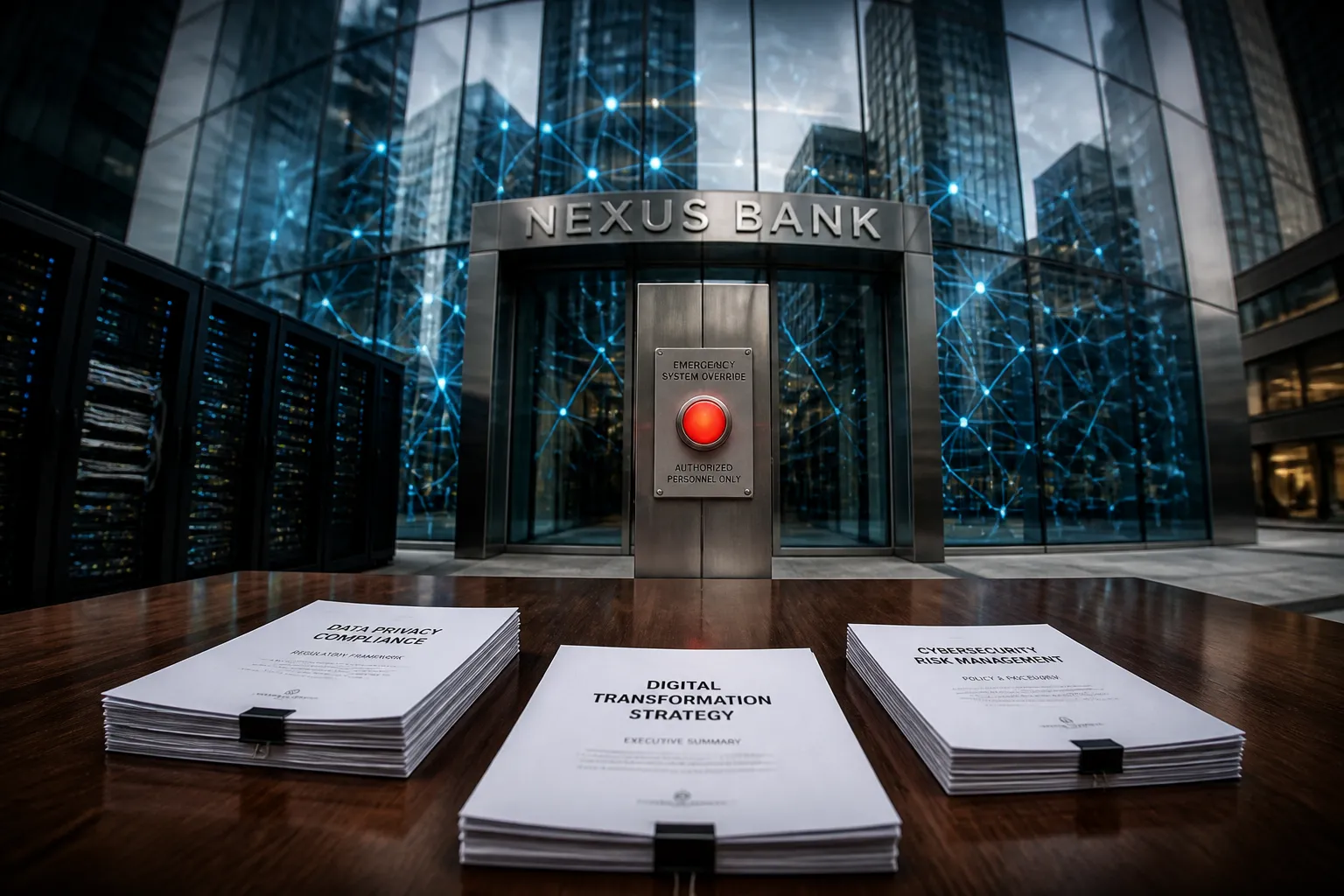
A kill switch, in RBI parlance, is a mechanism that lets a bank instantly override, suspend or deactivate an AI model if it produces a harmful or erroneous output. The RBI insists the switch must be “immediately shut down” and operable by any authorized staff member, covering everything from simple spreadsheet calculators to sophisticated generative‑AI systems.
The draft also tackles automation bias—the tendency for bank staff to accept AI recommendations without independent judgment. For customer‑facing AI services, banks must clearly disclose that a customer is interacting with an AI system and must offer the option to switch to a human agent at any point. In this way, the RBI ties model reliability to both internal controls and external transparency.
A key feature of the framework is a risk‑based tiering structure. Each model must be classified by risk level, and that classification determines the intensity of oversight, validation and controls. The RBI requires the risk tier of each model to be reviewed at least once a year. Models that fall into the high‑risk category cannot be cleared by technology or risk teams alone; they must receive approval from the Risk Management Committee of the board.
For the first time, the RBI places AI governance at the board level. The draft calls for a board‑approved Model Risk Management Framework that covers all models, whether built in‑house or sourced from vendors. The board is responsible for setting the institution’s risk appetite for model risk, approving the tiering policy, and ensuring that the framework incorporates stress testing and scenario analysis.
The guidelines also take a firm stance on third‑party AI models. A regulated entity remains fully accountable for the outcomes of any model it uses, regardless of whether it was developed internally or purchased from a fintech or technology vendor. The RBI specifically flags supply‑chain risk arising from dependence on a limited number of AI providers—a concern that reflects the concentration of advanced AI capabilities in a handful of global companies.
Beyond risk classification, the draft introduces new requirements for explainability, bias and fairness. Banks must define explainability thresholds for all AI models, meaning they must be able to articulate in understandable terms why a particular output was produced. The guidelines also require that bias mitigation and fairness checks be part of the model validation process.
The draft framework is currently open for public comment. The RBI has not yet set a definitive implementation date, but the central bank has indicated that the rules will be rolled out in phases, with the most stringent requirements applied to high‑risk models first. Banks and other regulated entities are expected to begin preparing internal processes and documentation to comply with the new oversight and disclosure obligations.
In summary, the RBI’s draft rules establish a kill‑switch requirement, enforce human oversight and customer disclosure, introduce a risk‑tiering system with board approval for high‑risk models, and tighten accountability for third‑party AI usage. The guidelines also mandate explainability thresholds and bias checks. The framework is still under review, and banks will need to adjust their AI governance structures to meet the new standards once the RBI finalizes the rules.
The guidelines, released for public consultation, go beyond a single technical requirement. They mandate human oversight, transparent customer disclosure, a risk‑based tiering system, board‑level approval for high‑risk models, and tighter controls on third‑party AI providers.
A kill switch, in RBI parlance, is a mechanism that lets a bank instantly override, suspend or deactivate an AI model if it produces a harmful or erroneous output. The RBI insists the switch must be “immediately shut down” and operable by any authorized staff member, covering everything from simple spreadsheet calculators to sophisticated generative‑AI systems.
The draft also tackles automation bias—the tendency for bank staff to accept AI recommendations without independent judgment. For customer‑facing AI services, banks must clearly disclose that a customer is interacting with an AI system and must offer the option to switch to a human agent at any point. In this way, the RBI ties model reliability to both internal controls and external transparency.
A key feature of the framework is a risk‑based tiering structure. Each model must be classified by risk level, and that classification determines the intensity of oversight, validation and controls. The RBI requires the risk tier of each model to be reviewed at least once a year. Models that fall into the high‑risk category cannot be cleared by technology or risk teams alone; they must receive approval from the Risk Management Committee of the board.
For the first time, the RBI places AI governance at the board level. The draft calls for a board‑approved Model Risk Management Framework that covers all models, whether built in‑house or sourced from vendors. The board is responsible for setting the institution’s risk appetite for model risk, approving the tiering policy, and ensuring that the framework incorporates stress testing and scenario analysis.
The guidelines also take a firm stance on third‑party AI models. A regulated entity remains fully accountable for the outcomes of any model it uses, regardless of whether it was developed internally or purchased from a fintech or technology vendor. The RBI specifically flags supply‑chain risk arising from dependence on a limited number of AI providers—a concern that reflects the concentration of advanced AI capabilities in a handful of global companies.
Beyond risk classification, the draft introduces new requirements for explainability, bias and fairness. Banks must define explainability thresholds for all AI models, meaning they must be able to articulate in understandable terms why a particular output was produced. The guidelines also require that bias mitigation and fairness checks be part of the model validation process.
The draft framework is currently open for public comment. The RBI has not yet set a definitive implementation date, but the central bank has indicated that the rules will be rolled out in phases, with the most stringent requirements applied to high‑risk models first. Banks and other regulated entities are expected to begin preparing internal processes and documentation to comply with the new oversight and disclosure obligations.
In summary, the RBI’s draft rules establish a kill‑switch requirement, enforce human oversight and customer disclosure, introduce a risk‑tiering system with board approval for high‑risk models, and tighten accountability for third‑party AI usage. The guidelines also mandate explainability thresholds and bias checks. The framework is still under review, and banks will need to adjust their AI governance structures to meet the new standards once the RBI finalizes the rules.





