Blab AI
Anthropic Launches Claude Tag, a Slack-Native AI Teammate Powered by Opus 4.8
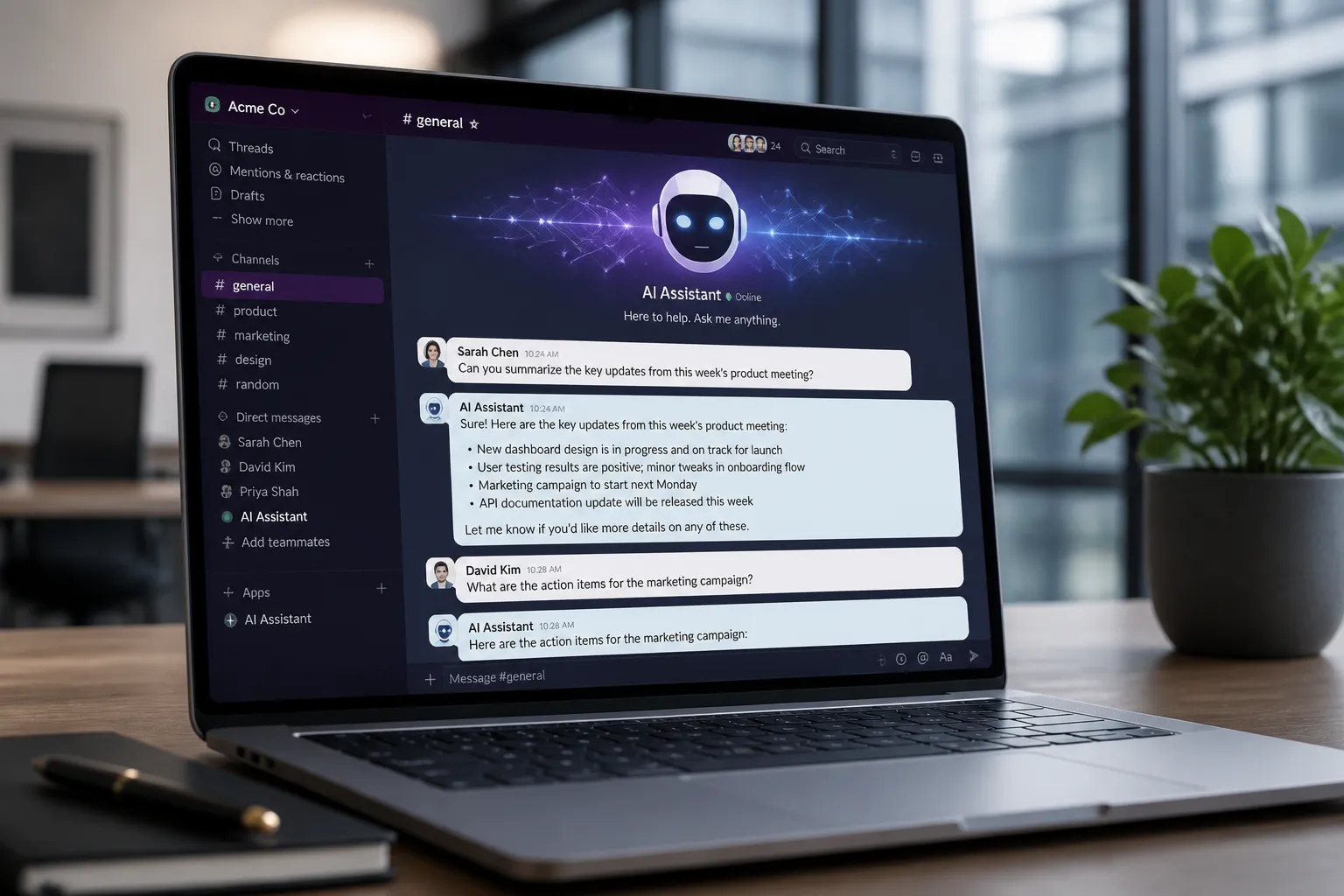
On Wednesday, Anthropic announced Claude Tag, a new Slack‑native AI teammate that replaces its earlier Claude chatbot in Salesforce’s popular communication platform. Built on the company’s latest large‑language model, Opus 4.8, Claude Tag is designed to function as a shared, team‑based conversational agent that can be summoned in any Slack channel by tagging @Claude, sending a direct message, or invoking Slack’s AI assistant panel.
Unlike the terminal‑only Claude Code tool that developers used in February, Claude Tag operates within a channel as a background teammate. It pulls in organization‑approved tools, code repositories, and contextual data to complete tasks asynchronously, notifying users only when a job finishes. This approach lets teams keep the AI invisible until its work is ready, mirroring the natural flow of human collaboration.
A post on X by Andrej Karpathy, head of Anthropic’s pre‑training team, framed Claude Tag as a new interaction paradigm that is “significantly more inline with all the other human activity org‑wide.” Karpathy noted that once the necessary engineering foundations—integrations, compute environments, memory, and security—are in place, Claude can join a team seamlessly, allowing members to converse with it as they would with a person.
Internally, Anthropic reports that Claude Tag now powers more than 65 % of code generation for its product teams and is being deployed across engineering, support, analytics, and operations. The system is wrapped in strict administrative controls: only organization Owners or Primary Owners can provision the agent’s identity, connect tools, define accessible channels, set spend limits, and review activity logs. Permissions and memory scopes are limited to specific workspaces and channels, preventing cross‑team leakage.
Claude Tag is currently in beta for Team and Enterprise Slack customers. Users of the legacy Claude chatbot will be migrated to the new agent on August 3. Anthropic says it plans to extend Claude Tag beyond Slack over time. The agent’s consumption‑based billing model means spend is tied to usage rather than the number of users, allowing teams to schedule tasks, revisit unfinished work, and receive proactive notifications.
Claude Code, launched in February of the previous year, was a text‑only programming interface that ran locally on a developer’s machine. Claude Tag expands that capability to a team setting, integrating with Slack’s collaborative environment and enterprise security framework.
In short, Anthropic’s Claude Tag offers a Slack‑native AI teammate that leverages Opus 4.8, operates asynchronously, and is governed by enterprise‑grade controls. The beta rollout for Team and Enterprise customers, the scheduled migration of existing users, and the company’s plans for broader deployment signal Anthropic’s intent to embed AI more deeply into workplace collaboration tools. The feature is live in beta, set to transition fully on August 3, and may shape how organizations weave AI assistants into their daily communication workflows.
Unlike the terminal‑only Claude Code tool that developers used in February, Claude Tag operates within a channel as a background teammate. It pulls in organization‑approved tools, code repositories, and contextual data to complete tasks asynchronously, notifying users only when a job finishes. This approach lets teams keep the AI invisible until its work is ready, mirroring the natural flow of human collaboration.
A post on X by Andrej Karpathy, head of Anthropic’s pre‑training team, framed Claude Tag as a new interaction paradigm that is “significantly more inline with all the other human activity org‑wide.” Karpathy noted that once the necessary engineering foundations—integrations, compute environments, memory, and security—are in place, Claude can join a team seamlessly, allowing members to converse with it as they would with a person.
Internally, Anthropic reports that Claude Tag now powers more than 65 % of code generation for its product teams and is being deployed across engineering, support, analytics, and operations. The system is wrapped in strict administrative controls: only organization Owners or Primary Owners can provision the agent’s identity, connect tools, define accessible channels, set spend limits, and review activity logs. Permissions and memory scopes are limited to specific workspaces and channels, preventing cross‑team leakage.
Claude Tag is currently in beta for Team and Enterprise Slack customers. Users of the legacy Claude chatbot will be migrated to the new agent on August 3. Anthropic says it plans to extend Claude Tag beyond Slack over time. The agent’s consumption‑based billing model means spend is tied to usage rather than the number of users, allowing teams to schedule tasks, revisit unfinished work, and receive proactive notifications.
Claude Code, launched in February of the previous year, was a text‑only programming interface that ran locally on a developer’s machine. Claude Tag expands that capability to a team setting, integrating with Slack’s collaborative environment and enterprise security framework.
In short, Anthropic’s Claude Tag offers a Slack‑native AI teammate that leverages Opus 4.8, operates asynchronously, and is governed by enterprise‑grade controls. The beta rollout for Team and Enterprise customers, the scheduled migration of existing users, and the company’s plans for broader deployment signal Anthropic’s intent to embed AI more deeply into workplace collaboration tools. The feature is live in beta, set to transition fully on August 3, and may shape how organizations weave AI assistants into their daily communication workflows.





