Blab AI
AI-Generated Breast Cancer Risk Scores Rise Over Time, Study Finds
A new study published in the Radiological Society of North America’s journal Radiology shows that artificial‑intelligence (AI) risk scores for breast cancer climb steadily in women who later develop the disease, with a pronounced surge in the year before diagnosis.
Led by Constance D. Lehman, MD, PhD, a Harvard Medical School radiology professor and CEO of Clairity Inc., the research examined more than 54,000 women who underwent serial screening mammograms between 2009 and 2019. The team applied a validated, open‑source deep‑learning model that estimates five‑year breast‑cancer risk from mammograms alone. Running the model on 158,000 exams from 54,014 women—each with up to six serial mammograms plus an index exam, the final screening study within the year before a cancer diagnosis—yielded 817 (1.5 %) cancer cases during the study period.
Among those cases, 55 % were invasive cancers, 14 % were ductal carcinoma in situ (DCIS), and 30 % had unknown pathology. Seventy‑three percent of the cancers were detected at screening, while 17 % were interval cancers that appeared between scheduled exams.
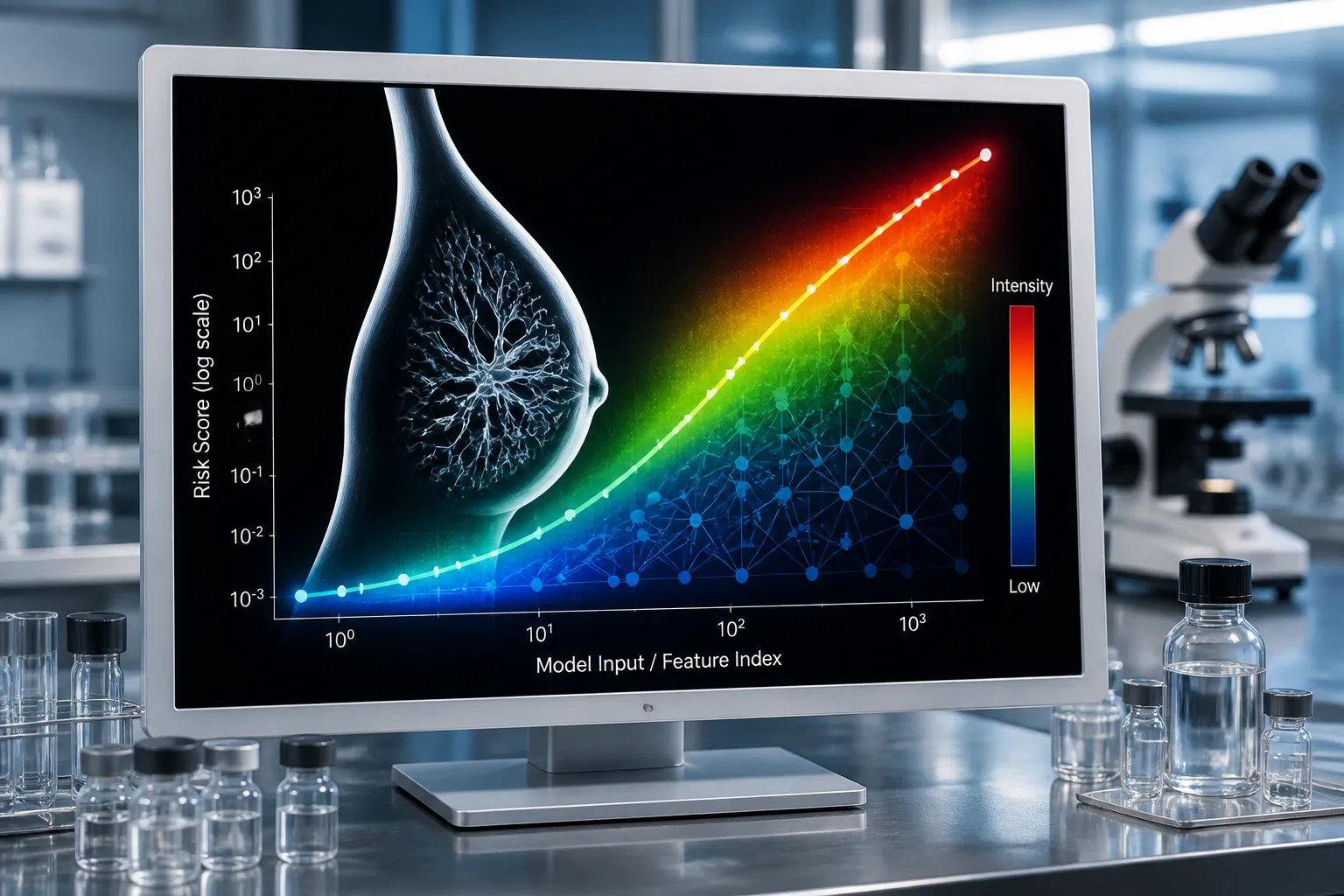
The study’s key finding is that the median AI risk score for women who eventually developed cancer rose from 2.1 in the earliest exams to 6.6 at the index exam. The increase was gradual over the first five to six years but accelerated markedly in the final year before diagnosis. In contrast, women who did not develop cancer showed stable risk scores throughout the same period. These patterns held across all breast‑density categories, indicating that the longitudinal signal is robust to variations in mammographic density.
Lead researcher Lehman explained the significance of the work: “Deep learning models have been primarily used to assess cancer risk scores at a static point in time,” she said in a June 23 announcement from the Radiological Society of North America. “In this study, we evaluated longitudinal changes in the image‑only deep learning breast cancer risk score using serial mammograms from a large screening cohort.” The findings imply that a dynamic biomarker derived solely from imaging could help tailor screening intervals and reduce disparities that arise from inconsistent clinical data.
Historically, AI risk models have focused on a single snapshot of a patient’s imaging, providing a one‑time risk estimate. By contrast, this study demonstrates that tracking risk scores over multiple exams adds predictive value. The open‑source model used in the research is similar in principle to Clairity’s FDA‑authorized platform, which also predicts five‑year risk from a single mammogram. Integrating longitudinal AI scores into clinical workflows could enable clinicians to identify women whose risk is rising and consider earlier diagnostic work‑up.
While the study confirms that longitudinal AI risk scores correlate with future breast‑cancer development, the authors note that further validation in diverse populations and prospective trials is needed before the approach can be incorporated into screening guidelines. Nonetheless, the research supports ongoing efforts to refine AI‑driven risk stratification and move beyond static assessments.
In summary, the study provides evidence that AI‑generated breast‑cancer risk scores change over time, rising steadily in women who later develop cancer and peaking in the year before diagnosis. The findings suggest that serial imaging data can enhance risk prediction and may inform more personalized screening strategies, though additional research is required to translate these insights into clinical practice.
Led by Constance D. Lehman, MD, PhD, a Harvard Medical School radiology professor and CEO of Clairity Inc., the research examined more than 54,000 women who underwent serial screening mammograms between 2009 and 2019. The team applied a validated, open‑source deep‑learning model that estimates five‑year breast‑cancer risk from mammograms alone. Running the model on 158,000 exams from 54,014 women—each with up to six serial mammograms plus an index exam, the final screening study within the year before a cancer diagnosis—yielded 817 (1.5 %) cancer cases during the study period.
Among those cases, 55 % were invasive cancers, 14 % were ductal carcinoma in situ (DCIS), and 30 % had unknown pathology. Seventy‑three percent of the cancers were detected at screening, while 17 % were interval cancers that appeared between scheduled exams.
The study’s key finding is that the median AI risk score for women who eventually developed cancer rose from 2.1 in the earliest exams to 6.6 at the index exam. The increase was gradual over the first five to six years but accelerated markedly in the final year before diagnosis. In contrast, women who did not develop cancer showed stable risk scores throughout the same period. These patterns held across all breast‑density categories, indicating that the longitudinal signal is robust to variations in mammographic density.
Lead researcher Lehman explained the significance of the work: “Deep learning models have been primarily used to assess cancer risk scores at a static point in time,” she said in a June 23 announcement from the Radiological Society of North America. “In this study, we evaluated longitudinal changes in the image‑only deep learning breast cancer risk score using serial mammograms from a large screening cohort.” The findings imply that a dynamic biomarker derived solely from imaging could help tailor screening intervals and reduce disparities that arise from inconsistent clinical data.
Historically, AI risk models have focused on a single snapshot of a patient’s imaging, providing a one‑time risk estimate. By contrast, this study demonstrates that tracking risk scores over multiple exams adds predictive value. The open‑source model used in the research is similar in principle to Clairity’s FDA‑authorized platform, which also predicts five‑year risk from a single mammogram. Integrating longitudinal AI scores into clinical workflows could enable clinicians to identify women whose risk is rising and consider earlier diagnostic work‑up.
While the study confirms that longitudinal AI risk scores correlate with future breast‑cancer development, the authors note that further validation in diverse populations and prospective trials is needed before the approach can be incorporated into screening guidelines. Nonetheless, the research supports ongoing efforts to refine AI‑driven risk stratification and move beyond static assessments.
In summary, the study provides evidence that AI‑generated breast‑cancer risk scores change over time, rising steadily in women who later develop cancer and peaking in the year before diagnosis. The findings suggest that serial imaging data can enhance risk prediction and may inform more personalized screening strategies, though additional research is required to translate these insights into clinical practice.





