Blab AI
India to Chair BRICS Security Meeting as Chinas Foreign Minister Visits New Delhi
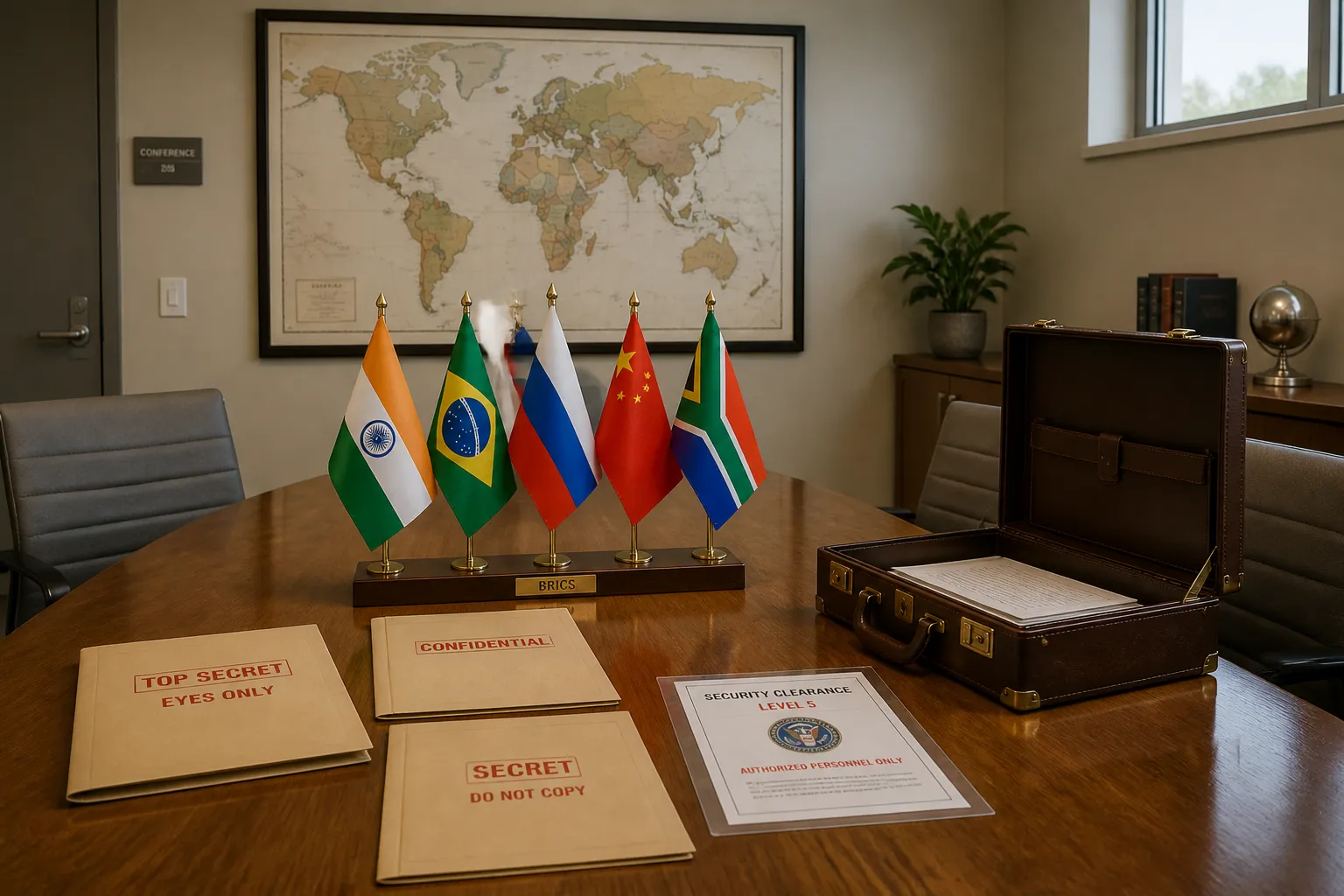
India will host a two‑day gathering of national security advisers from the ten BRICS member states on 22–23 June 2026, with National Security Adviser Ajit Doval presiding. The meeting takes place at the Indian Institute of Technology in New Delhi and marks India’s fourth chairmanship of the bloc in 2026.
The agenda centers on non‑traditional security threats. Delegates will examine terrorism, cyber‑intrusions, misinformation campaigns and the security implications of emerging technologies such as artificial intelligence. They will also review the work of BRICS joint working groups on counter‑terrorism and information security, and seek ways to strengthen coordination among member states.
A significant development is the arrival of Chinese Foreign Minister Wang Yi. His trip to India is his first in almost a year. According to reports, Wang will hold separate meetings with Doval and with India’s External Affairs Minister S. Jaishankar. While the BRICS security agenda dominates the schedule, the two leaders are expected to touch on bilateral issues between the two powers.
The meeting comes amid ongoing tensions along the Line of Actual Control (LAC). Skirmishes, most notably in 2020, have kept the LAC a point of strategic concern. The BRICS forum offers a venue for India and China to discuss confidence‑building measures and to explore avenues for de‑escalation.
India’s role as chair is framed by the bloc’s 2026 theme, “Building for Resilience, Innovation, Cooperation and Sustainability.” The theme reflects India’s push for a stronger voice for developing countries in global decision‑making and its call for a more inclusive international architecture in areas such as climate change, digital governance and economic reform.
Ajit Doval, who has served as India’s National Security Adviser since 2014, brings deep experience in counter‑terrorism and intelligence. His biography notes leadership of several high‑profile operations, including the Balakot airstrike and the Doklam standoff. Doval’s stewardship of the BRICS security meeting signals India’s commitment to multilateral security cooperation.
Wang Yi, the current Chinese Foreign Minister, has previously served as director of the Central Committee Foreign Affairs Commission Office and as a State Councilor. His visit follows a period of diplomatic thaw, during which China allowed Indian pilgrims to visit sites in the Tibet autonomous region and engaged in high‑level talks on trade and border issues.
The BRICS National Security Advisers’ Meeting is a preparatory step for the September BRICS Summit, where member states will discuss a broad range of political, economic and security issues. The outcomes of the advisers’ meeting are expected to shape the agenda and priorities for the summit.
Beyond security topics, the gathering will likely touch on digital infrastructure, supply‑chain resilience and the role of emerging technologies in national development. Including AI and other advanced technologies underscores the growing recognition that non‑traditional threats can have significant geopolitical ramifications.
The meeting’s proceedings are not expected to produce binding agreements, but they will provide a platform for dialogue and the exchange of best practices. The BRICS framework has historically facilitated cooperation on issues ranging from finance to health, and the security advisers’ meeting continues that tradition.
As the world watches the evolving relationship between India and China, the BRICS security meeting offers a rare opportunity for the two powers to engage directly on shared concerns. The discussions may help reduce mistrust and establish mechanisms for rapid communication in case of future incidents along the LAC.
The meeting concludes on 23 June, after which the participating advisers will return to their respective countries. The next major event for the BRICS bloc will be the September summit in Brazil, where the outcomes of the security meeting are expected to influence the broader agenda.
In summary, India’s hosting of the BRICS National Security Advisers’ Meeting and the arrival of China’s Foreign Minister Wang Yi represent significant diplomatic milestones. The focus on non‑traditional security challenges, coupled with the opportunity for bilateral dialogue, highlights the importance of multilateral platforms in addressing complex global threats.
The agenda centers on non‑traditional security threats. Delegates will examine terrorism, cyber‑intrusions, misinformation campaigns and the security implications of emerging technologies such as artificial intelligence. They will also review the work of BRICS joint working groups on counter‑terrorism and information security, and seek ways to strengthen coordination among member states.
A significant development is the arrival of Chinese Foreign Minister Wang Yi. His trip to India is his first in almost a year. According to reports, Wang will hold separate meetings with Doval and with India’s External Affairs Minister S. Jaishankar. While the BRICS security agenda dominates the schedule, the two leaders are expected to touch on bilateral issues between the two powers.
The meeting comes amid ongoing tensions along the Line of Actual Control (LAC). Skirmishes, most notably in 2020, have kept the LAC a point of strategic concern. The BRICS forum offers a venue for India and China to discuss confidence‑building measures and to explore avenues for de‑escalation.
India’s role as chair is framed by the bloc’s 2026 theme, “Building for Resilience, Innovation, Cooperation and Sustainability.” The theme reflects India’s push for a stronger voice for developing countries in global decision‑making and its call for a more inclusive international architecture in areas such as climate change, digital governance and economic reform.
Ajit Doval, who has served as India’s National Security Adviser since 2014, brings deep experience in counter‑terrorism and intelligence. His biography notes leadership of several high‑profile operations, including the Balakot airstrike and the Doklam standoff. Doval’s stewardship of the BRICS security meeting signals India’s commitment to multilateral security cooperation.
Wang Yi, the current Chinese Foreign Minister, has previously served as director of the Central Committee Foreign Affairs Commission Office and as a State Councilor. His visit follows a period of diplomatic thaw, during which China allowed Indian pilgrims to visit sites in the Tibet autonomous region and engaged in high‑level talks on trade and border issues.
The BRICS National Security Advisers’ Meeting is a preparatory step for the September BRICS Summit, where member states will discuss a broad range of political, economic and security issues. The outcomes of the advisers’ meeting are expected to shape the agenda and priorities for the summit.
Beyond security topics, the gathering will likely touch on digital infrastructure, supply‑chain resilience and the role of emerging technologies in national development. Including AI and other advanced technologies underscores the growing recognition that non‑traditional threats can have significant geopolitical ramifications.
The meeting’s proceedings are not expected to produce binding agreements, but they will provide a platform for dialogue and the exchange of best practices. The BRICS framework has historically facilitated cooperation on issues ranging from finance to health, and the security advisers’ meeting continues that tradition.
As the world watches the evolving relationship between India and China, the BRICS security meeting offers a rare opportunity for the two powers to engage directly on shared concerns. The discussions may help reduce mistrust and establish mechanisms for rapid communication in case of future incidents along the LAC.
The meeting concludes on 23 June, after which the participating advisers will return to their respective countries. The next major event for the BRICS bloc will be the September summit in Brazil, where the outcomes of the security meeting are expected to influence the broader agenda.
In summary, India’s hosting of the BRICS National Security Advisers’ Meeting and the arrival of China’s Foreign Minister Wang Yi represent significant diplomatic milestones. The focus on non‑traditional security challenges, coupled with the opportunity for bilateral dialogue, highlights the importance of multilateral platforms in addressing complex global threats.





