Blab AI
India Deploys AI-Powered Surveillance and 13.8 Lakh Cameras for NEET-UG 2026 Re-Exam
On Sunday, 21 June 2026, the National Eligibility‑cum‑Entrance Test (NEET) – Undergraduate (NEET‑UG) re‑examination will be held across India from 2 pm to 5:15 pm. Over 22 lakh candidates are expected to sit in 5,440 centres nationwide. The National Testing Agency (NTA), an autonomous body under the Ministry of Education, has announced a security framework that is the most extensive ever implemented for a national entrance exam.
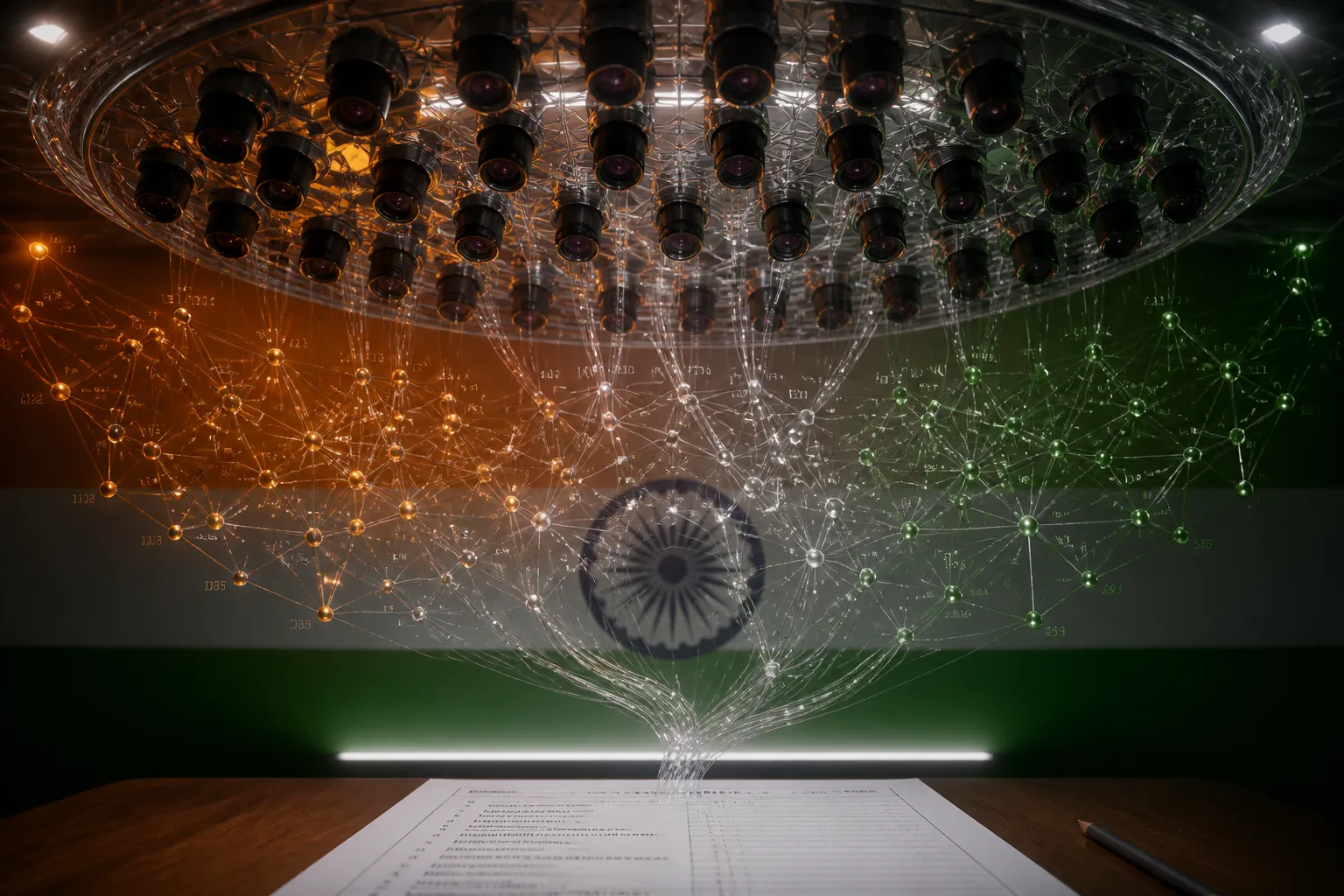
The security package includes 1.38 lakh CCTV cameras installed at every centre, 51,311 signal jammers, biometric verification of candidates, and real‑time monitoring by artificial‑intelligence systems. The Indian Air Force has been tasked with transporting sealed question papers to sensitive locations, and police officers have been deployed at all venues. The NTA has also set up a multi‑layer control room that receives live feeds from the cameras and alerts security staff to any abnormal activity.
In addition to physical security, the NTA has intensified cyber surveillance to counter misinformation and fake paper‑leak claims. The Ministry of Electronics and Information Technology has ordered a temporary block on the messaging app Telegram across India until 22 June. The ban is part of a broader strategy that includes monitoring social‑media channels and blocking identified Telegram groups that have circulated fabricated information about the exam. Authorities have warned candidates that offers of paper leaks in exchange for money are fraudulent.
To support candidates and their families, state governments have introduced special arrangements. In Delhi, all 97 exam centres have cooling zones with seating, drinking water, oral rehydration salts, lemonade, first‑aid facilities, and medical assistance for parents waiting outside. The Delhi government has also provided free travel for NEET candidates on Delhi Transport Corporation buses when they present valid admit cards. Similar help desks, emergency medical support, drinking‑water stations, and transport assistance at railway stations and bus terminals have been arranged in several other states.
Union Minister Ramdas Athawale said the government has taken stringent measures to prevent a repeat of the paper‑leak controversy that led to the cancellation of the May 3 exam. State governments in Uttar Pradesh, Delhi, Karnataka, Gujarat, Tripura, and Himachal Pradesh have confirmed that they have coordinated with education departments, district administrations, and police agencies to maintain security and order during the exam.
A controversy arose on the eve of the test when a candidate from Nagpur claimed that he had been allotted an examination centre in Abu Dhabi, despite applying from India. The NTA rejected the claim as a misunderstanding, stating that the candidate’s centre preference had been viewed and modified during the application process. The agency later facilitated a change of centre and confirmed that no system error had occurred.
The re‑examination is a critical test for both aspirants and authorities. With the enhanced surveillance, AI‑enabled monitoring, IAF‑backed logistics, and a crackdown on misinformation, officials hope the exam will proceed smoothly and restore confidence in India’s premier medical entrance examination. The outcome will determine whether the security measures are sufficient to prevent future incidents and whether the NTA can maintain the integrity of the exam under unprecedented scrutiny.
The security package includes 1.38 lakh CCTV cameras installed at every centre, 51,311 signal jammers, biometric verification of candidates, and real‑time monitoring by artificial‑intelligence systems. The Indian Air Force has been tasked with transporting sealed question papers to sensitive locations, and police officers have been deployed at all venues. The NTA has also set up a multi‑layer control room that receives live feeds from the cameras and alerts security staff to any abnormal activity.
In addition to physical security, the NTA has intensified cyber surveillance to counter misinformation and fake paper‑leak claims. The Ministry of Electronics and Information Technology has ordered a temporary block on the messaging app Telegram across India until 22 June. The ban is part of a broader strategy that includes monitoring social‑media channels and blocking identified Telegram groups that have circulated fabricated information about the exam. Authorities have warned candidates that offers of paper leaks in exchange for money are fraudulent.
To support candidates and their families, state governments have introduced special arrangements. In Delhi, all 97 exam centres have cooling zones with seating, drinking water, oral rehydration salts, lemonade, first‑aid facilities, and medical assistance for parents waiting outside. The Delhi government has also provided free travel for NEET candidates on Delhi Transport Corporation buses when they present valid admit cards. Similar help desks, emergency medical support, drinking‑water stations, and transport assistance at railway stations and bus terminals have been arranged in several other states.
Union Minister Ramdas Athawale said the government has taken stringent measures to prevent a repeat of the paper‑leak controversy that led to the cancellation of the May 3 exam. State governments in Uttar Pradesh, Delhi, Karnataka, Gujarat, Tripura, and Himachal Pradesh have confirmed that they have coordinated with education departments, district administrations, and police agencies to maintain security and order during the exam.
A controversy arose on the eve of the test when a candidate from Nagpur claimed that he had been allotted an examination centre in Abu Dhabi, despite applying from India. The NTA rejected the claim as a misunderstanding, stating that the candidate’s centre preference had been viewed and modified during the application process. The agency later facilitated a change of centre and confirmed that no system error had occurred.
The re‑examination is a critical test for both aspirants and authorities. With the enhanced surveillance, AI‑enabled monitoring, IAF‑backed logistics, and a crackdown on misinformation, officials hope the exam will proceed smoothly and restore confidence in India’s premier medical entrance examination. The outcome will determine whether the security measures are sufficient to prevent future incidents and whether the NTA can maintain the integrity of the exam under unprecedented scrutiny.





