Blab AI
Virginia Faces Water Crisis as Data Center Boom Accelerates AI Growth
Virginia’s data‑center industry is expanding faster than the state’s water resources can support, prompting lawmakers to consider new limits on water use and raising concerns about privacy and human agency in an era of widespread AI adoption.
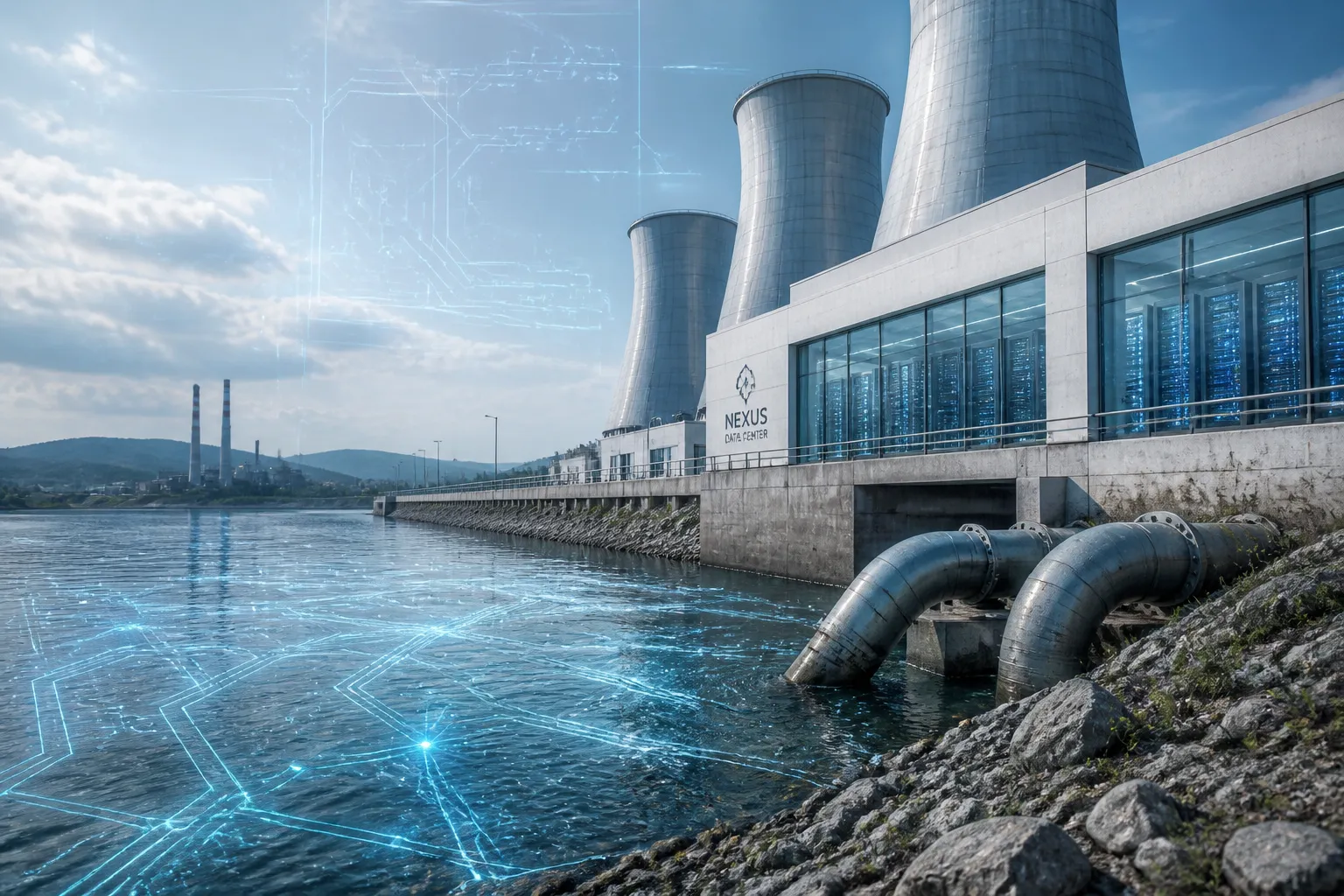
More than 600 data‑center facilities operate in Virginia, according to a database maintained by datacentermap.com. The state’s northern region, known as Northern Virginia, hosts roughly 70 % of the world’s internet traffic and is a hub for cloud and AI workloads. In 2023, Virginia data centers consumed over 1.85 billion gallons of water—an increase of nearly two‑thirds from 2019, according to a BladeRoom report. Much of that water is used for evaporative cooling of servers.
The rapid growth of AI‑driven workloads is intensifying the demand. An American Action Forum insight notes that the power and cooling requirements of AI models are outpacing the capacity of local electricity grids and water supplies. A 2026 Frontiers in Climate paper argues that the proliferation of data centers may pose severe human and planetary health risks, citing the strain on water and energy resources.
In response, Virginia lawmakers are drafting legislation to cap water consumption by data‑center operators. The proposal, reported by WDBJ, would require facilities to demonstrate water‑efficiency plans and could impose penalties for exceeding set limits. The bill comes amid plans by Google to build a new facility in Botetourt County that would draw an estimated 8 million gallons of water per day from Carvins Cove, as reported by the same outlet.
The state’s water‑use debate intersects with broader concerns about AI’s societal impact. Susan Lee Feathers, a resident of Virginia Beach, has publicly questioned how generative‑AI systems such as ChatGPT track users and how much personal data is retained. She argues that the rapid deployment of AI infrastructure may erode human agency and privacy. OpenAI, the developer of ChatGPT, states that it collects user data for model training but offers opt‑out mechanisms, as described on its data‑controls page.
ChatGPT’s adoption has accelerated quickly. Wikipedia records that the chatbot reached 100 million monthly active users two months after launch in November 2022 and 900 million weekly active users by February 2026. The service is embedded in many enterprise applications, and its usage is a key driver of demand for high‑performance computing and cooling infrastructure.
Local voices are also highlighting Virginia’s cultural heritage amid the tech boom. John T. Bowers, a volunteer deckhand on the Schooner Virginia, noted that the ship’s participation in Richmond SailFest—an event celebrating the state’s 250th anniversary—underscored the community’s connection to maritime history. Meanwhile, Tom Purcell, a resident of Chesapeake, highlighted the legacy of James Armistead Lafayette, an enslaved spy who contributed to the American victory at Yorktown. Purcell’s remarks, made during Juneteenth celebrations, remind residents that Virginia’s identity is rooted in both its historical struggles and its modern technological ambitions.
The state’s data‑center expansion, water‑use challenges, and AI‑privacy debates are unfolding in parallel with community efforts to preserve Virginia’s cultural and environmental heritage. Lawmakers are expected to vote on the water‑cap bill in the coming months, and industry groups are monitoring the legislation for potential impacts on future construction. The state’s water‑management agencies are also reviewing the projected water draw of new facilities, while privacy advocates continue to call for clearer regulations on how AI systems handle personal data.
At present, Virginia’s data‑center sector remains a critical component of the global digital economy, but the state’s water resources and residents’ privacy concerns are prompting a reevaluation of how that growth is managed. The outcome of the proposed legislation and the industry’s response will shape the balance between technological progress and sustainable, responsible development.
More than 600 data‑center facilities operate in Virginia, according to a database maintained by datacentermap.com. The state’s northern region, known as Northern Virginia, hosts roughly 70 % of the world’s internet traffic and is a hub for cloud and AI workloads. In 2023, Virginia data centers consumed over 1.85 billion gallons of water—an increase of nearly two‑thirds from 2019, according to a BladeRoom report. Much of that water is used for evaporative cooling of servers.
The rapid growth of AI‑driven workloads is intensifying the demand. An American Action Forum insight notes that the power and cooling requirements of AI models are outpacing the capacity of local electricity grids and water supplies. A 2026 Frontiers in Climate paper argues that the proliferation of data centers may pose severe human and planetary health risks, citing the strain on water and energy resources.
In response, Virginia lawmakers are drafting legislation to cap water consumption by data‑center operators. The proposal, reported by WDBJ, would require facilities to demonstrate water‑efficiency plans and could impose penalties for exceeding set limits. The bill comes amid plans by Google to build a new facility in Botetourt County that would draw an estimated 8 million gallons of water per day from Carvins Cove, as reported by the same outlet.
The state’s water‑use debate intersects with broader concerns about AI’s societal impact. Susan Lee Feathers, a resident of Virginia Beach, has publicly questioned how generative‑AI systems such as ChatGPT track users and how much personal data is retained. She argues that the rapid deployment of AI infrastructure may erode human agency and privacy. OpenAI, the developer of ChatGPT, states that it collects user data for model training but offers opt‑out mechanisms, as described on its data‑controls page.
ChatGPT’s adoption has accelerated quickly. Wikipedia records that the chatbot reached 100 million monthly active users two months after launch in November 2022 and 900 million weekly active users by February 2026. The service is embedded in many enterprise applications, and its usage is a key driver of demand for high‑performance computing and cooling infrastructure.
Local voices are also highlighting Virginia’s cultural heritage amid the tech boom. John T. Bowers, a volunteer deckhand on the Schooner Virginia, noted that the ship’s participation in Richmond SailFest—an event celebrating the state’s 250th anniversary—underscored the community’s connection to maritime history. Meanwhile, Tom Purcell, a resident of Chesapeake, highlighted the legacy of James Armistead Lafayette, an enslaved spy who contributed to the American victory at Yorktown. Purcell’s remarks, made during Juneteenth celebrations, remind residents that Virginia’s identity is rooted in both its historical struggles and its modern technological ambitions.
The state’s data‑center expansion, water‑use challenges, and AI‑privacy debates are unfolding in parallel with community efforts to preserve Virginia’s cultural and environmental heritage. Lawmakers are expected to vote on the water‑cap bill in the coming months, and industry groups are monitoring the legislation for potential impacts on future construction. The state’s water‑management agencies are also reviewing the projected water draw of new facilities, while privacy advocates continue to call for clearer regulations on how AI systems handle personal data.
At present, Virginia’s data‑center sector remains a critical component of the global digital economy, but the state’s water resources and residents’ privacy concerns are prompting a reevaluation of how that growth is managed. The outcome of the proposed legislation and the industry’s response will shape the balance between technological progress and sustainable, responsible development.





