Blab AI
Disney Imagineering Turns to Adobe Firefly for AI-Powered Theme-Park Design
When the world’s most beloved stories are about to become physical experiences, Disney Imagineering has turned to Adobe Firefly to bring them to life faster—and safer.
Walt Disney Imagineering, the creative engine behind the park’s attractions, has announced that it will use Adobe’s Firefly Foundry to generate 2‑D concept art, 2‑D renderings and 3‑D prototype models. The decision follows a short‑lived partnership with OpenAI that collapsed a few months ago, according to Variety. The Imagineering Research & Development unit has now signed up for Adobe’s commercial AI platform, which is designed to keep a brand’s intellectual property (IP) protected.
Firefly Foundry is a version of Adobe’s generative‑AI models that can be trained on a company’s own content. Marketed as “commercially safe,” it is built on data that the user owns or that is in the public domain. For Disney, that means the AI can produce images of its characters and settings without risking copyright infringement.
The move comes amid a series of lawsuits in which Disney has sued other AI firms for using its copyrighted works to train their models. The most recent case involves a lawsuit against Midjourney, filed in June 2025, in which Disney and Universal allege that the image‑generation service scraped their IP. In May 2026, Disney filed a lawsuit against the Chinese AI firm MiniMax, claiming that MiniMax used Disney’s copyrighted characters without permission.
In a statement released by Variety, Disney’s senior vice president of R&D, technology and engineering, Kyle Laughlin, said the partnership with Adobe “lets us bring Disney stories and characters to life in our Parks faster, and with the emotional quality our guests expect.” Adobe’s vice president of GenAI New Business Ventures, Hannah Elsakr, added that the tools “will provide a creative foundation to explore bolder ideas and make the best ones a reality.”
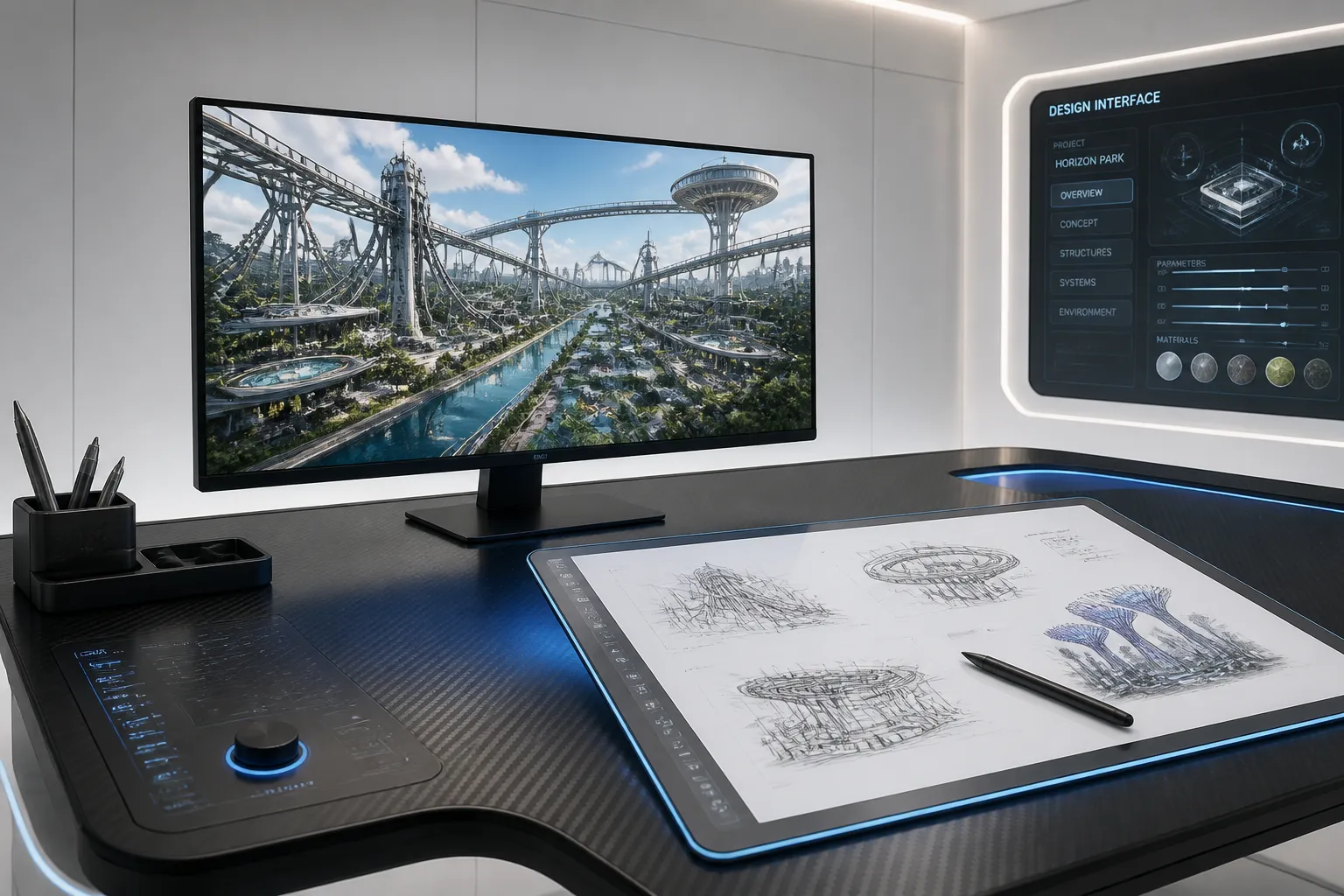
The first projects to use Firefly Foundry involve classic Disney films such as Frozen, Cars and Lilo & Stitch. Imagineers are turning hand‑drawn sketches of these movies into detailed prototypes and renderings that can be used in the design and construction of new attractions. The collaboration, according to a blog post on Adobe’s website, will allow Imagineers to generate visual concepts more quickly and iterate on designs before moving to physical models.
Firefly Foundry is built on Adobe’s Sensei platform and is available to enterprise customers through a subscription model. The platform offers AI copilots for content generation, creative design and other tasks that can be integrated into existing Adobe Creative Cloud applications.
AI has long been part of Disney’s creative toolkit, with experiments in robotics, virtual reality and other technologies dating back decades. What is new is the scale of generative AI and the need to manage IP rights in a legal environment that is still evolving.
While the partnership with Adobe is still in its early stages, industry observers note that the ability to produce high‑quality concept art and prototypes quickly could shorten the time from idea to park attraction and reduce costs associated with manual drafting and physical mock‑ups. Disney has not yet announced a timetable for when Firefly‑generated designs will be used in a live attraction, nor whether it plans to apply the same technology to other Disney properties such as Disney+ or its film studios.
As the legal landscape around AI training data continues to shift, Disney’s choice of a platform that emphasizes IP protection may set a precedent for other entertainment companies. In the meantime, Disney Imagineering will continue to develop its internal AI tools while monitoring regulatory developments and court rulings that could affect how generative AI is used in creative industries.
The partnership with Adobe Firefly Foundry represents Disney’s next step in integrating AI into the creative process while safeguarding its valuable intellectual property.
Walt Disney Imagineering, the creative engine behind the park’s attractions, has announced that it will use Adobe’s Firefly Foundry to generate 2‑D concept art, 2‑D renderings and 3‑D prototype models. The decision follows a short‑lived partnership with OpenAI that collapsed a few months ago, according to Variety. The Imagineering Research & Development unit has now signed up for Adobe’s commercial AI platform, which is designed to keep a brand’s intellectual property (IP) protected.
Firefly Foundry is a version of Adobe’s generative‑AI models that can be trained on a company’s own content. Marketed as “commercially safe,” it is built on data that the user owns or that is in the public domain. For Disney, that means the AI can produce images of its characters and settings without risking copyright infringement.
The move comes amid a series of lawsuits in which Disney has sued other AI firms for using its copyrighted works to train their models. The most recent case involves a lawsuit against Midjourney, filed in June 2025, in which Disney and Universal allege that the image‑generation service scraped their IP. In May 2026, Disney filed a lawsuit against the Chinese AI firm MiniMax, claiming that MiniMax used Disney’s copyrighted characters without permission.
In a statement released by Variety, Disney’s senior vice president of R&D, technology and engineering, Kyle Laughlin, said the partnership with Adobe “lets us bring Disney stories and characters to life in our Parks faster, and with the emotional quality our guests expect.” Adobe’s vice president of GenAI New Business Ventures, Hannah Elsakr, added that the tools “will provide a creative foundation to explore bolder ideas and make the best ones a reality.”
The first projects to use Firefly Foundry involve classic Disney films such as Frozen, Cars and Lilo & Stitch. Imagineers are turning hand‑drawn sketches of these movies into detailed prototypes and renderings that can be used in the design and construction of new attractions. The collaboration, according to a blog post on Adobe’s website, will allow Imagineers to generate visual concepts more quickly and iterate on designs before moving to physical models.
Firefly Foundry is built on Adobe’s Sensei platform and is available to enterprise customers through a subscription model. The platform offers AI copilots for content generation, creative design and other tasks that can be integrated into existing Adobe Creative Cloud applications.
AI has long been part of Disney’s creative toolkit, with experiments in robotics, virtual reality and other technologies dating back decades. What is new is the scale of generative AI and the need to manage IP rights in a legal environment that is still evolving.
While the partnership with Adobe is still in its early stages, industry observers note that the ability to produce high‑quality concept art and prototypes quickly could shorten the time from idea to park attraction and reduce costs associated with manual drafting and physical mock‑ups. Disney has not yet announced a timetable for when Firefly‑generated designs will be used in a live attraction, nor whether it plans to apply the same technology to other Disney properties such as Disney+ or its film studios.
As the legal landscape around AI training data continues to shift, Disney’s choice of a platform that emphasizes IP protection may set a precedent for other entertainment companies. In the meantime, Disney Imagineering will continue to develop its internal AI tools while monitoring regulatory developments and court rulings that could affect how generative AI is used in creative industries.
The partnership with Adobe Firefly Foundry represents Disney’s next step in integrating AI into the creative process while safeguarding its valuable intellectual property.





