Blab AI
Andros Island Launches First Destination-Specific AI Travel Assistant
Andros, the northernmost island of Greece’s Cyclades, has announced the launch of Andros AI, a chat‑based artificial‑intelligence assistant that claims to be the first of its kind built for a Greek destination. The service is operated by Hype², a startup founded by Ioannis Pitakidis, who also runs the travel portal andros‑guide.gr. Andros AI is designed to provide instant, localized answers about the island’s beaches, transport, restaurants, hiking routes and historical sites.
The island’s appeal lies in its contrast to the typical dry, wind‑blown Cyclades. While most nearby islands are arid, Andros is covered by flowing springs, streams and fertile valleys. The island’s capital, Chora, is dominated by neoclassical mansions that were built roughly 130–140 years ago during a period of maritime prosperity. These homes combine local stone with the island’s renowned marble, featuring symmetrical façades, elegant pediments, carved wooden doorways and intricate balconies. The architecture reflects a deliberate shift from the simple whitewashed Cycladic style to a more urbane aesthetic, a change driven by the island’s cosmopolitan shipping community.
Key figures in this transformation were the Goulandris and Embirikos families. The Embirikos, in particular, approached development with a humanistic vision. They purchased large plots, laid out the main square and funded a combined hospital and care home. The facility was designed with open iron railings instead of imposing stone walls, allowing patients to view the town and enabling passersby to wave. This design choice was intended to maintain a visual and emotional connection between the vulnerable and the community.
Beyond its built heritage, Andros offers a rich natural environment. Ancient stone pathways wind through citrus orchards and mountainous ravines fed by mineral springs such as the Sariza spring, where water flows from a sculpted stone lion’s head. The abundant water supply supports lush vegetation, making the island a popular destination for hikers and nature lovers seeking a quieter experience than the typical Greek beach holiday.
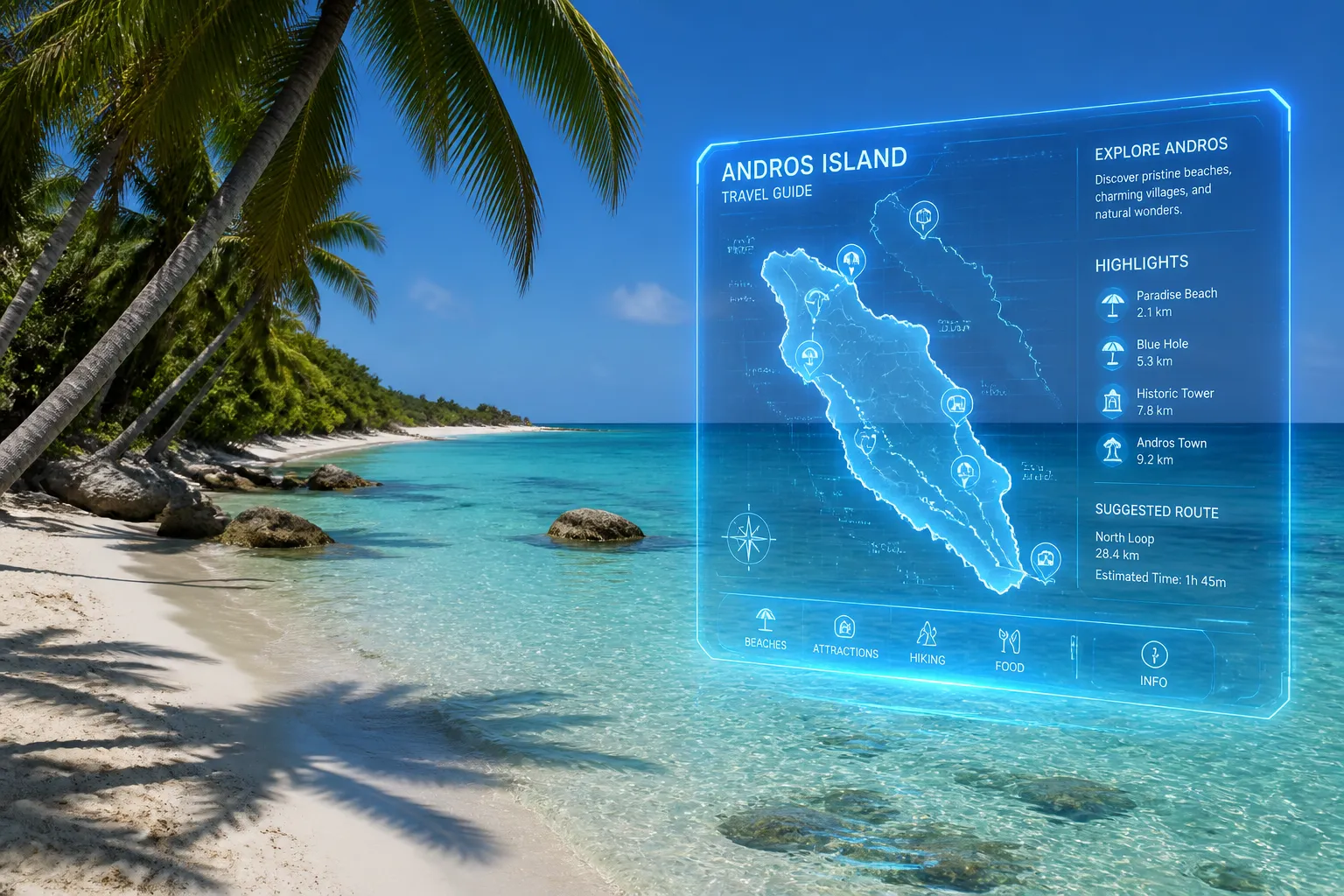
Andros AI builds on this blend of history and nature by providing travelers with real‑time, authoritative guidance. According to the company’s announcement, the assistant can answer questions about secluded beaches that are only reachable on foot, local bus timetables, the best traditional tavernas, or the backstory of a particular neoclassical mansion. The goal is to reduce the cognitive load of trip planning, allowing visitors to focus on the island’s physical beauty.
The launch of Andros AI represents a milestone for Greek tourism. It is the first destination‑specific AI travel assistant in Greece, a claim that has been reported by multiple outlets, including Yahoo Travel, AOL and Travel and Tour World. By integrating advanced technology with the island’s cultural and natural assets, Andros sets an example for other Greek destinations that wish to modernise visitor services while preserving heritage.
The initiative also reflects the broader trend of digital transformation in the tourism sector. Greece, which recorded 38 million arrivals and €23.6 billion in tourism revenue in 2025, has been exploring ways to enhance competitiveness and sustainability. Andros AI’s real‑time chat interface aligns with these goals by offering instant, accurate information and encouraging deeper engagement with the island’s environment.
In summary, Andros AI is a first‑of‑its‑kind tool that combines the island’s neoclassical architecture, shipping legacy, and natural landscapes with cutting‑edge AI technology. The assistant is available to travelers and locals alike and is expected to improve the visitor experience while supporting the island’s tourism economy. As Greece continues to adopt digital solutions, Andros AI may serve as a model for other destinations seeking to blend heritage preservation with modern convenience.
The island’s appeal lies in its contrast to the typical dry, wind‑blown Cyclades. While most nearby islands are arid, Andros is covered by flowing springs, streams and fertile valleys. The island’s capital, Chora, is dominated by neoclassical mansions that were built roughly 130–140 years ago during a period of maritime prosperity. These homes combine local stone with the island’s renowned marble, featuring symmetrical façades, elegant pediments, carved wooden doorways and intricate balconies. The architecture reflects a deliberate shift from the simple whitewashed Cycladic style to a more urbane aesthetic, a change driven by the island’s cosmopolitan shipping community.
Key figures in this transformation were the Goulandris and Embirikos families. The Embirikos, in particular, approached development with a humanistic vision. They purchased large plots, laid out the main square and funded a combined hospital and care home. The facility was designed with open iron railings instead of imposing stone walls, allowing patients to view the town and enabling passersby to wave. This design choice was intended to maintain a visual and emotional connection between the vulnerable and the community.
Beyond its built heritage, Andros offers a rich natural environment. Ancient stone pathways wind through citrus orchards and mountainous ravines fed by mineral springs such as the Sariza spring, where water flows from a sculpted stone lion’s head. The abundant water supply supports lush vegetation, making the island a popular destination for hikers and nature lovers seeking a quieter experience than the typical Greek beach holiday.
Andros AI builds on this blend of history and nature by providing travelers with real‑time, authoritative guidance. According to the company’s announcement, the assistant can answer questions about secluded beaches that are only reachable on foot, local bus timetables, the best traditional tavernas, or the backstory of a particular neoclassical mansion. The goal is to reduce the cognitive load of trip planning, allowing visitors to focus on the island’s physical beauty.
The launch of Andros AI represents a milestone for Greek tourism. It is the first destination‑specific AI travel assistant in Greece, a claim that has been reported by multiple outlets, including Yahoo Travel, AOL and Travel and Tour World. By integrating advanced technology with the island’s cultural and natural assets, Andros sets an example for other Greek destinations that wish to modernise visitor services while preserving heritage.
The initiative also reflects the broader trend of digital transformation in the tourism sector. Greece, which recorded 38 million arrivals and €23.6 billion in tourism revenue in 2025, has been exploring ways to enhance competitiveness and sustainability. Andros AI’s real‑time chat interface aligns with these goals by offering instant, accurate information and encouraging deeper engagement with the island’s environment.
In summary, Andros AI is a first‑of‑its‑kind tool that combines the island’s neoclassical architecture, shipping legacy, and natural landscapes with cutting‑edge AI technology. The assistant is available to travelers and locals alike and is expected to improve the visitor experience while supporting the island’s tourism economy. As Greece continues to adopt digital solutions, Andros AI may serve as a model for other destinations seeking to blend heritage preservation with modern convenience.





