Blab AI
AI Infrastructure Spending Raises Debt-Risk Concerns, Says NYU Professor
The world’s appetite for AI has turned the global economy into a debt‑laden frontier, warns Aswath Damodaran, the NYU Stern finance professor whose caution echoes the dot‑com bubble.
Damodaran says that a future correction in the AI market could expose the global economy to risks greater than those seen in the 2000‑01 dot‑com crash. The warning comes as companies worldwide pour trillions of dollars into data‑centre construction, specialised GPUs and other physical assets that power large‑language models and other AI workloads.
In the late 1990s, internet companies built software platforms and marketing campaigns with modest capital outlays. Their growth was largely driven by equity investment and venture capital, and the collapse of the bubble mainly hurt shareholders.
By contrast, AI firms are building hyperscale data centres, high‑performance computing clusters and custom silicon. Much of this capital is being raised through debt, including private‑credit facilities and bond issuances.
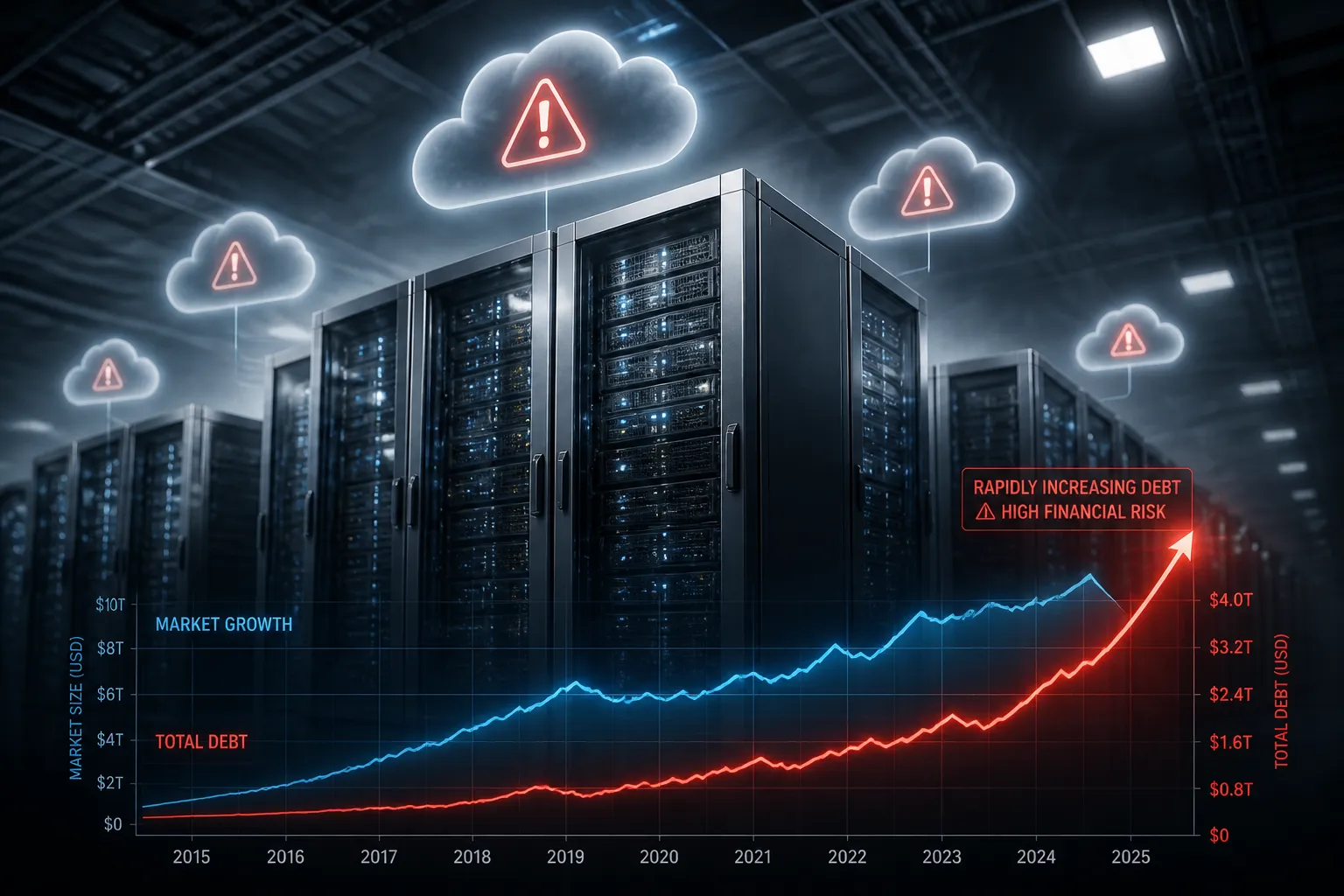
Industry estimates suggest that global data‑centre construction could reach nearly $3 trillion by 2028, with roughly half of that financed through borrowing. The debt‑heavy model raises the possibility that if AI revenue growth does not keep pace with the capital commitments, companies could face defaults that would affect banks, lenders and the wider financial system.
Damodaran has drawn parallels with the 2008 financial crisis, noting that “lenders overreach” can trigger systemic problems.
Several high‑profile firms illustrate the scale of the investment. Elon Musk’s AI start‑up xAI has raised billions in a mix of equity and debt to build the computing capacity for its Grok chatbot. Alphabet’s Google is expanding its cloud and AI‑chip portfolio, while Microsoft is investing heavily in Azure and its partnership with OpenAI. Amazon’s AWS and Meta’s AI research division are also allocating significant budgets to new data‑centre sites and custom silicon. These moves underscore the belief that raw computing power will become a key competitive advantage.
India’s technology sector is closely tied to the global AI race. Companies such as Infosys and TCS, along with Bengaluru and Hyderabad‑based start‑ups, are investing in AI capabilities to serve domestic and international clients. Global firms are expanding their presence in India to tap engineering talent and a growing digital ecosystem. A slowdown in AI spending abroad could reduce foreign investment, pressure start‑up valuations, create hiring uncertainty and delay data‑centre projects in the country.
While some analysts argue that AI already delivers measurable productivity gains and that large tech firms have stronger balance sheets than the dot‑com era, Damodaran cautions that optimism can lead to excessive borrowing. He stresses that the challenge for investors, companies and policymakers is to separate genuine long‑term value from hype.
At present, the AI infrastructure market is expanding faster than revenue growth, and debt issuance by tech giants has accelerated. The next few years will test whether the industry can sustain the capital intensity without triggering a correction that reverberates beyond equity markets.
The situation remains fluid. Companies continue to announce new data‑centre projects, bond issuances and capital raises, while regulators monitor the growing debt exposure. The outcome will shape not only the trajectory of AI technology but also the stability of the broader financial system.
Damodaran says that a future correction in the AI market could expose the global economy to risks greater than those seen in the 2000‑01 dot‑com crash. The warning comes as companies worldwide pour trillions of dollars into data‑centre construction, specialised GPUs and other physical assets that power large‑language models and other AI workloads.
In the late 1990s, internet companies built software platforms and marketing campaigns with modest capital outlays. Their growth was largely driven by equity investment and venture capital, and the collapse of the bubble mainly hurt shareholders.
By contrast, AI firms are building hyperscale data centres, high‑performance computing clusters and custom silicon. Much of this capital is being raised through debt, including private‑credit facilities and bond issuances.
Industry estimates suggest that global data‑centre construction could reach nearly $3 trillion by 2028, with roughly half of that financed through borrowing. The debt‑heavy model raises the possibility that if AI revenue growth does not keep pace with the capital commitments, companies could face defaults that would affect banks, lenders and the wider financial system.
Damodaran has drawn parallels with the 2008 financial crisis, noting that “lenders overreach” can trigger systemic problems.
Several high‑profile firms illustrate the scale of the investment. Elon Musk’s AI start‑up xAI has raised billions in a mix of equity and debt to build the computing capacity for its Grok chatbot. Alphabet’s Google is expanding its cloud and AI‑chip portfolio, while Microsoft is investing heavily in Azure and its partnership with OpenAI. Amazon’s AWS and Meta’s AI research division are also allocating significant budgets to new data‑centre sites and custom silicon. These moves underscore the belief that raw computing power will become a key competitive advantage.
India’s technology sector is closely tied to the global AI race. Companies such as Infosys and TCS, along with Bengaluru and Hyderabad‑based start‑ups, are investing in AI capabilities to serve domestic and international clients. Global firms are expanding their presence in India to tap engineering talent and a growing digital ecosystem. A slowdown in AI spending abroad could reduce foreign investment, pressure start‑up valuations, create hiring uncertainty and delay data‑centre projects in the country.
While some analysts argue that AI already delivers measurable productivity gains and that large tech firms have stronger balance sheets than the dot‑com era, Damodaran cautions that optimism can lead to excessive borrowing. He stresses that the challenge for investors, companies and policymakers is to separate genuine long‑term value from hype.
At present, the AI infrastructure market is expanding faster than revenue growth, and debt issuance by tech giants has accelerated. The next few years will test whether the industry can sustain the capital intensity without triggering a correction that reverberates beyond equity markets.
The situation remains fluid. Companies continue to announce new data‑centre projects, bond issuances and capital raises, while regulators monitor the growing debt exposure. The outcome will shape not only the trajectory of AI technology but also the stability of the broader financial system.





