Blab AI
Vatican Launches Comprehensive Digital Archive Project Using Non-Contact Scanning and AI-Enhanced Search
In a bold move that blends centuries‑old parchment with cutting‑edge technology, the Holy See has unveiled a plan to digitise its vast documentary heritage. Led by the Dicastery for Communication, the initiative will turn fragile manuscripts, bound volumes, photographs and other historical records into a secure, searchable digital archive.
The Vatican’s collections are staggering: the Apostolic Library houses 75,000 codices and more than a million printed books, while the Apostolic Archive contains 150,000 items. Scholars of history, theology and the social sciences have long relied on these treasures. Earlier efforts, such as the DigiVatLib project launched in 2014, opened many manuscripts to the world online, but the new programme aims to broaden coverage and sharpen access.
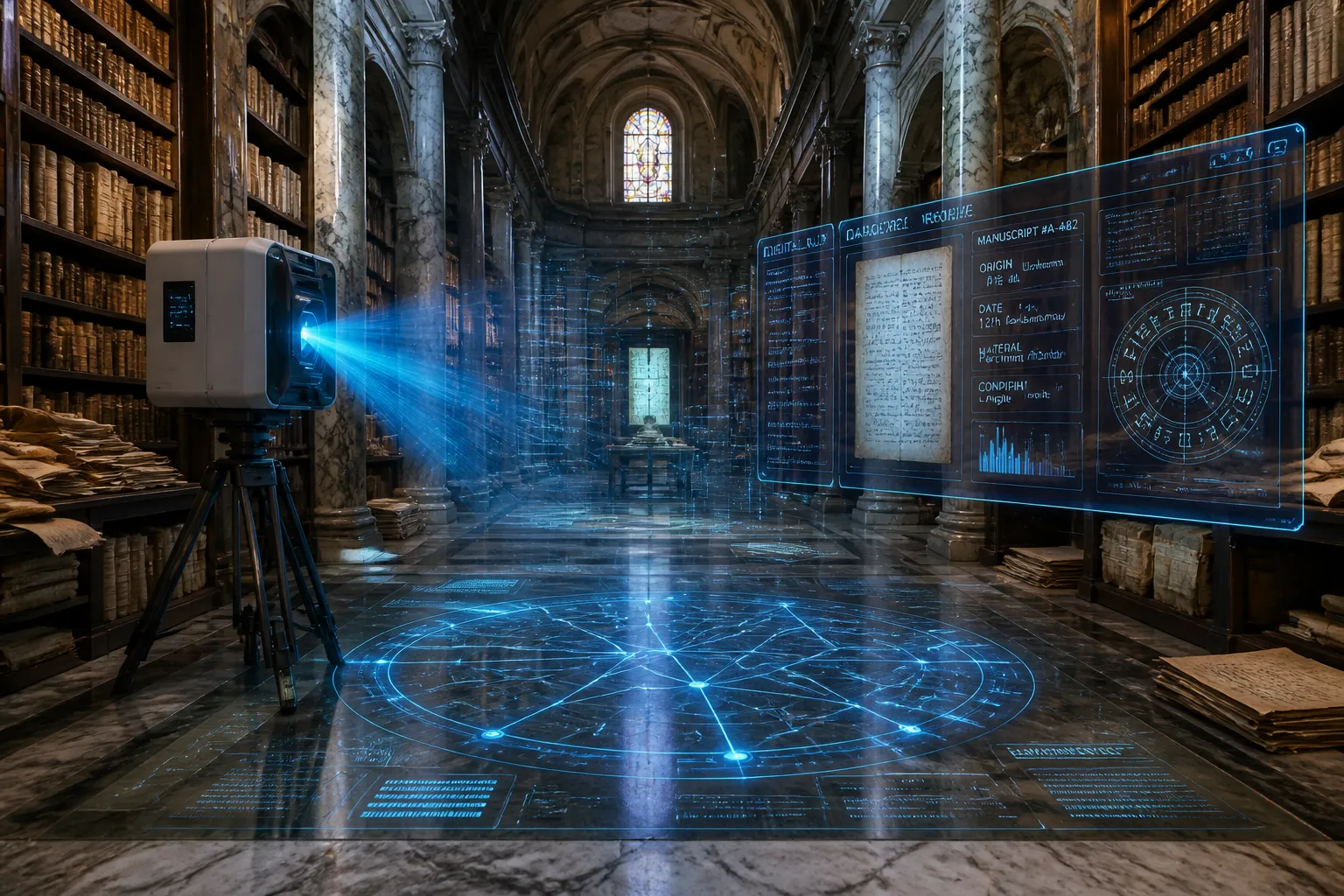
Central to the effort are high‑resolution, non‑contact scanners supplied by PFU, the document‑scanning division of Ricoh. The technology captures images of delicate materials without touching them, thereby minimizing wear. Scans reach up to 600 dots per inch, offering detail sufficient for close examination and future machine‑reading applications.
Beyond simple digitisation, the Vatican is building an integrated system that will store, catalogue and protect the digital assets. Designed to meet modern information‑management standards, the infrastructure will keep the digital copies authentic and verifiable—an essential safeguard against the growing problem of misinformation. Researchers, journalists and the public will be able to confirm the provenance of documents and images with confidence.
The Dicastery for Communication, created in 2015 to unify the Holy See’s media outlets, is steering the project. Its remit includes Vatican News, Vatican Radio, L’Osservatore Romano, the Vatican Publishing House and other communication services. The department’s involvement signals a broader trend of the Vatican embracing contemporary digital tools while preserving its traditional role as steward of historical records.
Looking ahead, the Vatican plans to integrate Retrieval‑Augmented Generation (RAG) systems. RAG combines the retrieval of relevant documents with generative language models, enabling researchers to locate, organise and connect information across the archive quickly. By feeding the high‑resolution scans into such a system, the Vatican expects to provide search capabilities that can identify specific documents or references in seconds—a task that previously required days of manual work.
The initiative also reflects the Vatican’s commitment to safeguarding cultural heritage. Digitising and securing its archives protects irreplaceable materials and makes them available to a global audience. The project’s emphasis on authenticity and verification aligns with the Church’s broader communication strategy, which seeks to provide reliable information in an era of rapid digital dissemination.
At present, the project is in the planning and early implementation stages. No launch date for the AI‑enhanced search platform has been announced, but the Vatican has indicated that the next phase will build on the current digitisation work. The initiative is expected to have significant implications for scholars, journalists and anyone interested in the historical record of the Catholic Church and its influence on modern society.
In sum, the Vatican’s digital transformation project combines cutting‑edge non‑contact scanning, high‑resolution imaging and future AI search capabilities to preserve and provide access to its vast archival holdings. The effort represents a concrete step toward modernising the Church’s stewardship of historical documents while addressing contemporary challenges of misinformation and digital preservation.
The Vatican’s collections are staggering: the Apostolic Library houses 75,000 codices and more than a million printed books, while the Apostolic Archive contains 150,000 items. Scholars of history, theology and the social sciences have long relied on these treasures. Earlier efforts, such as the DigiVatLib project launched in 2014, opened many manuscripts to the world online, but the new programme aims to broaden coverage and sharpen access.
Central to the effort are high‑resolution, non‑contact scanners supplied by PFU, the document‑scanning division of Ricoh. The technology captures images of delicate materials without touching them, thereby minimizing wear. Scans reach up to 600 dots per inch, offering detail sufficient for close examination and future machine‑reading applications.
Beyond simple digitisation, the Vatican is building an integrated system that will store, catalogue and protect the digital assets. Designed to meet modern information‑management standards, the infrastructure will keep the digital copies authentic and verifiable—an essential safeguard against the growing problem of misinformation. Researchers, journalists and the public will be able to confirm the provenance of documents and images with confidence.
The Dicastery for Communication, created in 2015 to unify the Holy See’s media outlets, is steering the project. Its remit includes Vatican News, Vatican Radio, L’Osservatore Romano, the Vatican Publishing House and other communication services. The department’s involvement signals a broader trend of the Vatican embracing contemporary digital tools while preserving its traditional role as steward of historical records.
Looking ahead, the Vatican plans to integrate Retrieval‑Augmented Generation (RAG) systems. RAG combines the retrieval of relevant documents with generative language models, enabling researchers to locate, organise and connect information across the archive quickly. By feeding the high‑resolution scans into such a system, the Vatican expects to provide search capabilities that can identify specific documents or references in seconds—a task that previously required days of manual work.
The initiative also reflects the Vatican’s commitment to safeguarding cultural heritage. Digitising and securing its archives protects irreplaceable materials and makes them available to a global audience. The project’s emphasis on authenticity and verification aligns with the Church’s broader communication strategy, which seeks to provide reliable information in an era of rapid digital dissemination.
At present, the project is in the planning and early implementation stages. No launch date for the AI‑enhanced search platform has been announced, but the Vatican has indicated that the next phase will build on the current digitisation work. The initiative is expected to have significant implications for scholars, journalists and anyone interested in the historical record of the Catholic Church and its influence on modern society.
In sum, the Vatican’s digital transformation project combines cutting‑edge non‑contact scanning, high‑resolution imaging and future AI search capabilities to preserve and provide access to its vast archival holdings. The effort represents a concrete step toward modernising the Church’s stewardship of historical documents while addressing contemporary challenges of misinformation and digital preservation.





