Blab AI
Senator Mark Kelly Introduces AI DATA Act to Track AIs Effect on the U.S. Workforce
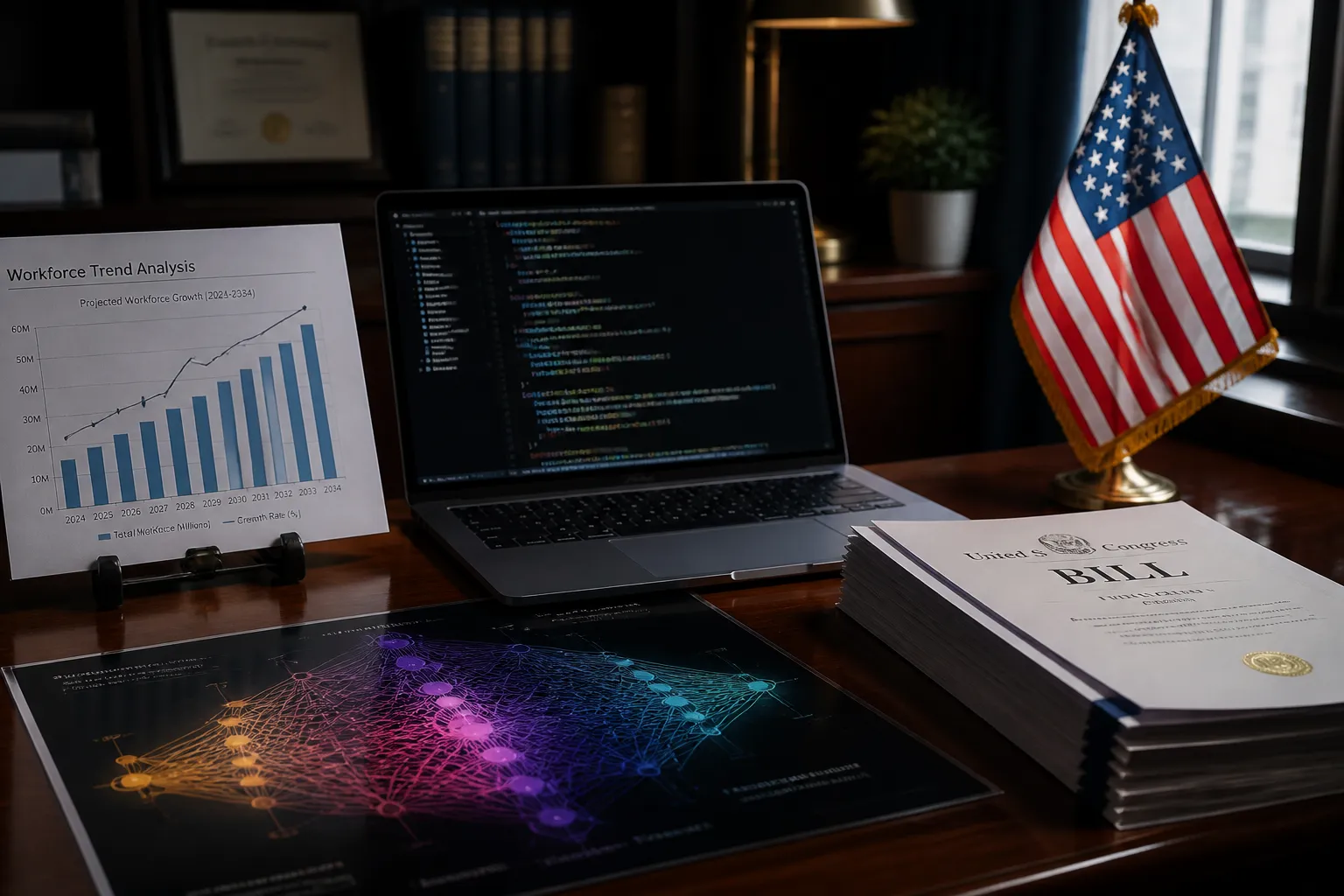
On June 10, 2026, Senator Mark Kelly (D‑AZ) filed the Artificial Intelligence Data Authorization and Transparency Act (S. 4742) in the Senate, a bill that currently has two cosponsors. Its purpose is to broaden federal data collection on how artificial intelligence (AI) shapes employment, hiring, wages, and work patterns.
At the heart of the proposal are new surveys and reporting mandates. The Secretary of Labor would launch a monthly employer survey that records job openings, hiring, layoffs, quits, and other turnover metrics, broken down by industry, occupation, and geographic area. This granular view would let analysts isolate labor‑market shifts potentially linked to AI and automation. The bill also requires a recurring household survey to track how people allocate time to work, caregiving, household tasks, education, and other activities, probing the use of digital tools and emerging technologies in both home and workplace settings.
A long‑term panel survey is likewise embedded in the bill. It would follow individuals over time to study employment, earnings, job changes, education, training, and related outcomes, adding new cohorts every decade to keep the data current.
The Census Bureau would weave AI‑related questions into its Business Trends and Outlook Survey, covering AI adoption, effects on hiring and separations, job openings, workforce demand, and business operations. The Labor Department and the Department of Commerce would be required to publish an annual report on AI’s impact on the workforce, drawing on Census and Labor data and other federal sources. That report would examine hiring, job openings, occupations, earnings, job mobility, training, and skill needs.
The AI DATA Act does not impose new restrictions on AI use by companies or on specific AI systems. Instead, it focuses on measurement and transparency. The reporting authority would expire after ten years, and the bill authorizes whatever federal funding is necessary to carry out the activities.
The legislation fits into Senator Kelly’s broader AI agenda. In September 2025, he unveiled the “AI for America” roadmap, calling for a public‑private partnership to fund workforce development and infrastructure. Other bills he has introduced include a grant program for semiconductor education (S. 4810), the WARP Act (S. 4683), and a defense‑related AI responsibility act (S. 4682).
Industry observers note that the bill responds to growing concerns about AI’s labor‑market effects. Reports from FlexJobs and McKinsey have highlighted rising AI adoption and its potential to reshape job roles. The new surveys would provide the data needed to confirm or refute those claims.
Because the bill is still in the early stages, its ultimate fate remains uncertain. It has not yet been assigned to a Senate committee, and no vote has been scheduled. Nevertheless, the introduction of the AI DATA Act signals a willingness among some lawmakers to use data‑driven policy tools to address AI’s societal impact.
If enacted, the bill would create a comprehensive, federal data infrastructure that could inform policymakers, businesses, and workers about AI’s evolving role in the economy. The ten‑year expiration clause would allow the program to be reassessed as AI technologies and labor markets continue to evolve.
For now, the AI DATA Act remains a proposal that could shape how the United States tracks the intersection of technology and employment for the next decade.
At the heart of the proposal are new surveys and reporting mandates. The Secretary of Labor would launch a monthly employer survey that records job openings, hiring, layoffs, quits, and other turnover metrics, broken down by industry, occupation, and geographic area. This granular view would let analysts isolate labor‑market shifts potentially linked to AI and automation. The bill also requires a recurring household survey to track how people allocate time to work, caregiving, household tasks, education, and other activities, probing the use of digital tools and emerging technologies in both home and workplace settings.
A long‑term panel survey is likewise embedded in the bill. It would follow individuals over time to study employment, earnings, job changes, education, training, and related outcomes, adding new cohorts every decade to keep the data current.
The Census Bureau would weave AI‑related questions into its Business Trends and Outlook Survey, covering AI adoption, effects on hiring and separations, job openings, workforce demand, and business operations. The Labor Department and the Department of Commerce would be required to publish an annual report on AI’s impact on the workforce, drawing on Census and Labor data and other federal sources. That report would examine hiring, job openings, occupations, earnings, job mobility, training, and skill needs.
The AI DATA Act does not impose new restrictions on AI use by companies or on specific AI systems. Instead, it focuses on measurement and transparency. The reporting authority would expire after ten years, and the bill authorizes whatever federal funding is necessary to carry out the activities.
The legislation fits into Senator Kelly’s broader AI agenda. In September 2025, he unveiled the “AI for America” roadmap, calling for a public‑private partnership to fund workforce development and infrastructure. Other bills he has introduced include a grant program for semiconductor education (S. 4810), the WARP Act (S. 4683), and a defense‑related AI responsibility act (S. 4682).
Industry observers note that the bill responds to growing concerns about AI’s labor‑market effects. Reports from FlexJobs and McKinsey have highlighted rising AI adoption and its potential to reshape job roles. The new surveys would provide the data needed to confirm or refute those claims.
Because the bill is still in the early stages, its ultimate fate remains uncertain. It has not yet been assigned to a Senate committee, and no vote has been scheduled. Nevertheless, the introduction of the AI DATA Act signals a willingness among some lawmakers to use data‑driven policy tools to address AI’s societal impact.
If enacted, the bill would create a comprehensive, federal data infrastructure that could inform policymakers, businesses, and workers about AI’s evolving role in the economy. The ten‑year expiration clause would allow the program to be reassessed as AI technologies and labor markets continue to evolve.
For now, the AI DATA Act remains a proposal that could shape how the United States tracks the intersection of technology and employment for the next decade.





